THE CLASSIC COLLECTION✦A dead man’s diaryCLASSIC FREE BOOKS
A dead man’s diary
Coulson Kernahan
THE CLASSIC COLLECTION · 1908
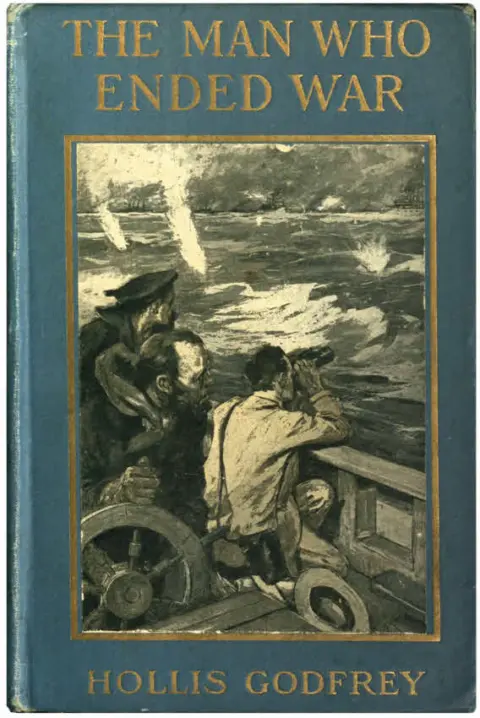
"The Man Who Ended War" by Hollis Godfrey is a fictional novel written in the early 20th century. The narrative revolves around the extraordinary premise of a mysterious individual who claims he can bring an end to all war. The initial chapters introduce a group of correspondents and officials discussing a bizarre letter from this figure, setting the stage for an intriguing exploration of themes such as power, war, and the potential for peace. At the start of the story, the setting is a government office where the Secretary of War has just concluded a statement about new military transports. The protagonist, Orrington, and his colleague Ordway then delve into the contents of a ludicrous letter declaring war against war itself; the author of the letter threatens to destroy battleships if nations do not disarm. This shocking declaration seems ludicrous at first, summoning laughter among the correspondents. However, as Orrington pursues further investigation into the peculiar claims of the letter, he discovers a deeper, possibly dangerous significance behind the man’s intentions. The narrative intertwines personal stories, including the budding romance between Orrington and a research scientist named Dorothy Haldane, lending emotional depth to the unfolding adventure as they uncover the truth behind the mysterious figure and his ambitions.
Introduction adapted from the source catalogue; source summaries may be automatically generated.
Free to read · English · 70,394 words · No account needed
MAKE TIME FOR A GOOD BOOK
On by default. Untick to stop anonymous reading totals. Each page counts after 10 seconds in view. How this works.
Anonymous counting is on unless you have switched it off.
“Where is he?” I shouted.
“At my house, but he’s crazy,” replied the man.
“Can we get in there with the yacht?”
“No, but I can take you in,” he answered, and it was but a moment’s work to lower a boat from the davits. As I stepped to the side, Tom and Dorothy hurried up.
“We’re going, too,” Tom cried.
The launch bore us rapidly across to the catboat, and as we approached, I studied the faces of the man and the boy. They were simple folk, of evidently limited intelligence. Hardly had we come alongside, when I began my questions, and a strange story came in reply. Stripped of its vernacular and repetitions, this was the tale finally dragged from the man and boy, as we sailed towards the shore.
They had started out in the early morning and had fished with some success. In the afternoon, they had seen a knockabout running free before the wind, with all sorts of strange action. The sail widespread, she turned and reared, started and checked, swung and circled. There was no sign of life on board that they could ascertain, and they made up their minds that the boat had either lost its occupants or had been driven offshore with its sail hoisted. On boarding, much to their surprise, they found a man, apparently a solitary fisherman, lying unconscious in the stern sheets. Throwing water over him roused him. He sat up and looked around, but with unseeing eyes. His lips quivered, and in a low whisper he began to speak. “Disappeared, disappeared, disappeared. Nothing real, nothing real.” Rising, he started to walk straight ahead, but struck the side and fell. His murmur now changed to a loud moan. “Disappeared, disappeared, disappeared. Nothing real, nothing real.” Again he tried to walk, but this time they caught him, bound him, and carried him to shore, to their house, where he went quietly enough to bed, with the unceasing moan. “Disappeared, disappeared, disappeared. Nothing real, nothing real,” rising and falling like the waves on the shore.
The story had taken all the way in, and as we rowed towards shore, leaving the catboat and launch at the mooring where the knockabout lay, the night was swiftly shutting in. A light glimmered in a low house on the bluff.
“That’s my house,” said the man, as we hastened towards it. A woman with a kindly face met us at the door.
“Wife, these are some folks that are looking for the crazy man,” said
our friend.
“He’s fast asleep,” was the answer, “but you can go in and see him, if
you want to.”
Your reading position is saved on this browser. Take it to another device with a library code. Reading pages adapt to text, rather than matching a printed edition.
BEHIND THE BOOK
This eBook is for the use of anyone anywhere in the United States and most other parts of the world at no cost and with almost no restrictions whatsoever. You may copy it, give it away or re-use it under the terms of the Project Gutenberg License included with this eBook or online at www.gutenberg.org. If you are not located in the United States, you will have to check the laws of the country where you are located before using this eBook. Read the source licence.
The original source file, including credits and licence, is retained by this library. Request an original-format copy at no charge. Please include the book title and Project Gutenberg identifier #49848.
KEEP YOUR CURIOSITY GOING
Coulson Kernahan

Maurice Baring
Frances Wright
Cécile Tormay
Francis Greenleaf Allinson & Anne C. E. (Anne Crosby Emery) Allinson

Frederic Jesup Stimson