THE CLASSIC COLLECTION✦Undream’d of shoresCLASSIC FREE BOOKS
Undream’d of shores
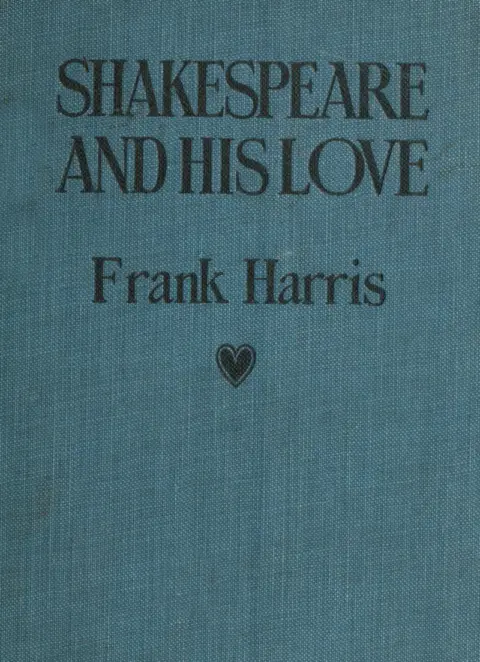
Frank Harris
THE CLASSIC COLLECTION · 1909
"The Man Shakespeare and His Tragic Life Story" by Frank Harris is a historical account written in the early 20th century. This work delves into the life and character of William Shakespeare, asserting that the playwright's complex personality and tragic experiences are intertwined with his literary creations. Harris aims to present a nuanced portrayal of Shakespeare, arguing that the playwright painted himself multiple times through his characters across different stages of his life. The opening of the text reveals Harris's intention to provide an introspective analysis of Shakespeare's works and how they reflect his own life, passions, and struggles. Harris mentions the various interpretations and critiques Shakespeare has faced throughout the centuries, noting that many have failed to grasp the true essence of the man behind the plays. He highlights his plan to explore the Shakespearean characters of Hamlet, Macbeth, and others, suggesting that these figures represent different aspects of Shakespeare's own experiences. Ultimately, he seeks to elucidate Shakespeare's heroic and tragic dimensions, emphasizing the ongoing relevance of his life and work in understanding the human condition.
Introduction adapted from the source catalogue; source summaries may be automatically generated.
Free to read · English · 110,939 words · No account needed
MAKE TIME FOR A GOOD BOOK
On by default. Untick to stop anonymous reading totals. Each page counts after 10 seconds in view. How this works.
Anonymous counting is on unless you have switched it off.
He asks Miranda what she can remember of her early life, and reaches
magical words:
“What seest thou else
In the dark backward and abysm of time?”
Miranda is only fifteen years of age. Shakespeare turned Juliet, it will be remembered, from a girl of sixteen into one of fourteen; now, though the sensuality has left him, he makes Miranda only fifteen; clearly he is the same admirer of girlish youth at forty-eight as he was twenty years before. Then Prospero tells Miranda of himself and his brother, the “perfidious” Duke:
“And Prospero, the prime Duke, being so reputed
In dignity, and for the liberal arts
Without a parallel; those being all my study.”
He will not only be a Prince now, but a master “without a parallel” in the liberal arts. He must explain, too, at undue length, how he allowed himself to be supplanted by his false brother, and speaks about himself in Shakespeare's very words:
“I thus neglecting worldly ends, all dedicate
To closeness, and the bettering of my mind
With that, which, but by being so retired,
O'erprized all popular rate, in my false brother
Awaked an evil nature: and my trust,
Like a good parent, did beget of him,
A falsehood, in its contrary as great
As my trust was; which had, indeed, no limit,
A confidence sans bound.”
Shakespeare, too, “neglecting worldly ends,” had dedicated himself to “bettering of his mind,” we may be sure. Prospero goes on to tell us explicitly how Shakespeare loved books, which we were only able to infer from his earlier plays:
“Me, poor man, my library
Was dukedom large enough.”
And again, Gonzalo (another name for Kent and Flavius) having given him
some books, he says:
“Of his gentleness,
Knowing I loved my books, he furnished me
From my own library, with volumes that
I prize above my dukedom.”
His daughter grieves lest she had been a trouble to him: forthwith
Shakespeare-Prospero answers:
“O, a cherubim
Thou wast, that did preserve me. Thou didst smile
Infused with a fortitude from heaven,
When I have deck'd the sea with drops full salt
Under my burden groan'd; which raised in me
An undergoing stomach, to bear up
Against what should ensue.”
But why should the magician weep or groan under a burden? had he no confidence in his miraculous powers? All this is Shakespeare's confession. Every word is true; his daughter did indeed “preserve” Shakespeare, and enable him to bear up under the burden of life's betrayals.
Your reading position is saved on this browser. Take it to another device with a library code. Reading pages adapt to text, rather than matching a printed edition.
Frank Harris
Frank Harris
Frank Harris
Frank Harris
BEHIND THE BOOK
This eBook is for the use of anyone anywhere in the United States and most other parts of the world at no cost and with almost no restrictions whatsoever. You may copy it, give it away or re-use it under the terms of the Project Gutenberg License included with this eBook or online at www.gutenberg.org. If you are not located in the United States, you will have to check the laws of the country where you are located before using this eBook. Read the source licence.
The original source file, including credits and licence, is retained by this library. Request an original-format copy at no charge. Please include the book title and Project Gutenberg identifier #9079.
KEEP YOUR CURIOSITY GOING
Cécile Tormay

Moritz Busch
John L. Ransom
Frances Wright
Cécile Tormay

Mabel Potter Daggett