THE CLASSIC COLLECTION✦Undream’d of shoresCLASSIC FREE BOOKS
Undream’d of shores
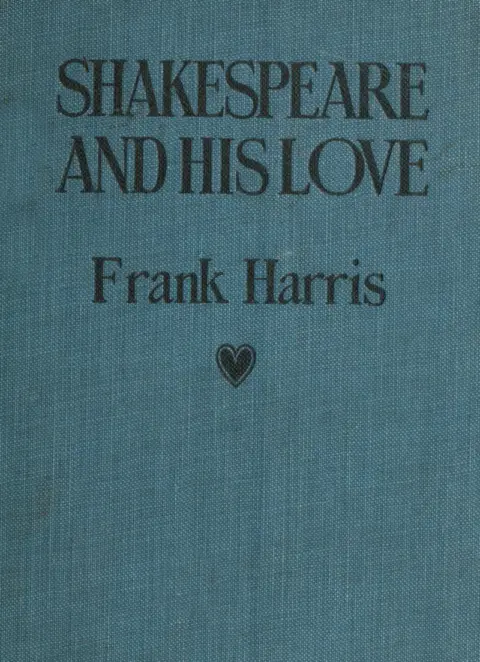
Frank Harris
THE CLASSIC COLLECTION · 1909
"The Man Shakespeare and His Tragic Life Story" by Frank Harris is a historical account written in the early 20th century. This work delves into the life and character of William Shakespeare, asserting that the playwright's complex personality and tragic experiences are intertwined with his literary creations. Harris aims to present a nuanced portrayal of Shakespeare, arguing that the playwright painted himself multiple times through his characters across different stages of his life. The opening of the text reveals Harris's intention to provide an introspective analysis of Shakespeare's works and how they reflect his own life, passions, and struggles. Harris mentions the various interpretations and critiques Shakespeare has faced throughout the centuries, noting that many have failed to grasp the true essence of the man behind the plays. He highlights his plan to explore the Shakespearean characters of Hamlet, Macbeth, and others, suggesting that these figures represent different aspects of Shakespeare's own experiences. Ultimately, he seeks to elucidate Shakespeare's heroic and tragic dimensions, emphasizing the ongoing relevance of his life and work in understanding the human condition.
Introduction adapted from the source catalogue; source summaries may be automatically generated.
Free to read · English · 110,939 words · No account needed
MAKE TIME FOR A GOOD BOOK
On by default. Untick to stop anonymous reading totals. Each page counts after 10 seconds in view. How this works.
Anonymous counting is on unless you have switched it off.
She uses a dozen taunts to prevent her lover from leaving her; but when she sees him resolved, she wishes him victory and success. And so through a myriad changes of mood and of cunning wiles we discover that love for Antony which is the anchor to her unstable nature.
The scene with the eunuch Mardian is a little gem. She asks:
“Hast thou affections?
Mar. Yes, gracious madam.
Cleo. Indeed?
Mar. Not in deed, madam; for I can do nothing.
But what indeed is honest to be done;
Yet have I fierce affections, and think
What Venus did with Mars.
Cleo. O, Charmian!
Where think'st thou he is now? Stands he, or sits he?”
She is with her lover again, and recalls his phrase for her, “my serpent of old Nile,” and feeds herself with love's “delicious poison.”
No sooner does she win our sympathy by her passion for Antony than Shakespeare chills our admiration by showing her as the courtesan:
“Cleo. Did I, Charmian,
Ever love Caesar so?
Char. O, that brave Caesar!
Cleo. Be choked with such another emphasis!
Say, the brave Antony.
Char. The valiant Caesar!
Cleo. By Isis, I will give thee bloody teeth
If thou with Caesar paragon again
My man of men.
Char. By your most gracious pardon,
I sing but after you.
Cleo. My salad days,
When I was green in judgement: cold in blood,
To say as I said then!”
Already we see and know her, her wiles, her passion, her quick temper, her chameleon-like changes, her subtle charms of person and of word, and yet we have not reached the end of the first act. Next to Falstaff and to Hamlet, Cleopatra is the most astonishing piece of portraiture in all Shakespeare. Enobarbus gives the soul of her:
“Ant. She is cunning past man's thought.
Eno. Alack, sir, no; her passions are made of nothing
but the finest part of pure love....
Ant. Would I had never seen her!
Eno. O, sir, you had then left unseen a wonderful piece of work; which not to have been blest withal would have discredited your travel.”
Here Shakespeare gives his true opinion of Mary Fitton: then comes the
miraculous expression:
“Age cannot wither her, nor custom stale
Her infinite variety. Other women cloy
The appetites they feed; but she makes hungry
Where most she satisfies.”
Act by act Shakespeare makes the portrait more complex and more perfect. In the second act she calls for music like the dark lady of the Sonnets:
“Music--moody food of us that trade in love,”
Your reading position is saved on this browser. Take it to another device with a library code. Reading pages adapt to text, rather than matching a printed edition.
Frank Harris
Frank Harris
Frank Harris
Frank Harris
BEHIND THE BOOK
This eBook is for the use of anyone anywhere in the United States and most other parts of the world at no cost and with almost no restrictions whatsoever. You may copy it, give it away or re-use it under the terms of the Project Gutenberg License included with this eBook or online at www.gutenberg.org. If you are not located in the United States, you will have to check the laws of the country where you are located before using this eBook. Read the source licence.
The original source file, including credits and licence, is retained by this library. Request an original-format copy at no charge. Please include the book title and Project Gutenberg identifier #9079.
KEEP YOUR CURIOSITY GOING
Cécile Tormay

Moritz Busch
John L. Ransom
Frances Wright
Cécile Tormay

Mabel Potter Daggett