THE CLASSIC COLLECTION✦Undream’d of shoresCLASSIC FREE BOOKS
Undream’d of shores
Frank Harris
THE CLASSIC COLLECTION · 1909
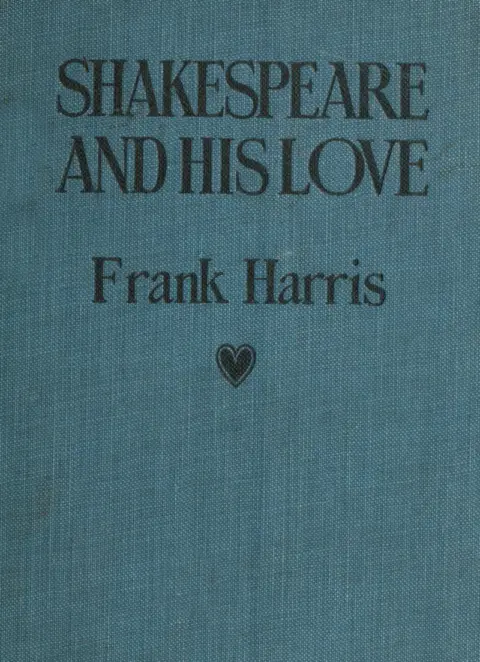
"The Man Shakespeare and His Tragic Life Story" by Frank Harris is a historical account written in the early 20th century. This work delves into the life and character of William Shakespeare, asserting that the playwright's complex personality and tragic experiences are intertwined with his literary creations. Harris aims to present a nuanced portrayal of Shakespeare, arguing that the playwright painted himself multiple times through his characters across different stages of his life. The opening of the text reveals Harris's intention to provide an introspective analysis of Shakespeare's works and how they reflect his own life, passions, and struggles. Harris mentions the various interpretations and critiques Shakespeare has faced throughout the centuries, noting that many have failed to grasp the true essence of the man behind the plays. He highlights his plan to explore the Shakespearean characters of Hamlet, Macbeth, and others, suggesting that these figures represent different aspects of Shakespeare's own experiences. Ultimately, he seeks to elucidate Shakespeare's heroic and tragic dimensions, emphasizing the ongoing relevance of his life and work in understanding the human condition.
Introduction adapted from the source catalogue; source summaries may be automatically generated.
Free to read · English · 110,939 words · No account needed
MAKE TIME FOR A GOOD BOOK
On by default. Untick to stop anonymous reading totals. Each page counts after 10 seconds in view. How this works.
Anonymous counting is on unless you have switched it off.
“Biron. Did not I dance with you in Brabant once?
Ros. Did not I dance with you in Brabant once?
Biron. I know you did.
Ros. How needless was it, then, to ask the question!
Biron. You must not be so quick.
Ros. 'Tis long of you that spur me with such questions.
Biron. Your wit's too hot, it speeds too fast, 'twill tire.
Ros. Not till it leave the rider in the mire.
Biron. What time o' day?
Ros. The hour that fools should ask.
Biron. Now fair befall your mask!
Ros. Fair fall the face it covers!
Biron. And send you many lovers!
Ros. Amen, so you be none.
Biron. Nay, then will I be gone.”
Clearly this Rosaline, too, has Dian's wit and is not in love with Biron, any more than the Rosaline of “Romeo and Juliet” was in love with Romeo.
The next allusion is even more characteristic. Biron and Longaville and Boyet are talking; Longaville shows his admiration for one of the Princess's women, “the one in the white” he declares, is a most sweet lady....”
Biron. What is her name in the cap?
Boyet. Rosaline, by good hap.
Biron. Is she wedded or no?
Boyet. To her will, sir, or so.
Biron. You are welcome, sir: adieu.”
This, “To her will, sir, or so,” is exactly in the spirit of the sonnets: every one will remember the first two lines of sonnet 135:
“Whoever hath her wish, thou hast thy Will, And Will to
boot, and Will in overplus;”
That, “To her will, sir, or so,” I find astonishingly significant, for not only has it nothing to do with the play and is therefore unexpected, but the character-drawing is unexpected, too; maids are not usually wedded to their will in a double sense, and no other of these maids of honour is described at all.
A little later Biron speaks again of Rosaline in a way which shocks expectation. First of all, he rages at himself for being in love at all. “And I, forsooth in love! I, that have been love's whip!” Here I pause again, it seems to me that Shakespeare is making confession to us, just as when he admitted without reason that Jaques was lewd. Be that as it may, he certainly goes on in words which are astounding, so utterly unforeseen are they, and therefore the more characteristic:
“Nay, to be perjured, which is worst of all;
And, among three, to love the worst of all;”
Your reading position is saved on this browser. Take it to another device with a library code. Reading pages adapt to text, rather than matching a printed edition.
Frank Harris
Frank Harris
Frank Harris
Frank Harris
BEHIND THE BOOK
This eBook is for the use of anyone anywhere in the United States and most other parts of the world at no cost and with almost no restrictions whatsoever. You may copy it, give it away or re-use it under the terms of the Project Gutenberg License included with this eBook or online at www.gutenberg.org. If you are not located in the United States, you will have to check the laws of the country where you are located before using this eBook. Read the source licence.
The original source file, including credits and licence, is retained by this library. Request an original-format copy at no charge. Please include the book title and Project Gutenberg identifier #9079.
KEEP YOUR CURIOSITY GOING
Cécile Tormay

Moritz Busch
John L. Ransom
Frances Wright
Cécile Tormay

Mabel Potter Daggett