THE CLASSIC COLLECTION✦Undream’d of shoresCLASSIC FREE BOOKS
Undream’d of shores
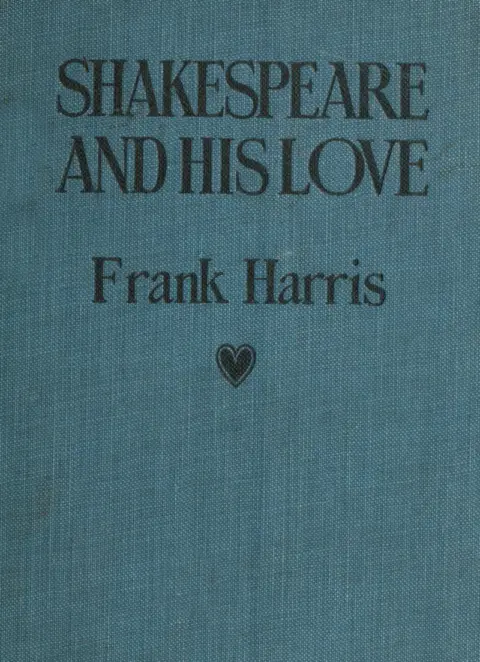
Frank Harris
THE CLASSIC COLLECTION · 1909
"The Man Shakespeare and His Tragic Life Story" by Frank Harris is a historical account written in the early 20th century. This work delves into the life and character of William Shakespeare, asserting that the playwright's complex personality and tragic experiences are intertwined with his literary creations. Harris aims to present a nuanced portrayal of Shakespeare, arguing that the playwright painted himself multiple times through his characters across different stages of his life. The opening of the text reveals Harris's intention to provide an introspective analysis of Shakespeare's works and how they reflect his own life, passions, and struggles. Harris mentions the various interpretations and critiques Shakespeare has faced throughout the centuries, noting that many have failed to grasp the true essence of the man behind the plays. He highlights his plan to explore the Shakespearean characters of Hamlet, Macbeth, and others, suggesting that these figures represent different aspects of Shakespeare's own experiences. Ultimately, he seeks to elucidate Shakespeare's heroic and tragic dimensions, emphasizing the ongoing relevance of his life and work in understanding the human condition.
Introduction adapted from the source catalogue; source summaries may be automatically generated.
Free to read · English · 110,939 words · No account needed
MAKE TIME FOR A GOOD BOOK
On by default. Untick to stop anonymous reading totals. Each page counts after 10 seconds in view. How this works.
Anonymous counting is on unless you have switched it off.
This tone of modest gentle sincerity is Shakespeare's habitual tone from about his thirtieth year to the end of his life: it has the accent of unaffected nature. In bidding farewell to Salarino Antonio shows us the exquisite courtesy which Shakespeare used in life. Salarino, seeing Bassanio approaching, says:
“I would have stayed till I had made you merry,
If worthier friends had not prevented me.”
Antonio answers:
“Your worth is very dear in my regard.
I take it, your own business calls on you,
And you embrace the occasion to depart.”
More characteristic still is the dialogue between Gratiano and Antonio in the same scene. Gratiano, the twin-brother surely of Mercutio, tells Antonio that he thinks too much of the things of this world, and warns him:
“They lose it that do buy it with much care.”
Antonio replies:
“I hold the world but as the world, Gratiano;
A stage, where every man must play a part,
And mine a sad one.”
Every one who has followed me so far will admit that this is Shakespeare's most usual and most ingenuous attitude towards life; “I do not esteem worldly possessions,” he says; “life itself is too transient, too unreal to be dearly held.” Gratiano's reflection, too, is Shakespeare's, and puts the truth in a nutshell:
“They lose it that do buy it with much care.”
We now come to the most salient peculiarity in this play. When Bassanio, his debtor, asks him for more money, Antonio answers:
“My purse, my person, my extremes! means,
Lie all unlocked to your occasions.”
And, though Bassanio tells him his money is to be risked on a romantic and wild adventure, Antonio declares that Bassanio's doubt does him more wrong than if his friend had already wasted all he has, and the act closes by Antonio pressing Bassanio to use his credit “to the uttermost.” Now, this contempt of money was, no doubt, a pose, if not a habit of the aristocratic society of the time, and Shakespeare may have been aping the tone of his betters in putting to show a most lavish generosity. But even if his social superiors encouraged him in a wasteful extravagance, it must be admitted that Shakespeare betters their teaching. The lord was riotously lavish, no doubt, because he had money, or could get it without much trouble; but, put in Antonio's position, he would not press his last penny on his friend, much less strain his credit “to the uttermost” for him as Antonio does for Bassanio. Here we have the personal note of Shakespeare: “Your affection,” says the elder man to the younger, “is all to me, and money's less than nothing in the balance. Don't let us waste a word on it; a doubt of me were an injury!” But men will do that for affection which they would never do in cool blood, and therefore one cannot help asking whether Shakespeare really felt and practised this extreme contempt of wealth? For the moment, if we leave his actions out of the account, there can be, I think, no doubt about his feelings. His dislike of money makes him disfigure reality. No merchant, it may fairly be said, either of the sixteenth century or the twentieth, ever amassed or kept a fortune with Antonio's principles. In our day of world-wide speculation and immense wealth it is just possible for a man to be a millionaire and generous; but in the sixteenth century, when wealth was made by penurious saving, by slow daily adding of coin to coin, merchants like this Antonio were unheard of, impossible.
Your reading position is saved on this browser. Take it to another device with a library code. Reading pages adapt to text, rather than matching a printed edition.
Frank Harris
Frank Harris
Frank Harris
Frank Harris
BEHIND THE BOOK
This eBook is for the use of anyone anywhere in the United States and most other parts of the world at no cost and with almost no restrictions whatsoever. You may copy it, give it away or re-use it under the terms of the Project Gutenberg License included with this eBook or online at www.gutenberg.org. If you are not located in the United States, you will have to check the laws of the country where you are located before using this eBook. Read the source licence.
The original source file, including credits and licence, is retained by this library. Request an original-format copy at no charge. Please include the book title and Project Gutenberg identifier #9079.
KEEP YOUR CURIOSITY GOING
Cécile Tormay

Moritz Busch
John L. Ransom
Frances Wright
Cécile Tormay

Mabel Potter Daggett