
The Story of a Governess
Mrs. (Margaret) Oliphant
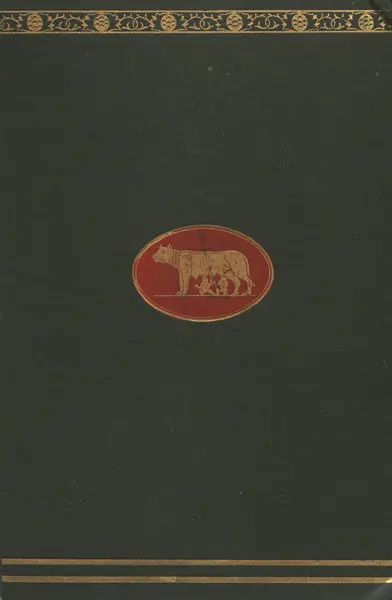
THE CLASSIC COLLECTION · 1895
"The Makers of Modern Rome" by Mrs. Oliphant is a historical account written in the late 19th century. The work provides a detailed examination of the pivotal figures and events that shaped Rome during its transitional period, particularly focusing on the role of women and the shifting authority from political to religious figures. The book's exploration of characters, such as influential women like Marcella and Melania, highlights the complexities of their lives within the broader societal and spiritual transformations of the era. The opening of the book sets the stage by reflecting on the grandeur and subsequent decline of Rome, detailing the contrast between its glorious past and the stagnant societal conditions of the fourth century. The author discusses how Rome, once the center of the universe, became a city rich in history but struggling for vitality as new influences began to reshape its identity. The narrative introduces Marcella, a beauty from a noble family who defies societal norms by refusing to remarry, thus establishing a community for Christian women dedicated to a pure, devout lifestyle. The opening chapters also hint at Melania, another prominent figure whose dramatic decisions challenge traditional expectations of motherhood and societal roles. Overall, the beginning of the book presents a vivid and complex portrait of a city and its people caught between the remnants of an ancient civilization and the emergence of a new spiritual authority.
Introduction adapted from the source catalogue; source summaries may be automatically generated.
Free to read · English · 194,150 words · No account needed
MAKE TIME FOR A GOOD BOOK
On by default. Untick to stop anonymous reading totals. Each page counts after 10 seconds in view. How this works.
Anonymous counting is on unless you have switched it off.
Was it a cruel desertion, a heartless abandonment of duty? Who can tell? There are desertions, cruelties in this kind, which are the highest sacrifice, and sometimes the most bitter proof of self-devotion. Did Paula in her heart believe, most painful thought that can enter a mother's mind, that her boy would be better without her, brought up in peace among his uncles and guardians, who, had she been there, would have made his life a continual struggle between two sides? Was Rufina more likely to be happy in her gentle sister's charge, than with her mind disturbed, and perhaps her marriage spoiled, by her mother's religious vows, and all that was involved in them? She might be wrong in thinking so, as we are all wrong often in our best and most painfully pondered plans. But condemnation is very easy, and gives so little trouble--there is surely a word to be said on the other side of the question.
When these pilgrims leave Rome they cease to have any part in the story of the great city with which we have to do. Yet their after-fate may be stated in a few words. No need to follow the great lady in her journey over land and sea to the Holy Land with all its associations, where Jerusalem out of her ruins, decked with a new classic name, was already rising again into the knowledge and the veneration of the world. These were not the days of excursion trains and steamers, it is true; but the number of pilgrims ever coming and going to those more than classic shores, those holy places, animated with every higher hope, was perhaps greater in proportion to the smaller size and less population of the known world than are our many pilgrimages now, though this seems so strange a thing to say. But is there not a Murray, a Baedeker, of the fourth century, still existent, the Itinéraire de Bordeaux à Jerusalem, unquestioned and authentic, containing the most careful account of inns and places of refuge and modes of travel for the pilgrims? It is possible that the lady Paula may have had that ancient roll in her satchel, or slung about the shoulders of her attendant for constant reference. Her ship was occupied by her own party alone, and conveyed, no doubt, much baggage and many provisions as an emigration for life would naturally do; and it was hindered by no storms, as far as we hear, but only by a great calm which delayed the vessel much and made the voyage tedious, necessitating the use of the galley's oars, which very likely the ladies would like best, though it kept them so many more days upon the sea. They reached Cyprus at last, that holy island now covered with monasteries, where Epiphanius, once Paula's guest in Rome, awaited and received her with every honour, and where there were many visits to be paid to monks and nuns in their new establishments, the favourite dissipation of the cloister. The ladies afterwards continued their voyage to Antioch, where they met Jerome; and proceeded on their journey, having probably had enough of the sea, along the coast by Tyre and Sidon, by Herod's splendid city of Cæsarea, and Joppa with its memories of the Apostles--not without a thought of Andromeda and her monster as they looked over the dark and dangerous reefs which still scare the traveller: for they loved literature, notwithstanding their separation from the world. They formed by this time a great caravanserai, not unlike, to tell the truth, one of those parties which we are so apt to despise, under charge of guides and attendants who wear the livery of Cook. But such an expedition was far more dignified and important in those distant days. Jerome and his monks made but one family of sisters and brothers with the Roman ladies and their followers, who endured so bravely all the fatigues and dangers of the way. Paula the pilgrim was no longer a tottering fine lady, but the most animated and interested of travellers, with no mere mission of hermit-hunting like Melania, but the truest human enthusiasm for all the storied scenes through which she passed. When they reached Jerusalem she went in a rapture of tears and exaltation from one to another of the sacred sites, kissing the broken stone which was supposed to have been that which was rolled against the door of the Holy Sepulchre, and following with pious awe and joy the steps of Helena into the cave where the True Cross was found. The legend was still fresh in those days, and doubts there were none. The enthusiasm of Paula, the rapture and exaltation, which found vent in torrents of tears, in ecstasies of sacred emotion, joy and prayer, moved all the city, thronged with pilgrims, devout and otherwise, to whom the great Roman lady was a wonder: the crowd followed her about from point to point, marvelling at her devotion and the warmth of natural feeling which in all circumstances distinguished her. The reader cannot but follow still with admiring interest a figure so fresh, so unconventional, so profoundly touched by all those holy and sacred associations. Amid so many who are represented as almost more abstracted among spiritual thoughts than nature permits, her frank emotion and tender, natural enthusiasm are always a refreshment and a charm.
Your reading position is saved on this browser. Take it to another device with a library code. Reading pages adapt to text, rather than matching a printed edition.
Mrs. (Margaret) Oliphant

Mrs. (Margaret) Oliphant

Mrs. (Margaret) Oliphant

Mrs. (Margaret) Oliphant
BEHIND THE BOOK
This eBook is for the use of anyone anywhere in the United States and most other parts of the world at no cost and with almost no restrictions whatsoever. You may copy it, give it away or re-use it under the terms of the Project Gutenberg License included with this eBook or online at www.gutenberg.org. If you are not located in the United States, you will have to check the laws of the country where you are located before using this eBook. Read the source licence.
The original source file, including credits and licence, is retained by this library. Request an original-format copy at no charge. Please include the book title and Project Gutenberg identifier #40135.
KEEP YOUR CURIOSITY GOING
Cécile Tormay

Moritz Busch
John L. Ransom
Frances Wright
Cécile Tormay

Mabel Potter Daggett