THE CLASSIC COLLECTION✦The man in the street: Papers on American topicsCLASSIC FREE BOOKS
The man in the street: Papers on American topics
Meredith Nicholson
THE CLASSIC COLLECTION · 1903
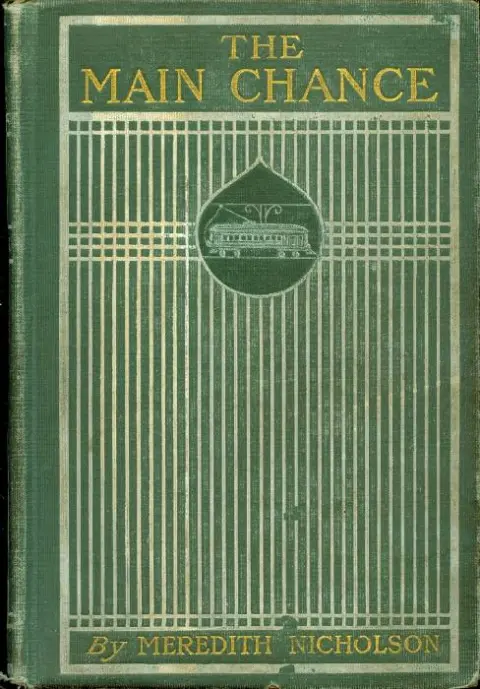
"The Main Chance" by Meredith Nicholson is a novel written in the early 20th century. The story introduces John Saxton, who has relocated to Clarkson to manage the troubled investments of a group of Eastern investors. The narrative sets up the challenges he faces in this new environment, highlighting his past failures in ranching and the complexities of the Western landscape wrapped around business and social interactions. At the start of the novel, Saxton arrives in Clarkson and meets William Porter, the president of the local bank, who advises him about navigating the financial landscape of the region. Saxton, seeking to prove himself after a failed venture in Wyoming, grapples with his reputation and the expectations of those around him. He reflects on his past while settling into his new office and prepares for the uphill battle of managing his clients' difficult investments. The introduction of intriguing side characters, including Porter and the lively Warrick Raridan, hints at the social undertones and relationships that will develop as the story unfolds.
Introduction adapted from the source catalogue; source summaries may be automatically generated.
Free to read · English · 111,703 words · No account needed
MAKE TIME FOR A GOOD BOOK
On by default. Untick to stop anonymous reading totals. Each page counts after 10 seconds in view. How this works.
Anonymous counting is on unless you have switched it off.
"I vote twenty-five hundred and ninety-seven shares of the common stock of this company; you gentlemen haven't more than that, have you?" The fact was that the three officers present owned only one share each as their strict legal qualification for holding office.
"I think the minutes ought to show," said the secretary, "that these were the only shares represented, and that due advertisement was published according to law, but that owing to the loss of the stock register, written notice to individual stockholders was given only to such holders of certificates as disclosed themselves."
"That's all right," said Margrave. "You fix it up, Barnes, and you'd better get Congreve to see that it's done with the legal frills." Congreve was the local counsel of Margrave's railroad, and was a man that could be trusted.
"I move," said Barnes, "that we proceed to the election of officers for
the ensuing year."
"And I move," said Percival, "that the secretary be instructed to cast the ballot of the stockholders for Timothy Margrave for president."
"Consent," exclaimed Barnes, hurriedly.
Steps could be heard in the outer hall, and Margrave looked at his
watch.
"I move that we adjourn to meet at my office at two o'clock, to conclude the election of officers."
Some one was shaking the outside door.
"Can't we finish now?" asked Horton, who had been promised the vice-presidency. He and the other officers were afraid of Margrave, and were reluctant to have their own elections deferred even for a few hours.
There was another knock at the door.
"At two o'clock," said Margrave decisively, as the knocking at the door was renewed. He gathered up his certificates and prepared to leave.
Saxton, standing with Fenton in the dark hall, referred to his watch
again.
"Shall we go in?" he asked.
The lawyer dropped the knob of the door and drew back out of the way.
"It's too bad it's glass," said Saxton, setting his shoulder against the wooden frame over the lock. The lock held, but the door bent away from it. He braced his feet and drove his shoulder harder into the corner, at the same time pressing his hip against the lock. It refused to yield, but the glass cracked, and finally half of it fell with a crash to the floor within.
"Don't hurry yourselves, gentlemen," said Fenton, coolly, speaking through the ragged edges of broken glass. Saxton thrust his hand in to the catch and opened the door.
"Why, it's only Fenton," called Margrave in a pleasant tone to his associates, who had effected their exits safely into a rear room.
Your reading position is saved on this browser. Take it to another device with a library code. Reading pages adapt to text, rather than matching a printed edition.
Meredith Nicholson
Meredith Nicholson
Meredith Nicholson

Meredith Nicholson
BEHIND THE BOOK
This eBook is for the use of anyone anywhere in the United States and most other parts of the world at no cost and with almost no restrictions whatsoever. You may copy it, give it away or re-use it under the terms of the Project Gutenberg License included with this eBook or online at www.gutenberg.org. If you are not located in the United States, you will have to check the laws of the country where you are located before using this eBook. Read the source licence.
The original source file, including credits and licence, is retained by this library. Request an original-format copy at no charge. Please include the book title and Project Gutenberg identifier #37190.
KEEP YOUR CURIOSITY GOING
Coulson Kernahan

Maurice Baring
Frances Wright
Cécile Tormay

Frederic Jesup Stimson

W. H. P. (William Henry Pope) Jarvis