THE CLASSIC COLLECTION✦The WebCLASSIC FREE BOOKS
The Web
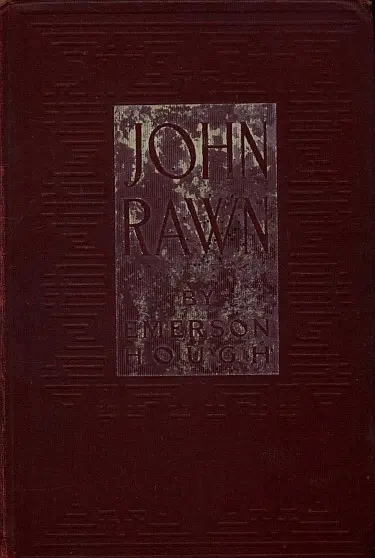
Emerson Hough
THE CLASSIC COLLECTION · 1916
"The Magnificent Adventure" by Emerson Hough is a historical novel likely written in the early 20th century. The narrative revolves around the life of Meriwether Lewis, a prominent figure in early American exploration, as he embarks on a journey of discovery and adventure. The novel intertwines themes of exploration with personal and romantic elements, particularly focusing on Lewis's relationship with his mother and a woman named Theodosia. The opening of the novel introduces us to the formidable Widow Lewis, who awaits the return of her son, Meriwether. Their reunion reveals not only the depth of their bond but also hints at Meriwether's destiny as a remarkable explorer. The dialogue conveys his mother's understanding of his spirit, marked by a sense of melancholy and resolute ambition. As Meriwether grapples with his identity and future, the stage is set for an adventure that will test his courage, resolve, and the relationships in his life. This initial encounter establishes the foundation for a rich exploration of both the external wilderness and the inner landscapes of human emotion as the story unfolds.
Introduction adapted from the source catalogue; source summaries may be automatically generated.
Free to read · English · 88,579 words · No account needed
MAKE TIME FOR A GOOD BOOK
On by default. Untick to stop anonymous reading totals. Each page counts after 10 seconds in view. How this works.
Anonymous counting is on unless you have switched it off.
"I am late, mother," said he at length, as he turned and, seating himself at her feet, threw his arm across her lap--himself but boy again now, and not the hunter and the man.
She stroked his dark hair, not foolishly fond, but with a sort of stern maternal care, smoothing it back in place where it belonged, straightening out the riot it had assumed. It made a mane above his forehead and reached down his neck to his shoulders, so heavy that where its dark mass was lifted it showed the skin of his neck white beneath.
"You are late, yes."
"And you waited--so long?"
"I am always waiting for you, Merne," said she. She used the Elizabethan vowel, as one should pronounce "bird," with no sound of "u"--"Mairne," the name sounded as she spoke it. And her voice was full and rich and strong, as was her son's; musically strong.
"I am always waiting for you, Merne," said she. "But I long ago learned not to expect anything else of you." She spoke with not the least reproach in her tone. "No, I only knew that you would come back in time, because you told me that you would."
"And you did not fear for me, then--gone overnight in the woods?" He half smiled at that thought himself.
"You know I would not. I know you, what you are--born woodsman. No, I trust you to care for yourself in any wild country, my son, and to come back. And then--to go back again into the forest. When will it be, my son? Tomorrow? In two days, or four, or six? Sometime you will go to the wilderness again. It draws you, does it not?"
She turned her head slightly toward the west, where lay the forest from which the boy had but now emerged. He did not smile, did not deprecate. He was singularly mature in his actions, though but eighteen years of age.
"I did not desert my duty, mother," said he at length.
"Oh, no, you would not do that, Merne!" returned the widow.
"Please, mother," said he suddenly, "I want you to call me by my full name--that of your people. Am I not Meriwether, too?"
The hand on his forehead ceased its gentle movement, fell to its owner's lap. A sigh passed his mother's set lips.
"Yes, my son, Meriwether," said she. "This is the last journey! I have lost you, then, it seems? You do not wish to be my boy any longer? You are a man altogether, then?"
"I am Meriwether Lewis, mother," said he gravely, and no more.
"Yes!" She spoke absently, musingly. "Yes, you always were!"
Your reading position is saved on this browser. Take it to another device with a library code. Reading pages adapt to text, rather than matching a printed edition.
Emerson Hough
Emerson Hough
Emerson Hough
Emerson Hough
BEHIND THE BOOK
This eBook is for the use of anyone anywhere in the United States and most other parts of the world at no cost and with almost no restrictions whatsoever. You may copy it, give it away or re-use it under the terms of the Project Gutenberg License included with this eBook or online at www.gutenberg.org. If you are not located in the United States, you will have to check the laws of the country where you are located before using this eBook. Read the source licence.
The original source file, including credits and licence, is retained by this library. Request an original-format copy at no charge. Please include the book title and Project Gutenberg identifier #30298.
KEEP YOUR CURIOSITY GOING
Cécile Tormay

Moritz Busch
Coulson Kernahan
John L. Ransom

Maurice Baring
Frances Wright