THE CLASSIC COLLECTION✦Primitive Psycho-Therapy and QuackeryCLASSIC FREE BOOKS
Primitive Psycho-Therapy and Quackery
Robert Means Lawrence
THE CLASSIC COLLECTION · 1898
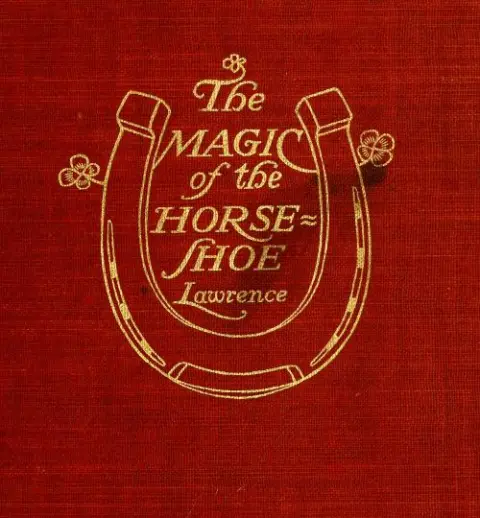
"The Magic of the Horse-Shoe, with Other Folk-Lore Notes" by Robert Means Lawrence is a collection of folk-lore explorations written in the late 19th century. The work delves into the origins and significances of various superstitions and popular beliefs, with a particular focus on the cultural history and magical connotations surrounding the horse-shoe as a talisman. It examines how such symbols have influenced human behavior and cultural practices over time, making it a rich resource for those interested in folklore and superstitious traditions. At the start of the text, the author introduces the study of popular customs and beliefs as a window into early human thought. The preface sets the tone for the exploration by discussing the evolution of the horse-shoe from a practical item to a symbol imbued with luck and supernatural properties, detailing historical practices and anecdotes, including a tale of Queen Elizabeth I and the tradition of giving horse-shoes as tokens of reverence. The author emphasizes the horse-shoe's dual significance: as a pragmatic tool for horses’ welfare and as a guardian against malevolent forces, showcasing the depth of cultural traditions attached to this seemingly simple object.
Introduction adapted from the source catalogue; source summaries may be automatically generated.
Free to read · English · 78,485 words · No account needed
MAKE TIME FOR A GOOD BOOK
On by default. Untick to stop anonymous reading totals. Each page counts after 10 seconds in view. How this works.
Anonymous counting is on unless you have switched it off.
Iron, as a protective charm, 26-40.
use of, in folk-medicine, 36, 37.
religious prejudice against, 29.
Iron and flint, affinity between, 33.
Iron-workers, regarded as sorcerers, 48.
Jinn, the, mythical demons, 29, 30.
Kalevalla, ancient Finnish epic poem, 42.
Legends, 30-32, 43-46, 50, 69, 70, 79, 91, 128-136, 154, 155, 160, 192, 193, 227, 228, 236, 237.
Leonard, Saint, 124, 126.
Lesbos, charm against insects in vogue in, 305.
Lincoln Cathedral, 123, 124.
Lincoln Imp, 123.
Locusts invade fields, 295.
Loki, the Principle of Evil in Northern mythology, 331.
Lutins, mischievous imps, 179, 236.
Mano cornuta, or anti-witch gesture, 12-14.
Medical superstitions regarding days, 251, 252.
Metal working and sorcery, early association of, 53.
Mexican priests, use magical ointment as a charm against wild
beasts, 307.
Moon, superstitions concerning the, 19-21.
Moon-worship, 19.
Moonwort, 25.
Nagendra, Cingalese serpent-king, 65.
Nail, story of the, 6, 7.
Neapolitan evil-eye amulets, survivals of ancient Chaldean symbols, 13.
Neck, or Scandinavian river-spirit, 38.
North, the unblessed heathen quarter, 122, 123.
Numbers, the luck of odd, 302-339.
early significance of, 312-314.
the number three, 315-318.
the number seven, 318-324.
odd numbers in witchcraft, 324-327.
odd numbers in folk-medicine, 327-330.
thirteen, 331-339.
Nundinæ, or market days, 245.
Oakham castle in Rutlandshire, 4, 5.
Odd numbers, 312-339.
Ormuzd, chief deity of the Parsees, 57, 223.
Passover, Feast of the, 7, 8, 257.
Perforated stones as talismans, 75, 97.
Persians, share popular distrust of the number thirteen, 336.
Phelo, Chinese idol, 155.
Popiel II., king of Poland, pursued by rats, 282.
Position of horse-shoe as amulet, 94-103.
Prascovia, Saint, 274, 275.
Prometheus, myth concerning, 227, 228.
Put-sign, Egyptian, 66.
Pythagorean doctrine of numbers, 312.
Rats and mice as avengers, 279, 284.
Rats rhymed to death, 305.
Raven, the, a portentous bird, 285.
Recapitulation of theories of the origin of the horse-shoe
superstition, 137, 138.
Rickets, cure for, in Scotland, 51.
Rites connected with sneezing, 230-233.
Rowan-tree, 92, 102, 196.
Salt, the folk-lore of common, 154-205.
origin and history of, 154-157.
uncongenial to witches and devils, 158-161.
the Latin word sal, 161-163.
employed to confirm an oath, 164-166.
salt-spilling as an omen, 166-172.
helping to salt at table, 172, 173.
as a protection to infants, 173-177.
as a magical substance, 177-184.
miscellaneous remarks on, 184-196.
used as money, 186, 187.
regarded as an obnoxious article, 189-191.
The Value of Salt. A Roman folk-tale, 193-196.
the salt-cellar, 196-205.
Saxon superstitions, 260.
Septentriones, or seven stars of the constellation of the Great
Bear, 319.
Serpent as an amuletic symbol, 58-60, 64, 65.
as a tutelary divinity, 61.
serpent-worship, 59-61.
Serpentine shape of the horse-shoe, 58-65.
Seven, the number, 318-324.
Shastra, or holy books of the Hindus, 224.
Sneezing, the omens of, 206-238.
in ancient times, 206-211.
mediæval beliefs concerning, 211-214.
modern superstitions about, 215-220.
doctrine of demoniacal possession, 220-227.
salutation after sneezing, 227-236.
alleged origin of custom, 229, 230.
legends, 236-238.
Spite-stake, 79.
Talismanic coiffure, 14.
Talismans, complex, of the Tibetans, 100.
Tantura, head-dress, 15.
Teutonic beliefs about sneezing, 215.
Thieves fear to steal on a Friday, in Palermo, 271.
Thirteen, the number, 331-339.
Thirteen Club, 334.
Three, the number, 315-318.
a favorite of witches, 316.
Threshold, a sacred place, 96-98.
Triads, in the codes of ancient Welsh laws, 315.
Your reading position is saved on this browser. Take it to another device with a library code. Reading pages adapt to text, rather than matching a printed edition.
BEHIND THE BOOK
This eBook is for the use of anyone anywhere in the United States and most other parts of the world at no cost and with almost no restrictions whatsoever. You may copy it, give it away or re-use it under the terms of the Project Gutenberg License included with this eBook or online at www.gutenberg.org. If you are not located in the United States, you will have to check the laws of the country where you are located before using this eBook. Read the source licence.
The original source file, including credits and licence, is retained by this library. Request an original-format copy at no charge. Please include the book title and Project Gutenberg identifier #57411.
KEEP YOUR CURIOSITY GOING
Cécile Tormay

Moritz Busch
John L. Ransom

Maurice Baring
Frances Wright
Cécile Tormay