THE CLASSIC COLLECTION✦Primitive Psycho-Therapy and QuackeryCLASSIC FREE BOOKS
Primitive Psycho-Therapy and Quackery
Robert Means Lawrence
THE CLASSIC COLLECTION · 1898
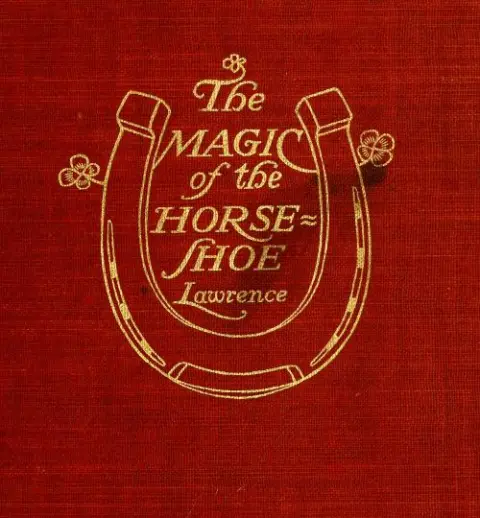
"The Magic of the Horse-Shoe, with Other Folk-Lore Notes" by Robert Means Lawrence is a collection of folk-lore explorations written in the late 19th century. The work delves into the origins and significances of various superstitions and popular beliefs, with a particular focus on the cultural history and magical connotations surrounding the horse-shoe as a talisman. It examines how such symbols have influenced human behavior and cultural practices over time, making it a rich resource for those interested in folklore and superstitious traditions. At the start of the text, the author introduces the study of popular customs and beliefs as a window into early human thought. The preface sets the tone for the exploration by discussing the evolution of the horse-shoe from a practical item to a symbol imbued with luck and supernatural properties, detailing historical practices and anecdotes, including a tale of Queen Elizabeth I and the tradition of giving horse-shoes as tokens of reverence. The author emphasizes the horse-shoe's dual significance: as a pragmatic tool for horses’ welfare and as a guardian against malevolent forces, showcasing the depth of cultural traditions attached to this seemingly simple object.
Introduction adapted from the source catalogue; source summaries may be automatically generated.
Free to read · English · 78,485 words · No account needed
MAKE TIME FOR A GOOD BOOK
On by default. Untick to stop anonymous reading totals. Each page counts after 10 seconds in view. How this works.
Anonymous counting is on unless you have switched it off.
[248] L. Austine Waddell, B. A., The Buddhism of Tibet, p. 512.
[249] Mythology and Monuments of Ancient Athens.
[250] Rodolfo Lanciani, Pagan and Christian Rome.
[251] Thomas Wright, The Celt, the Roman, and the Saxon.
[252] Read at the Annual Meeting of the American Folk-Lore Society, New
York, December 29, 1896.
[253] Banier’s Mythology. London, 1739.
[254] Bancroft, Native Races, vol. ii. p. 353.
[255] J. J. L. Ratton, M. D., M. C., A Hand-Book of Common Salt.
[256] J. B. Friedrich, Die Symbolik und Mythologie der Natur.
[257] Calmet’s Dictionary of the Holy Bible.
[258] Philemon Holland, The Morals or Miscellane Works of Plutarch.
[259] Horst, Dæmonomagie. Frankfurt, 1818.
[260] Richalmus, Liber Revelationum de Insidiis et Versutiis Dæmonum
adversus Homines.
[261] Dr. Heinrich von Wlislocki, Volksglaube und religiöser Brauch der
Magyar, p. 151.
[262] W. Mannhardt, Germanische Mythen. Berlin, 1858.
[263] W. Crooke, B. A., p. 147.
[264] Alexander Adam, LL. D., Roman Antiquities.
[265] Grosses Universal Lexicon. Leipzig and Halle, 1742.
[266] John Borrow, F. R. S., Travels in China.
[267] Natural History, book xxxi. ch. 41.
[268] Elias Artista Hermetica, Das Geheimniss vom Salz.
[269] Il a répandu le sel à pleines mains dans ses écrits.
[270] Baret, 1580.
[271] Brewer’s Dictionary of Phrase and Fable.
[272] Edinburgh Monthly Magazine, June, 1817.
[273] Chevalier d’Arvieux, Memoir. Paris, 1735.
[274] J. J. Manley, M. A., Salt and Other Condiments, p. 90.
[275] Karl Baedeker, The Eastern Alps, p. 124. 1895.
[276] Spectator, vol. 66. 1891.
[277] Gentleman’s Magazine, part i. 1833.
[278] Felix Liebrecht, Die Symbolik und Mythologie der Natur.
[279] Owen on Serpents.
[280] The writer is indebted for this translation to John P. Hopkinson,
Esq.
[281] Felix Liebrecht, Zur Volkskunde. 1877.
[282] Shakespeare refers to this subject in several passages, and among
them the following:—
How came her eyes so bright? Not with salt tears.
Midsummer Night’s Dream.
With tears as salt as sea.
2 Henry VI.
[283] Current Superstitions, edited by Fanny D. Bergen.
[284] Clifton Johnson, What they say in New England, p. 92. 1896.
[285] M. J. Schleiden, Das Salz, p. 73.
[286] The Study of Sociology, p. 5.
[287] Revue des traditions populaires, tome i. 1886.
[288] A Theological and Philosophical Treatise of the Nature and Goodnesse of Salt. Imprinted by Felix Kyngston for Richard Boyle at London, 1612.
[289] James Napier, Folk-Lore, p. 33.
[290] Pitré, vol. iv. p. 102.
[291] R. T. Hampson, Medii Ævi Kalendarium. London, 1841.
[292] Pitré, vol. ii. p. 161.
[293] Dr. Heino Pfannenschmid, Das Weihwasser im heidnischen und
christlichen Cultus.
[294] Notes and Queries, 6th series, vol. ix. p. 428. May, 1884.
[295] Century Dictionary.
[296] Francis Grose, Popular Superstitions.
[297] Spenser’s Faerie Queene.
[298] Clara Erskine Clement, Naples.
[299] Grimm’s Teutonic Mythology.
[300] The Folk-Lore Journal, vol. vii. 1889.
[301] Journal of American Folk-Lore, No. xviii. 1892.
[302] The Washington Post, November 27, 1894.
[303] William Henderson, Notes on the Folk-Lore of the Northern
Countries of England.
[304] Journal of American Folk-Lore, No. 19. 1892.
[305] Keightley’s Fairy Mythology.
[306] Giuseppe Pitré, Usi e costumi, credenze e pregiudizi del popolo Siciliano, vol. iii. p. 426. Palermo, 1889.
[307] Leechdoms, Wortcunning, and Starcraft, edited by Rev. Oswald
Cockayne. London, 1865.
Your reading position is saved on this browser. Take it to another device with a library code. Reading pages adapt to text, rather than matching a printed edition.
BEHIND THE BOOK
This eBook is for the use of anyone anywhere in the United States and most other parts of the world at no cost and with almost no restrictions whatsoever. You may copy it, give it away or re-use it under the terms of the Project Gutenberg License included with this eBook or online at www.gutenberg.org. If you are not located in the United States, you will have to check the laws of the country where you are located before using this eBook. Read the source licence.
The original source file, including credits and licence, is retained by this library. Request an original-format copy at no charge. Please include the book title and Project Gutenberg identifier #57411.
KEEP YOUR CURIOSITY GOING
Cécile Tormay

Moritz Busch
John L. Ransom

Maurice Baring
Frances Wright
Cécile Tormay