THE CLASSIC COLLECTION✦Primitive Psycho-Therapy and QuackeryCLASSIC FREE BOOKS
Primitive Psycho-Therapy and Quackery
Robert Means Lawrence
THE CLASSIC COLLECTION · 1898
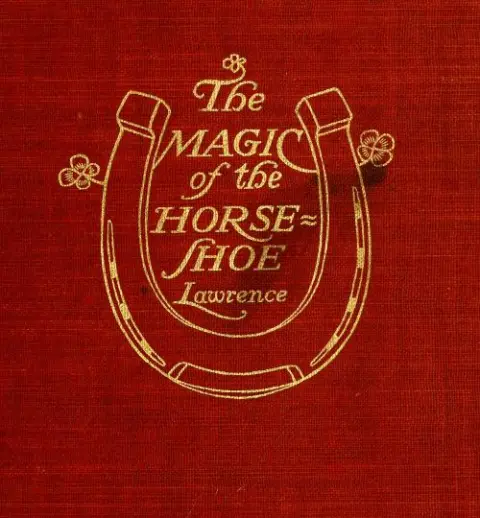
"The Magic of the Horse-Shoe, with Other Folk-Lore Notes" by Robert Means Lawrence is a collection of folk-lore explorations written in the late 19th century. The work delves into the origins and significances of various superstitions and popular beliefs, with a particular focus on the cultural history and magical connotations surrounding the horse-shoe as a talisman. It examines how such symbols have influenced human behavior and cultural practices over time, making it a rich resource for those interested in folklore and superstitious traditions. At the start of the text, the author introduces the study of popular customs and beliefs as a window into early human thought. The preface sets the tone for the exploration by discussing the evolution of the horse-shoe from a practical item to a symbol imbued with luck and supernatural properties, detailing historical practices and anecdotes, including a tale of Queen Elizabeth I and the tradition of giving horse-shoes as tokens of reverence. The author emphasizes the horse-shoe's dual significance: as a pragmatic tool for horses’ welfare and as a guardian against malevolent forces, showcasing the depth of cultural traditions attached to this seemingly simple object.
Introduction adapted from the source catalogue; source summaries may be automatically generated.
Free to read · English · 78,485 words · No account needed
MAKE TIME FOR A GOOD BOOK
On by default. Untick to stop anonymous reading totals. Each page counts after 10 seconds in view. How this works.
Anonymous counting is on unless you have switched it off.
In order to expel snakes, insects, and vermin from their dwellings, the Bulgarian women of Turkey, on the last day of February, endeavor to frighten the creatures by beating copper vessels all over the house, while shouting, “Out with you, snakes, scorpions, flies, bugs, and fleas!” One of the vessels is then taken into the court-yard, the pests being expected to follow it. And in Serfo, an island of the Grecian archipelago, at the commencement of the vintage a bunch of grapes is thrown into each house to expel the vermin, while this formula is repeated: “The black grape will sicken you; the black grape will poison you! Out with you, rats and fleas!”[491]
In Albania, when locusts or cockchafers devastate the fields, a number of women, having caught some of the insects, form a mock funeral procession, and proceed to drown them in some convenient stream. And while on their way thither they chant in turn the following dirge, which all repeat in chorus:—
O locusts, O cockchafers, parents kind,
Orphaned you have left us all behind.
And this proceeding is thought to be destructive to the whole swarm of
insects.[492]
The following charm against foxes was formerly used in France, and was to be repeated thrice a week:—
Foxes, both male and female, I conjure you in the name of the Holy Trinity, that ye neither touch nor carry off any of my fowls, whether roosters, hens or chickens; nor eat their nests, nor suck their blood, nor break their eggs, nor do them any harm whatever.[493]
The Roman Catholic Church formerly sanctioned the use of certain sentences as charms against vipers, and the following may serve as a specimen:—
I conjure thee, O serpent, in this hour, by the five holy wounds of Our Lord, that thou remove not out of this place, as certainly as God was born of a pure Virgine. Otherwise, I conjure thee, serpent, by Our Lady St. Mary, that thou obey me, as wax obeyeth the fire, and as fire obeyeth water, that thou neither hurt me nor any other Christian, as certainly as God was born of an immaculate Virgine, in which respect I take thee up. In Nomine Patris et Filii et Spiritus Sancti.… Otherwise, O vermine, thou must come as God came unto the Jews.[494]
When a Turk chances to encounter a serpent, he is wont to invoke the aid of Chah-Miran, the serpent-king, and in the name of this deity he bids the reptile depart. Now Chah-Miran has long been dead, but the astute Turk reasons that serpents are not aware of this fact, for, if they were, the human race would be helpless against their attacks.[495]
Your reading position is saved on this browser. Take it to another device with a library code. Reading pages adapt to text, rather than matching a printed edition.
BEHIND THE BOOK
This eBook is for the use of anyone anywhere in the United States and most other parts of the world at no cost and with almost no restrictions whatsoever. You may copy it, give it away or re-use it under the terms of the Project Gutenberg License included with this eBook or online at www.gutenberg.org. If you are not located in the United States, you will have to check the laws of the country where you are located before using this eBook. Read the source licence.
The original source file, including credits and licence, is retained by this library. Request an original-format copy at no charge. Please include the book title and Project Gutenberg identifier #57411.
KEEP YOUR CURIOSITY GOING
Cécile Tormay

Moritz Busch
John L. Ransom

Maurice Baring
Frances Wright
Cécile Tormay