THE CLASSIC COLLECTION✦Primitive Psycho-Therapy and QuackeryCLASSIC FREE BOOKS
Primitive Psycho-Therapy and Quackery
Robert Means Lawrence
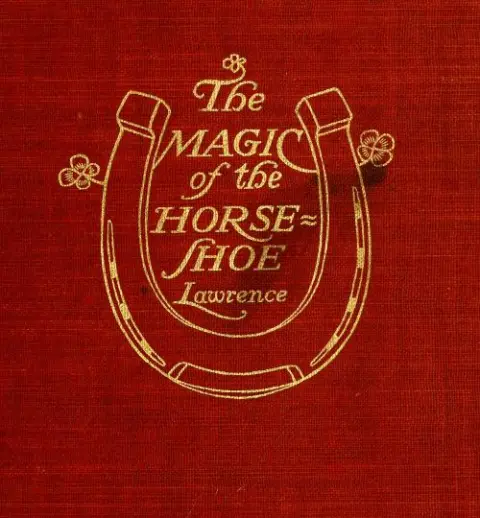
THE CLASSIC COLLECTION · 1898
"The Magic of the Horse-Shoe, with Other Folk-Lore Notes" by Robert Means Lawrence is a collection of folk-lore explorations written in the late 19th century. The work delves into the origins and significances of various superstitions and popular beliefs, with a particular focus on the cultural history and magical connotations surrounding the horse-shoe as a talisman. It examines how such symbols have influenced human behavior and cultural practices over time, making it a rich resource for those interested in folklore and superstitious traditions. At the start of the text, the author introduces the study of popular customs and beliefs as a window into early human thought. The preface sets the tone for the exploration by discussing the evolution of the horse-shoe from a practical item to a symbol imbued with luck and supernatural properties, detailing historical practices and anecdotes, including a tale of Queen Elizabeth I and the tradition of giving horse-shoes as tokens of reverence. The author emphasizes the horse-shoe's dual significance: as a pragmatic tool for horses’ welfare and as a guardian against malevolent forces, showcasing the depth of cultural traditions attached to this seemingly simple object.
Introduction adapted from the source catalogue; source summaries may be automatically generated.
Free to read · English · 78,485 words · No account needed
MAKE TIME FOR A GOOD BOOK
On by default. Untick to stop anonymous reading totals. Each page counts after 10 seconds in view. How this works.
Anonymous counting is on unless you have switched it off.
“As much as the bread we eat,” was her reply; and he said within himself, “She must, as I thought, love me the most of all; for bread is the first necessary of our existence, without which we cannot live. She means, therefore, that she loves me so much she could not live without me.”
Then he called the second daughter by herself, and said to her, “How much do you love me?”
And she answered, “As much as wine.”
“That is a good answer too,” said the king to himself. “It is true she does not seem to love me quite so much as the eldest; but still, scarcely can one live without wine, so that there is not much difference.”
Then he called the youngest by herself, and said to her, “And you, how much do you love me?”
And she answered, “As much as salt.”
Then the king said, “What a contemptible comparison! She only loves me as much as the cheapest and commonest thing that comes to the table. This is as much as to say, she doesn’t love me at all. I always thought it was so. I will never see her again.”
Then he ordered that a wing of the palace should be shut up from the rest, where she should be served with everything belonging to her condition in life, but where she should live by herself apart, and never come near him.
Here she lived, then, all alone. But though her father fancied she did not care for him, she pined so much at being kept away from him, that at last she was worn out, and could bear it no longer.
The room that had been given her had no windows on the street, that she might not have the amusement of seeing what was going on in the town, but they looked upon an inner court-yard. Here she sometimes saw the cook come out and wash vegetables at the fountain.
“Cook, cook!” she called one day, as she saw him pass thus
under the window.
The cook looked up with a good-natured face, which gave her
encouragement.
“Don’t you think, cook, I must be very lonely and miserable up
here all alone?”
“Yes, Signorina,” he replied; “I often think I should like to help you to get out; but I dare not think of it, the king would be so angry.”
“No, I don’t want you to do anything to disobey the king,” answered the princess; “but would you really do me a favor, which would make me very grateful indeed?”
“Oh, yes, Signorina, anything which I can do without disobeying the king,” replied the faithful servant.
Your reading position is saved on this browser. Take it to another device with a library code. Reading pages adapt to text, rather than matching a printed edition.
BEHIND THE BOOK
This eBook is for the use of anyone anywhere in the United States and most other parts of the world at no cost and with almost no restrictions whatsoever. You may copy it, give it away or re-use it under the terms of the Project Gutenberg License included with this eBook or online at www.gutenberg.org. If you are not located in the United States, you will have to check the laws of the country where you are located before using this eBook. Read the source licence.
The original source file, including credits and licence, is retained by this library. Request an original-format copy at no charge. Please include the book title and Project Gutenberg identifier #57411.
KEEP YOUR CURIOSITY GOING
Cécile Tormay

Moritz Busch
John L. Ransom

Maurice Baring
Frances Wright
Cécile Tormay