
The story of Betty
Carolyn Wells
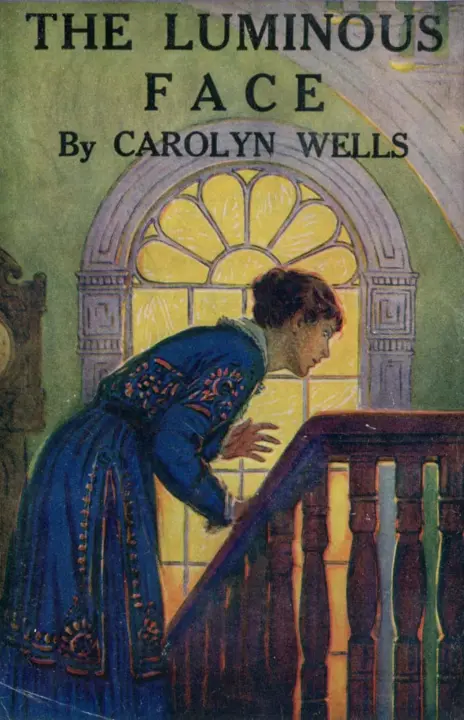
THE CLASSIC COLLECTION · 1921
"The Luminous Face" by Carolyn Wells is a mystery novel written in the early 20th century. The story unfolds around the suspicious death of Robert Gleason, which is initially treated as a suicide but quickly reveals layers of intrigue and potential foul play. Key characters include Doctor Ely Davenport, a physician with a strong sense of self-importance; Pollard, a man with a mysterious connection to Gleason; and Phyllis Lindsay, who is revealed to have had a complicated relationship with the deceased. At the start of the narrative, a group of acquaintances discusses the unsolved murder of Gleason, establishing a tense atmosphere as they contemplate the nature of crime and motives. The dialogue hints at the complexity of human emotions surrounding the concept of murder. Soon after, a frantic call from Gleason claiming he has been shot propels Doctor Davenport into action, ultimately leading to the discovery of Gleason's body and raising questions about the circumstances of his death. The opening effectively sets the stage for a tangled web of relationships and motives that will likely unfold as the investigation progresses.
Introduction adapted from the source catalogue; source summaries may be automatically generated.
Free to read · English · 63,786 words · No account needed
MAKE TIME FOR A GOOD BOOK
On by default. Untick to stop anonymous reading totals. Each page counts after 10 seconds in view. How this works.
Anonymous counting is on unless you have switched it off.
“You bet I do! I ought to. She’s my sister’s stepdaughter.”
“Phyllis Lindsay!” cried Barry, involuntarily speaking the name.
“The same,” said Gleason, smiling; “and as I’m due there for dinner, I’ll be toddling now to make myself fine for the event.”
With a general beaming smile of good nature that included all the
group, Gleason went away.
For a few moments no one spoke, and then Monroe began, “As I was saying, there are only three motives for murder—and I stick to that. But you were about to say, Pollard——?”
“I was about to say that you have omitted the most frequent and most impelling motive. It doesn’t always result in the fatal stroke, but as a motive, it can’t be beat.”
“Go on—what is it?”
“Just plain dislike.”
“Oh, hate,” said Monroe.
“Not at all. Hate implies a reason, a grievance. But I mean an ineradicable, and unreasonable dislike—why, simply a case of:
‘I do not like you, Doctor Fell,
The reason why I cannot tell;
But this I know and know full well,
I do not like you, Doctor Fell.’
One Tom Brown wrote that, and it’s a bit of truth, all right!”
“One Martial said it before your friend Brown,” informed Doctor
Davenport. “He wrote:
‘Non amo, te, Sabidi,
nec possum dicere quore;
Hoc tantum possum dicere,
non amo te.’
Which is, being translated for the benefit of you unlettered ones, ‘I do not love thee, Sabidius, nor can I say why; this only can I say, I do not love thee.’ There’s a French version, also.”
“Never mind, Doc,” Pollard interrupted, “we don’t want your erudition, but your opinion. You say you know psychology as well as physiology; will you agree that a strong motive for murder might be just that unreasonable dislike—that distaste of seeing a certain person around?”
“No, not a strong motive,” said Davenport, after a short pause for thought. “A slight motive, perhaps, by which I mean a fleeting impulse.”
“No,” persisted Pollard, “an impelling—a compelling motive. Why, there’s Gleason now. I can’t bear that man. Yet I scarcely know him. I’ve met him but a few times—had little or no personal conversation with him—yet I dislike him. Not detest or hate or despise—merely dislike him. And, some day I’m going to kill him.”
“Going to kill all the folks you dislike?” asked Barry, indifferently.
Your reading position is saved on this browser. Take it to another device with a library code. Reading pages adapt to text, rather than matching a printed edition.
Carolyn Wells

Carolyn Wells & Harry Persons Taber

Carolyn Wells
Carolyn Wells
BEHIND THE BOOK
This eBook is for the use of anyone anywhere in the United States and most other parts of the world at no cost and with almost no restrictions whatsoever. You may copy it, give it away or re-use it under the terms of the Project Gutenberg License included with this eBook or online at www.gutenberg.org. If you are not located in the United States, you will have to check the laws of the country where you are located before using this eBook. Read the source licence.
The original source file, including credits and licence, is retained by this library. Request an original-format copy at no charge. Please include the book title and Project Gutenberg identifier #42714.
KEEP YOUR CURIOSITY GOING
Coulson Kernahan

Maurice Baring
Frances Wright
Cécile Tormay

Frederic Jesup Stimson

W. H. P. (William Henry Pope) Jarvis