
The story of Betty
Carolyn Wells
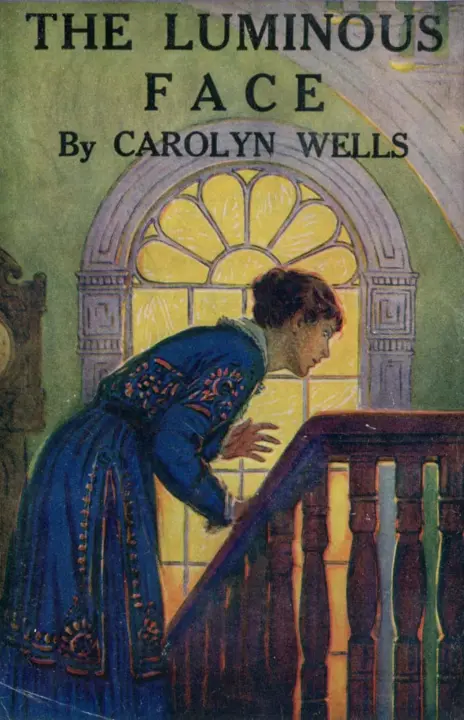
THE CLASSIC COLLECTION · 1921
"The Luminous Face" by Carolyn Wells is a mystery novel written in the early 20th century. The story unfolds around the suspicious death of Robert Gleason, which is initially treated as a suicide but quickly reveals layers of intrigue and potential foul play. Key characters include Doctor Ely Davenport, a physician with a strong sense of self-importance; Pollard, a man with a mysterious connection to Gleason; and Phyllis Lindsay, who is revealed to have had a complicated relationship with the deceased. At the start of the narrative, a group of acquaintances discusses the unsolved murder of Gleason, establishing a tense atmosphere as they contemplate the nature of crime and motives. The dialogue hints at the complexity of human emotions surrounding the concept of murder. Soon after, a frantic call from Gleason claiming he has been shot propels Doctor Davenport into action, ultimately leading to the discovery of Gleason's body and raising questions about the circumstances of his death. The opening effectively sets the stage for a tangled web of relationships and motives that will likely unfold as the investigation progresses.
Introduction adapted from the source catalogue; source summaries may be automatically generated.
Free to read · English · 63,786 words · No account needed
MAKE TIME FOR A GOOD BOOK
On by default. Untick to stop anonymous reading totals. Each page counts after 10 seconds in view. How this works.
Anonymous counting is on unless you have switched it off.
“Mightn’t he have telephoned after the first shot,” Pollard said, his air more that of one thinking aloud, than of one propounding a theory, “and then with a spasmodic gesture or something, have fired the second shot by accident?”
“The second shot was fired after the man was dead,” repeated Doctor
Davenport, positively.
“Then there was a murderer,” Belknap said, “which fact we have decided upon anyway. And an unusually clever murderer, too.”
“But I can’t see it,” Millicent Lindsay said, speaking in a low moaning voice. “Why would anybody shoot my brother after he had already killed him? I can’t see any theory that would explain that.”
“Nor I,” declared the doctor. “It’s the queerest thing I ever knew.”
“Leave that point for the moment,” Belknap advised, “if we get other facts they may throw light on that. Do any of you think that Mr Gleason,” he glanced furtively at Mrs Lindsay to see if he might go on, “was acquainted with—with young ladies——”
“Not in our set?” cried Louis; “he most assuredly was. Now you’re getting on the right tack! You don’t mind this talk, Millicent?”
“No; go on,” returned Mrs Lindsay. “I want to know the truth. And, of course, my brother was no saint. Moreover, if he chose to entertain chorus girls or that sort of people he had a perfect right to do so. I’m not surprised or shocked at anything of that kind. But if they were in any way responsible for his death, I want to know it. Do you know anything definite, Louis?”
“No,” was the reply, but the youth went white.
Belknap studied his face, feeling sure that to go white was not absolutely unusual with the young man. He was apparently anaemic, unstrung, and very emotional. His lips twitched, and he curled and uncurled his fingers.
As a matter of fact, Belknap was looking toward Louis as a possible suspect. Though, as yet, he had no reason for such a suspicion.
“I do,” said Phyllis Lindsay, speaking for the first time during this discussion. “I know he was intimate with some moving picture actresses. He had their photographs in his rooms.”
“When were you there last?” asked Belknap suddenly.
“I don’t know—about a week ago, I think. I called in one day to see a new picture Mr Gleason had just bought.”
Her face was slightly flushed, but she was cool and composed of manner. Belknap despaired of getting any real information here.
Doctor Davenport looked at Phyllis.
“Did you leave anything there?” he asked abruptly.
“Leave anything?” she repeated.
“Yes,” impatiently. “Any of your belongings—wearing apparel?”
Your reading position is saved on this browser. Take it to another device with a library code. Reading pages adapt to text, rather than matching a printed edition.
Carolyn Wells

Carolyn Wells & Harry Persons Taber

Carolyn Wells

Carolyn Wells
BEHIND THE BOOK
This eBook is for the use of anyone anywhere in the United States and most other parts of the world at no cost and with almost no restrictions whatsoever. You may copy it, give it away or re-use it under the terms of the Project Gutenberg License included with this eBook or online at www.gutenberg.org. If you are not located in the United States, you will have to check the laws of the country where you are located before using this eBook. Read the source licence.
The original source file, including credits and licence, is retained by this library. Request an original-format copy at no charge. Please include the book title and Project Gutenberg identifier #42714.
KEEP YOUR CURIOSITY GOING
Coulson Kernahan

Maurice Baring
Frances Wright
Cécile Tormay

Frederic Jesup Stimson

W. H. P. (William Henry Pope) Jarvis