
The story of Betty
Carolyn Wells
THE CLASSIC COLLECTION · 1921
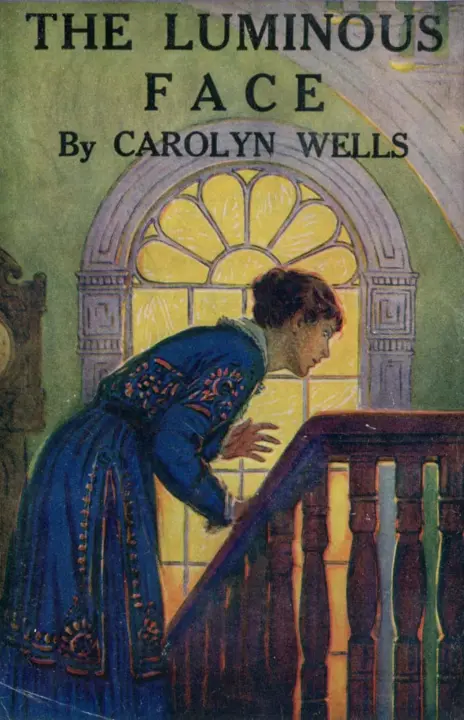
"The Luminous Face" by Carolyn Wells is a mystery novel written in the early 20th century. The story unfolds around the suspicious death of Robert Gleason, which is initially treated as a suicide but quickly reveals layers of intrigue and potential foul play. Key characters include Doctor Ely Davenport, a physician with a strong sense of self-importance; Pollard, a man with a mysterious connection to Gleason; and Phyllis Lindsay, who is revealed to have had a complicated relationship with the deceased. At the start of the narrative, a group of acquaintances discusses the unsolved murder of Gleason, establishing a tense atmosphere as they contemplate the nature of crime and motives. The dialogue hints at the complexity of human emotions surrounding the concept of murder. Soon after, a frantic call from Gleason claiming he has been shot propels Doctor Davenport into action, ultimately leading to the discovery of Gleason's body and raising questions about the circumstances of his death. The opening effectively sets the stage for a tangled web of relationships and motives that will likely unfold as the investigation progresses.
Introduction adapted from the source catalogue; source summaries may be automatically generated.
Free to read · English · 63,786 words · No account needed
MAKE TIME FOR A GOOD BOOK
On by default. Untick to stop anonymous reading totals. Each page counts after 10 seconds in view. How this works.
Anonymous counting is on unless you have switched it off.
“Go ahead, sir,” he agreed, “what do you want to know?”
“What time did Mr Pollard come in this afternoon?”
“What time, Henry?” the clerk asked the doorman.
“’Bout quarter past six,” was the reply. “I come on at six, and I’d been here a bit before Mr Pollard came along.”
“What did he do?” went on Prescott, a little less certain of his
convictions.
“Went up in the elevator.”
“Same elevator boy on now?”
“Yes, sir. The car’s up. Be down in a minute.”
It was; and the elevator boy related that he had taken Mr Pollard up as soon as he came into the hotel.
“Went right to his room, did he?”
“Yes, sir.” The woolly-headed one rolled his eyes in enjoyment of his sudden importance. “I knows he did, kase I watched after him.”
“Why did you look after him?”
“No reason, p’tikler. Only kase he’s such a fine gentleman. I most allus looks at him march down the hall. He marches like a—a platoon.”
“He does? And he marched straight to his room?”
“Yessuh.”
“When did you bring him down again?”
“’Bout an hour later, all dressed up in his glad raggses. Just like he
is now.”
“Just so. Now, during that hour do you know that Mr Pollard didn’t leave his room? Didn’t go down stairs again?”
“Not in my car, he didn’t. And he always uses my car.”
“Ask the other boy.” Prescott gave this order shortly. The scene was getting on his nerves. Pollard, quiet, calm, but superior. The clerk, ready to enjoy the detective’s discomfiture, if he failed to prove the point he was evidently trying hard to make. Black Bob, the elevator boy, his white teeth all in evidence, and his admiration for Pollard equally plain to be seen. And even the telephone girl, smirking from her switchboard nearby.
All of these were in sympathy with Pollard, and Prescott felt himself a rank outsider. But he persevered.
Joe, the other elevator boy, declared he had not carried Mr Pollard up or down that evening, and the clerk said there were but two cars.
“Go on, Mr Prescott,” Pollard adjured him. “I have prepared no
air-tight alibi.”
“Did any one here see Mr Pollard in his room,” the detective asked in desperation, and to his surprise a bellhop piped out, “I did.”
“You did!” and Prescott turned to him. “How did you happen to do so?”
“He rang, and I went up there, and he gave me a letter to mail for him. It was a wide letter, too wide to go in the chute.”
“Did you mail it?”
Your reading position is saved on this browser. Take it to another device with a library code. Reading pages adapt to text, rather than matching a printed edition.
Carolyn Wells

Carolyn Wells & Harry Persons Taber

Carolyn Wells

Carolyn Wells
BEHIND THE BOOK
This eBook is for the use of anyone anywhere in the United States and most other parts of the world at no cost and with almost no restrictions whatsoever. You may copy it, give it away or re-use it under the terms of the Project Gutenberg License included with this eBook or online at www.gutenberg.org. If you are not located in the United States, you will have to check the laws of the country where you are located before using this eBook. Read the source licence.
The original source file, including credits and licence, is retained by this library. Request an original-format copy at no charge. Please include the book title and Project Gutenberg identifier #42714.
KEEP YOUR CURIOSITY GOING
Coulson Kernahan

Maurice Baring
Frances Wright
Cécile Tormay

Frederic Jesup Stimson

W. H. P. (William Henry Pope) Jarvis