THE CLASSIC COLLECTION✦The sprightly romance of MarsacCLASSIC FREE BOOKS
The sprightly romance of Marsac
Molly Elliot Seawell
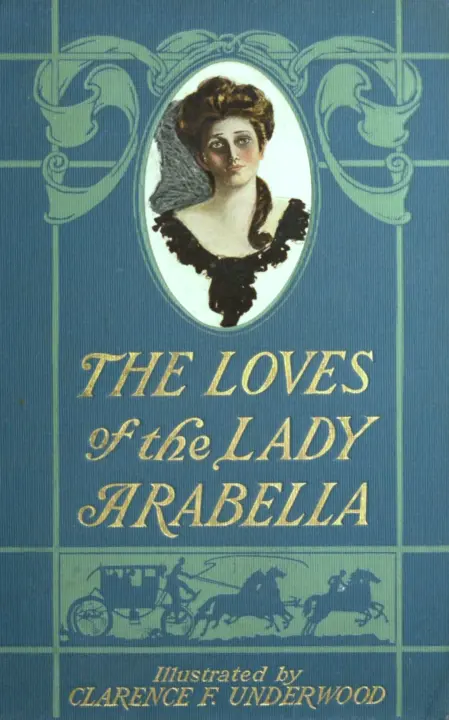
THE CLASSIC COLLECTION · 1898
"The Loves of the Lady Arabella" by Molly Elliot Seawell is a novel written in the late 19th century. The story is set in a historical context, revolving around the lives and loves of its central characters, notably Lady Arabella Stormont, who captures the affections of several suitors, including the young midshipman Richard Glyn. The narrative promises themes of romance, class dynamics, and the intricacies of society's expectations. The opening of the novel introduces us to Richard Glyn, who, at just fourteen, seeks a midshipman’s warrant in the Royal Navy. After an awkward meeting with his formidable great-uncle, Admiral Sir Peter Hawkshaw, and Lady Hawkshaw, Richard is eventually granted his wish. Notably, Richard meets Lady Arabella, described as the most beautiful creature he has ever seen, which sets the stage for his infatuation with her. Throughout this portion, we see the interplay of power and affection among the characters, particularly Richard's relationship with Lady Arabella and her interactions with others, including the ambitious Giles Vernon. This establishes a rich backdrop for the romantic and adventurous exploits yet to unfold in the narrative.
Introduction adapted from the source catalogue; source summaries may be automatically generated.
Free to read · English · 46,525 words · No account needed
MAKE TIME FOR A GOOD BOOK
On by default. Untick to stop anonymous reading totals. Each page counts after 10 seconds in view. How this works.
Anonymous counting is on unless you have switched it off.
After a while I left Daphne and went back to watch Lady Arabella. I soon saw that she was a very poor player, and lost continually; but that only whetted her appetite for the game. Presently a gentleman entered, and, walking about listlessly, although he seemed to be known to everybody present, approached me. It was Captain Overton, as handsome, as distrait, as on the first and only time I had seen him.
Much to my surprise, he recognized me and came up and spoke to me,
making me a very handsome compliment upon the performances of the
Ajax.
“And is my cousin, Mr. Vernon, here to-night?” he asked, smiling.
I replied I supposed not; he had received no card when we had parted that morning, and I knew of none since.
“I shall be very glad to meet him,” said Overton. “I think him a fine fellow, in spite of our disagreement. I see you are not playing.”
“I have no taste for play, strange to say.”
“Do not try to acquire it,” he said; “it is wrong, you may depend upon it; but indulgence in it makes many believe it to be right. Every time you look at a sin, it gets better looking.”
I was surprised to hear sin mentioned in the society of such elegant and well-bred sinners as I saw around me, who never alluded to it, except officially, as it were, on Sunday, when they all declared themselves miserable sinners--for that occasion only. Overton then sauntered over toward Lady Arabella, who seemed to recognize his approach by instinct. She turned to him, her cards in her hands, and flushed deeply; he gazed at her sternly as if in reproof, and, after a slight remark or two, moved off, to her evident chagrin.
Daphne being near me then, I said to her with a forced laugh,--
“What is the meaning, I beg you to tell me, of the pantomime between Lady Arabella and Captain Overton?”
Daphne hesitated, and then said,--
“Captain Overton was one of the gayest men about London until a year or two ago. Since then, it is said, he has turned Methody. It is believed he goes to Mr. Wesley’s meetings, although he has never been actually caught there. He lives plainly, and, some say, he gives his means to the poor; he will not go to the races any more, nor play, and he does not like to see Arabella play.”
“What has he to do with Arabella?”
“Nothing that I know of, except that she likes him. He does not like to see any one play now, although he gamed very high himself at one time.”
Your reading position is saved on this browser. Take it to another device with a library code. Reading pages adapt to text, rather than matching a printed edition.
Molly Elliot Seawell
Molly Elliot Seawell
Molly Elliot Seawell
Molly Elliot Seawell
BEHIND THE BOOK
This eBook is for the use of anyone anywhere in the United States and most other parts of the world at no cost and with almost no restrictions whatsoever. You may copy it, give it away or re-use it under the terms of the Project Gutenberg License included with this eBook or online at www.gutenberg.org. If you are not located in the United States, you will have to check the laws of the country where you are located before using this eBook. Read the source licence.
The original source file, including credits and licence, is retained by this library. Request an original-format copy at no charge. Please include the book title and Project Gutenberg identifier #68033.
KEEP YOUR CURIOSITY GOING
Cécile Tormay

Moritz Busch
Coulson Kernahan
John L. Ransom

Maurice Baring
Frances Wright