THE CLASSIC COLLECTION✦The romance of Isabel Lady BurtonCLASSIC FREE BOOKS
The romance of Isabel Lady Burton
Isabel, Lady Burton & W. H. (William Henry) Wilkins
THE CLASSIC COLLECTION · 1900
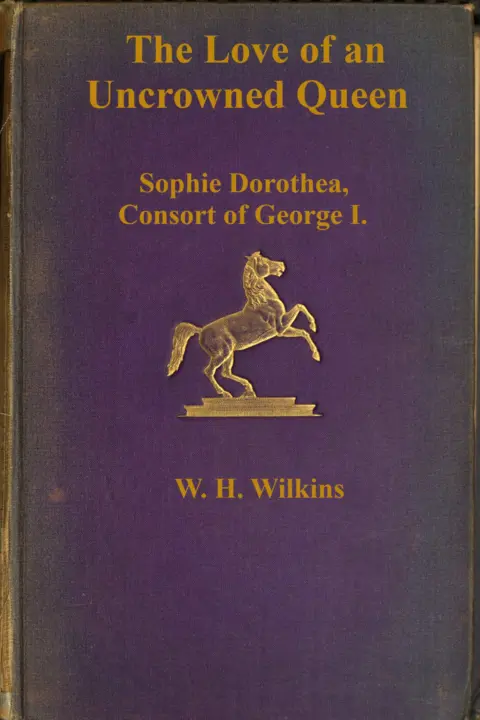
"The love of an uncrowned queen : Sophie Dorothea, consort of George I, and her…." by W. H. Wilkins is a historical biography written in the early 20th century. It traces the life of Sophie Dorothea of Celle—her rise from disputed birth to duchess’s daughter, her ill-fated love with Count Königsmarck as revealed in their letters, and the court intrigues of Celle and Hanover that shaped her fate. The opening of the work combines a documentary preface with the first chapters of narrative. Wilkins recounts how he discovered and authenticated Sophie Dorothea’s and Königsmarck’s love-letters (chiefly at Lund, with further caches in Berlin and likely among the Guelph papers), and notes scholarly defenses of their genuineness before outlining his revisions. The story then steps back to the House of Brunswick: George William’s rejection of a political match with Princess Sophia of the Palatinate, Sophia’s marriage instead to Ernest Augustus, and George William’s morganatic union with the clever and ambitious Eléonore d’Olbreuse, who wins status for herself and their daughter, Sophie Dorothea. We see Eléonore’s calculated advance (imperial legitimization, new titles, and alliances), the hostile rivalry of Duchess Sophia, early mention of the youthful Königsmarck at Celle, and, in Hanover, the rise of Madame Platen and a corrupt, Versailles-like court—setting the political and personal stage for the drama to come.
Introduction adapted from the source catalogue; source summaries may be automatically generated.
Free to read · English · 178,258 words · No account needed
MAKE TIME FOR A GOOD BOOK
On by default. Untick to stop anonymous reading totals. Each page counts after 10 seconds in view. How this works.
Anonymous counting is on unless you have switched it off.
Sophie Dorothea had reason enough to mourn, God knows: she had lost her one true friend on earth, and there seemed no prospect for her but to live on, uncared for, at the mercy of the relentless tyrant, her husband. Her fortitude of years began to give way, and in despair she meditated wild plans of escape, and set aside large sums of money to this end. But, alas! the very people she trusted took her gold with one hand and betrayed her with the other. For a little time she was not without hope. Her son-in-law, King Frederick of Prussia, seemed interested in her cause; but his interest proved purely selfish. He was absolutely indifferent as to what became of his wife’s mother, but was exceedingly interested in her fortune, which had been largely augmented by the death of the Duchess of Celle. He employed an agent in Hanover to discover exactly how matters stood and what share his wife would inherit from her mother. These inquiries gave great umbrage to King George. But they need not have done so, for when the King of Prussia discovered that his Queen would possess at least half her mother’s fortune he no longer paid the captive of Ahlden the least consideration, and ordered his wife to discontinue her correspondence with her mother. Nevertheless, communications continued to pass between Ahlden and Berlin, though under greater secrecy than before. The Count de Bar, who was indeed a traitor of the deepest dye, was suspected by the Queen of Prussia, and she repeatedly warned her mother against him; but Sophie Dorothea clung to him to the very last.
One fertile subject of correspondence between mother and daughter was on what was called the “double marriage scheme” between Sophie Dorothea’s grandchildren—namely, the marriage of Frederick, son of the Prince of Wales, to Wilhelmina, daughter of the King and Queen of Prussia, and of their son Fritz, afterwards Frederick the Great, to Amelia, second daughter of the Prince of Wales. This double marriage was a darling project of the Queen of Prussia, cherished by her almost from the time the children were born. She was supported by her father, the King of England, but opposed by her husband, the King of Prussia. The “Duchess of Ahlden” opposed it, too, and instructed her agent at Berlin to work against the scheme, though how it could have made any difference to her passes imagination. This opposition so incensed the Queen of Prussia that she sent word to her mother to the effect that when the marriage scheme was an accomplished fact she would work her hardest to set her free, but not until then. As these marriages could not come off for years, in consequence of the youth of the Princess Amelia, this message was disheartening, and at first Sophie Dorothea would not credit it; but it is characteristic that it made no change in her opposition. There was no more to be expected from the King and Queen of Prussia. Foiled in the direction she had hoped for deliverance, she fell back again on plans of escape. From time to time she had entrusted Count de Bar with large sums of money, amounting altogether to some sixty thousand pounds, which he deposited in the Bank of Amsterdam. He afterwards appropriated most of this to his own use;—but that is to anticipate. At this time Sophie Dorothea trusted him wholly, and her object in placing this money at Amsterdam was that it might come in useful to her in case she escaped from her husband’s territory; but how she thought to effect a flight from the closely guarded castle of Ahlden it is impossible to say. In this secret flight the Count de Bar was to assist. The Queen of Prussia became aware of the project, and in much alarm entreated her mother to be patient. She again promised that she would help her as soon as her pet scheme of the double marriage was out of the way, and she asked her mother to help her to effect it. She must have meant help with money to bribe ministers and agents, for there was no other way save money in which the imprisoned Princess could be of any use. She also advised a “general amnesty,” which meant that her mother should seek a reconciliation with King George, and express her willingness to submit to his terms, whatever they might be. But Sophie Dorothea had a proud spirit, which all these years of captivity could not break, and she was a difficult woman to deal with. Much as she desired her freedom, she would make no sacrifice of dignity or consistency.
Your reading position is saved on this browser. Take it to another device with a library code. Reading pages adapt to text, rather than matching a printed edition.
Isabel, Lady Burton & W. H. (William Henry) Wilkins
BEHIND THE BOOK
This eBook is for the use of anyone anywhere in the United States and most other parts of the world at no cost and with almost no restrictions whatsoever. You may copy it, give it away or re-use it under the terms of the Project Gutenberg License included with this eBook or online at www.gutenberg.org. If you are not located in the United States, you will have to check the laws of the country where you are located before using this eBook. Read the source licence.
The original source file, including credits and licence, is retained by this library. Request an original-format copy at no charge. Please include the book title and Project Gutenberg identifier #76394.
KEEP YOUR CURIOSITY GOING
Cécile Tormay

Moritz Busch
John L. Ransom
Frances Wright
Cécile Tormay

Mabel Potter Daggett