THE CLASSIC COLLECTION✦The romance of Isabel Lady BurtonCLASSIC FREE BOOKS
The romance of Isabel Lady Burton
Isabel, Lady Burton & W. H. (William Henry) Wilkins
THE CLASSIC COLLECTION · 1900
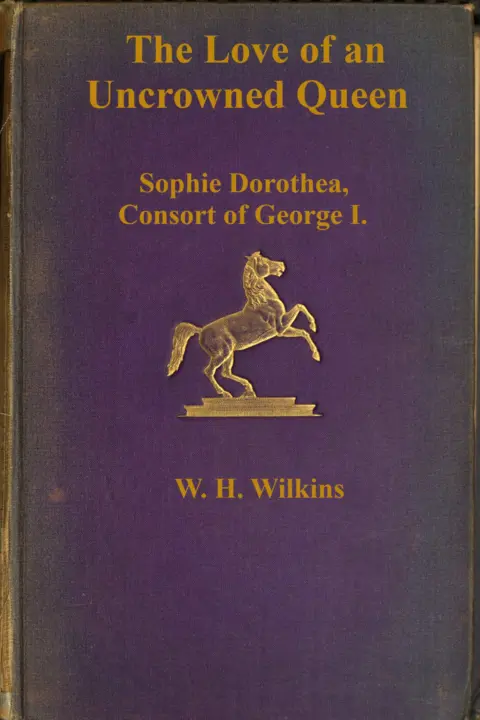
"The love of an uncrowned queen : Sophie Dorothea, consort of George I, and her…." by W. H. Wilkins is a historical biography written in the early 20th century. It traces the life of Sophie Dorothea of Celle—her rise from disputed birth to duchess’s daughter, her ill-fated love with Count Königsmarck as revealed in their letters, and the court intrigues of Celle and Hanover that shaped her fate. The opening of the work combines a documentary preface with the first chapters of narrative. Wilkins recounts how he discovered and authenticated Sophie Dorothea’s and Königsmarck’s love-letters (chiefly at Lund, with further caches in Berlin and likely among the Guelph papers), and notes scholarly defenses of their genuineness before outlining his revisions. The story then steps back to the House of Brunswick: George William’s rejection of a political match with Princess Sophia of the Palatinate, Sophia’s marriage instead to Ernest Augustus, and George William’s morganatic union with the clever and ambitious Eléonore d’Olbreuse, who wins status for herself and their daughter, Sophie Dorothea. We see Eléonore’s calculated advance (imperial legitimization, new titles, and alliances), the hostile rivalry of Duchess Sophia, early mention of the youthful Königsmarck at Celle, and, in Hanover, the rise of Madame Platen and a corrupt, Versailles-like court—setting the political and personal stage for the drama to come.
Introduction adapted from the source catalogue; source summaries may be automatically generated.
Free to read · English · 178,258 words · No account needed
MAKE TIME FOR A GOOD BOOK
On by default. Untick to stop anonymous reading totals. Each page counts after 10 seconds in view. How this works.
Anonymous counting is on unless you have switched it off.
“Mon Dieu! what does it mean? Why do the letters miscarry so? I would give much to know the reason. Her Highness fears that you have become unfaithful, and though I keep telling her the contrary, she does not believe me. All my fear runs on treachery. It must be the fault of your servants; you would do well to write and ask them the reason. It appears they forward you all your letters. If the others fare as badly as these it will comfort me, but if you receive them more regularly what can it mean? Why should these letters be so long on the road? Beware, sir. Do not neglect to find out, for the more I think of it the more anxious I become. I think you wrote in one of your letters that you were uneasy about the seal which I put inside the letter, and I wrote afterwards that I sealed it with that. All this makes me fear that the letters have been opened, and that they have taken away something. You have also written to Her Highness asking what she did after His Highness left. She told you everything, day by day; it cannot have been taken out of the letters. In truth, I know not what to think. I am half inclined to go and see about it myself, and end this anxiety. In the last letter, I wrote to you to send me an answer direct here; I do hope you addressed the letter to me in my own name. If you have not done so let me know, so that I may see to it.
Footnote 143:
La Sentinelle—one of the pseudonyms of the Fräulein von Knesebeck.
Königsmarck to the Princess.
“WAVER, August 14/24.
“At last I have reached the pinnacle of bliss. I received five of your letters at once, but I see by the last that two are still missing. That distresses me, for I do not know how to recover them, and I would not like to lose any of your dear letters, they comfort me too much. You cannot imagine what joy it gives me to find you are innocent. I humbly beg your pardon for having unjustly suspected you. I am greatly grieved about it, and I hope you will not be disgusted with me altogether, for it is because I love you so much that these fancies come to me. Do not punish me as I deserve; I have been punished enough already by the anguish these wicked suspicions have caused me. I promise you to have no more of them. What can I do to show you my gratitude for the quiet life you are leading? If my eternal love suffices, it is yours; if you desire a life sans peur et sans reproche, it is yours also. Night and day, day and night, I only think of how to please you. My love for you passes passion; I will be faithful unto death. What! I suspected you of inconstancy. Ah! base am I! You have shed tears for love of me. Oh! dear heart, do not pain those lovely eyes; I am not worthy. What distresses me most is to find that you are more reasonable than I, for you tell me you have not received my letters, and you attribute this to the neglect of my servants at Hanover. You are right, for this is the eighth I have written to you, though I had not received any from you. I was inclined at first to think it was your fault, without considering that a hundred accidents might have hindered. This is my defect—my weakness; but, dearest, remember it springs from loving you so much. I am very glad you are going to Wiesbaden. I am so satisfied with your conduct that you might go to Paris without causing me any anxiety. I am glad you are on such good terms with your parents; this time you should take advantage of it, for there are moments we can never recover.... I am delighted to hear that you find Prince Max sillier than ever; I hope he will never again salute you. The portrait I have with me is dearly cherished; you need not fear any one seeing it, for I guard it so carefully that I defy the cleverest man in the world to guess where it is. My pretty heart, you say in one of your letters that perhaps at this very moment I am dividing my heart with others. Yet see how I am all yours! We have been for six days only four leagues from Brussels without my having thought of setting my foot therein. Yesterday there was a great feast in Brussels called the ‘Feast of the Miracle,’ and Monseigneur l’Electeur[144] and all the great ones and generals of the army went in post-chaises to celebrate it; many fair ladies were there, too. I knew of it soon enough to have gone; but I swear, my dearest, I never thought of going. My soldiers went, and they could not praise it enough, particularly the fair sex. I would not go to Brussels at all if I were not obliged to have a certain bracelet made for me, of which you know, and a copy in miniature of a portrait I shall wear for ever next my heart. My Lord Portland[145] showed me much friendliness, and assured me that the King held me in esteem. All that does not make we wish to better my fortune. No, Beloved, so long as I can count you mine, I wish nothing more; all the favours of kings are useless to me. The King’s interview with our Prince was very dull, for both are men of few words. Yesterday the Prince went to see His Majesty in his camp. I did not go in his suite; but to-morrow I attend him to the Elector’s, and I will give you an account of that. Prince Frederick Augustus of Saxony is the dupe of all; he is cheated in his horses, and money is won from him at cards; he has already lost one thousand pistoles. He has no one to advise him, and is being ruined. I heard to day that Prince Christian is to marry the widow of the Duke d’Arenburg.”
Your reading position is saved on this browser. Take it to another device with a library code. Reading pages adapt to text, rather than matching a printed edition.
Isabel, Lady Burton & W. H. (William Henry) Wilkins
BEHIND THE BOOK
This eBook is for the use of anyone anywhere in the United States and most other parts of the world at no cost and with almost no restrictions whatsoever. You may copy it, give it away or re-use it under the terms of the Project Gutenberg License included with this eBook or online at www.gutenberg.org. If you are not located in the United States, you will have to check the laws of the country where you are located before using this eBook. Read the source licence.
The original source file, including credits and licence, is retained by this library. Request an original-format copy at no charge. Please include the book title and Project Gutenberg identifier #76394.
KEEP YOUR CURIOSITY GOING
Cécile Tormay

Moritz Busch
John L. Ransom
Frances Wright
Cécile Tormay

Mabel Potter Daggett