THE CLASSIC COLLECTION✦The romance of Isabel Lady BurtonCLASSIC FREE BOOKS
The romance of Isabel Lady Burton
Isabel, Lady Burton & W. H. (William Henry) Wilkins
THE CLASSIC COLLECTION · 1900
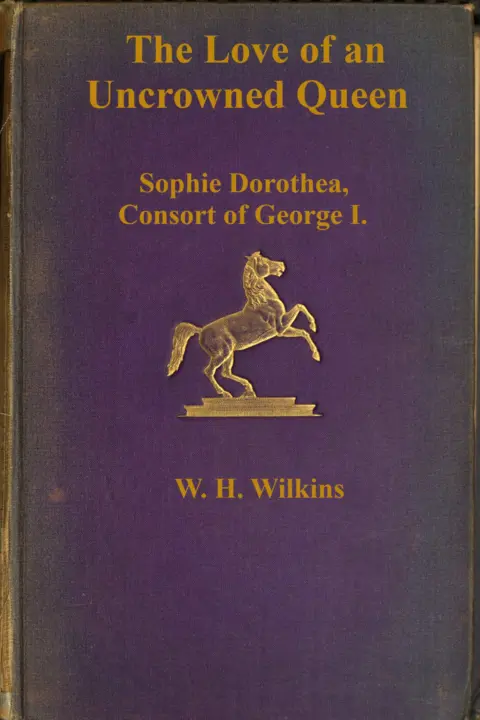
"The love of an uncrowned queen : Sophie Dorothea, consort of George I, and her…." by W. H. Wilkins is a historical biography written in the early 20th century. It traces the life of Sophie Dorothea of Celle—her rise from disputed birth to duchess’s daughter, her ill-fated love with Count Königsmarck as revealed in their letters, and the court intrigues of Celle and Hanover that shaped her fate. The opening of the work combines a documentary preface with the first chapters of narrative. Wilkins recounts how he discovered and authenticated Sophie Dorothea’s and Königsmarck’s love-letters (chiefly at Lund, with further caches in Berlin and likely among the Guelph papers), and notes scholarly defenses of their genuineness before outlining his revisions. The story then steps back to the House of Brunswick: George William’s rejection of a political match with Princess Sophia of the Palatinate, Sophia’s marriage instead to Ernest Augustus, and George William’s morganatic union with the clever and ambitious Eléonore d’Olbreuse, who wins status for herself and their daughter, Sophie Dorothea. We see Eléonore’s calculated advance (imperial legitimization, new titles, and alliances), the hostile rivalry of Duchess Sophia, early mention of the youthful Königsmarck at Celle, and, in Hanover, the rise of Madame Platen and a corrupt, Versailles-like court—setting the political and personal stage for the drama to come.
Introduction adapted from the source catalogue; source summaries may be automatically generated.
Free to read · English · 178,258 words · No account needed
MAKE TIME FOR A GOOD BOOK
On by default. Untick to stop anonymous reading totals. Each page counts after 10 seconds in view. How this works.
Anonymous counting is on unless you have switched it off.
Meantime George William had overcome his belated penchant for Sophia, if indeed it ever existed save in her imagination, and was gratifying his pleasure-loving soul by making a tour of many cities. Among others, he went to Breda, an exceedingly gay place at the end of the seventeenth century, albeit money was somewhat lacking there. It was the chosen home of political refugees, exiled princes, and deposed monarchs, who kept up their spirits despite their fallen fortunes, and maintained phantom courts on nothing a year. Here Charles II. dwelt for some time in his exile with many celebrated cavaliers; here, too, his aunt, the Queen of Bohemia, had held her shadowy court; here, too, was concluded the peace between England and Holland. All these things contributed to the importance and the gaiety of Breda; there were feasts, masquerades, and revelries, and plays with after-suppers and dances. Among the gayest of the gay was the Princess de Tarente, an aunt of the Duchess Sophia, a German princess who had married a French prince. One of her most cherished protégées was Eléonore d’Olbreuse, only child of the Marquis d’Olbreuse, a nobleman of ancient family, of Poitou. He was one of the many French Huguenots who, after the revocation of the Edict of Nantes, were persecuted by the government of Louis XIV. As he would not recant, his estates were confiscated, he was sent into exile, and found an asylum in Holland.
Before the persecution of the Huguenot nobles Eléonore d’Olbreuse had figured at the brilliant court of Louis XIV., where she was greatly admired for her wit and beauty. She was endowed with an exquisite figure, dark brown hair, regular features, and a brilliant complexion. At this time she was in the first bloom of youth, and her loveliness was only equalled by her sprightliness and charm of manner.[8] George William met her at a ball at the Princess de Tarente’s, and being of an amorous, though not of a marrying disposition, he fell in love at first sight. He became a constant visitor at the Princess de Tarente’s, and a closer acquaintance with the accomplishments and graces of the bewitching Eléonore only served to rivet his chains. He affected a great zeal to perfect his French, and the fair Eléonore willingly consented to give the good-looking Duke lessons, thereby offering fine opportunities for flirtation. What progress George William made with the French language is not recorded, but in the art of love there is no doubt he made rapid advances, for after a few lessons in the conjugation of the verb aimer, he avowed his passion in most extravagant terms, and swore that he could not live without her. He found that the citadel did not yield to the first attack. Eléonore d’Olbreuse was of a very different calibre to Signora Buccolini; she had only two available assets, her beauty and her virtue, and she was well aware of the value of both. She was not versed in the menue galanterie of the court of the Grand Monarque for nothing. George William was fervent in his protestations, prodigal in his promises of devotion, and what was more to the purpose, most liberal in his proposals as to settlements; but Eléonore held firm. Her birth was noble, though not royal, and, despite her poverty, she held that a French marquis of ancient descent was not so very inferior to a petty German prince. George William could not be expected to take this view, for, though indifferent to the trappings of rank, he, like all German princes, was inclined to over-estimate his own importance. But he could not give her up; he who had been accustomed to command in love was now its humblest supplicant; he who was indolent, easy-going in temperament, now developed an ardour and determination altogether foreign to him; he who was slow of speech now became more eloquent in the language of love. Eléonore had worked a transformation. So infatuated was he that he would willingly have married her then and there but for the document he had signed when the marriage was arranged between Ernest Augustus and Sophia. Eléonore knew nothing of this arrangement, but she positively refused to entertain any proposals short of marriage.
Your reading position is saved on this browser. Take it to another device with a library code. Reading pages adapt to text, rather than matching a printed edition.
Isabel, Lady Burton & W. H. (William Henry) Wilkins
BEHIND THE BOOK
This eBook is for the use of anyone anywhere in the United States and most other parts of the world at no cost and with almost no restrictions whatsoever. You may copy it, give it away or re-use it under the terms of the Project Gutenberg License included with this eBook or online at www.gutenberg.org. If you are not located in the United States, you will have to check the laws of the country where you are located before using this eBook. Read the source licence.
The original source file, including credits and licence, is retained by this library. Request an original-format copy at no charge. Please include the book title and Project Gutenberg identifier #76394.
KEEP YOUR CURIOSITY GOING
Cécile Tormay

Moritz Busch
John L. Ransom
Frances Wright
Cécile Tormay

Mabel Potter Daggett