THE CLASSIC COLLECTION✦A dead man’s diaryCLASSIC FREE BOOKS
A dead man’s diary
Coulson Kernahan
THE CLASSIC COLLECTION · 1871
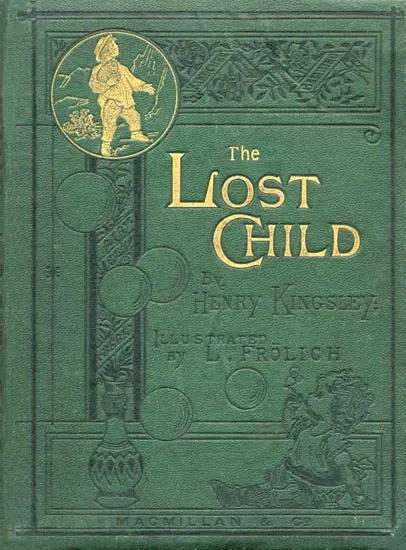
"The Lost Child" by Henry Kingsley is a novel written in the late 19th century. This work delves into the themes of childhood innocence and the longing for adventure, set against the backdrop of the Australian wilderness. The story reflects the experiences of a young boy who becomes lost in the bush, emphasizing the contrasts between civilization and nature, as well as the challenges faced by a child when separated from the safety of home. In the narrative, a young, adventurous bush child, filled with wonder and curiosity about the world beyond his home near the river, is drawn to explore the forbidden forest across the water. Ignoring his mother’s warnings about crossing the river to play with mythical creatures, he finds himself lost after bravely venturing into the dense wilderness. The search for him unfolds as two young men, Sam and Cecil, embark on a mission to find the boy, believing he may have drowned or become overtaken by the vast landscape. Tragically, their search concludes when they discover the boy's lifeless body on a remote cliff, clutching the flowers gathered during his final hours of innocent exploration. This poignant story highlights the perils of childhood freedom and the inevitable encounter with mortality and loss.
Introduction adapted from the source catalogue; source summaries may be automatically generated.
Free to read · English · 2,977 words · No account needed
MAKE TIME FOR A GOOD BOOK
On by default. Untick to stop anonymous reading totals. Each page counts after 10 seconds in view. How this works.
Anonymous counting is on unless you have switched it off.
"The river is too deep, child, and the Bunyip lives in the water under
the stones."
"Who are the children that play across there?"
"Black children, likely."
"No white children?"
"Pixies; don't go near 'em, child; they'll lure you on, Lord knows where. Don't get trying to cross the river, now, or you'll be drowned."
But next day the passion was stronger on him than ever. Quite early on the glorious cloudless midsummer day he was down by the river-side, sitting on a rock, with his shoes and stockings off, paddling his feet in the clear tepid water, and watching the million fish in the shallows--black fish and grayling--leaping and flashing in the sun.
There is no pleasure that I have ever experienced like a child's midsummer holiday,--the time, I mean, when two or three of us used to go away up the brook, and take our dinners with us, and come home at night tired, dirty, happy, scratched beyond recognition, with a great nosegay, three little trout and one shoe, the other having been used for a boat till it had gone down with all hands out of soundings. How poor our Derby days, our Greenwich dinners, our evening parties, where there are plenty of nice girls, are, after that! Depend on it, a man never experiences such pleasure or grief after fourteen as he does before: unless in some cases in his first love-making, when the sensation is new to him.
But, meanwhile, there sat our child, barelegged, watching the forbidden ground beyond the river. A fresh breeze was moving the trees, and making the whole a dazzling mass of shifting light and shadow. He sat so still that a glorious violet and red kingfisher perched quite close, and, dashing into the water, came forth with a fish, and fled like a ray of light along the winding of the river. A colony of little shell parrots, too, crowded on a bough, and twittered and ran to and fro quite busily, as though they said to him, "We don't mind you, my dear; you are quite one of us."
Never was the river so low. He stepped in; it scarcely reached his ankle. Now surely he might get across. He stripped himself, and, carrying his clothes, waded through, the water never reaching his middle, all across the long, yellow gravelly shallow. And there he stood, naked and free, on the forbidden ground.
He quickly dressed himself, and began examining his new kingdom, rich beyond his utmost hopes. Such quantongs, such raspberries, surpassing imagination; and when tired of them, such fern boughs, six or eight feet long! He would penetrate this region, and see how far it extended.
Your reading position is saved on this browser. Take it to another device with a library code. Reading pages adapt to text, rather than matching a printed edition.
BEHIND THE BOOK
This eBook is for the use of anyone anywhere in the United States and most other parts of the world at no cost and with almost no restrictions whatsoever. You may copy it, give it away or re-use it under the terms of the Project Gutenberg License included with this eBook or online at www.gutenberg.org. If you are not located in the United States, you will have to check the laws of the country where you are located before using this eBook. Read the source licence.
The original source file, including credits and licence, is retained by this library. Request an original-format copy at no charge. Please include the book title and Project Gutenberg identifier #25404.
KEEP YOUR CURIOSITY GOING
Coulson Kernahan

Maurice Baring
Frances Wright
Cécile Tormay

Frederic Jesup Stimson

W. H. P. (William Henry Pope) Jarvis