THE CLASSIC COLLECTION✦An outlaw’s diary: the CommuneCLASSIC FREE BOOKS
An outlaw’s diary: the Commune
Cécile Tormay
THE CLASSIC COLLECTION · 1922
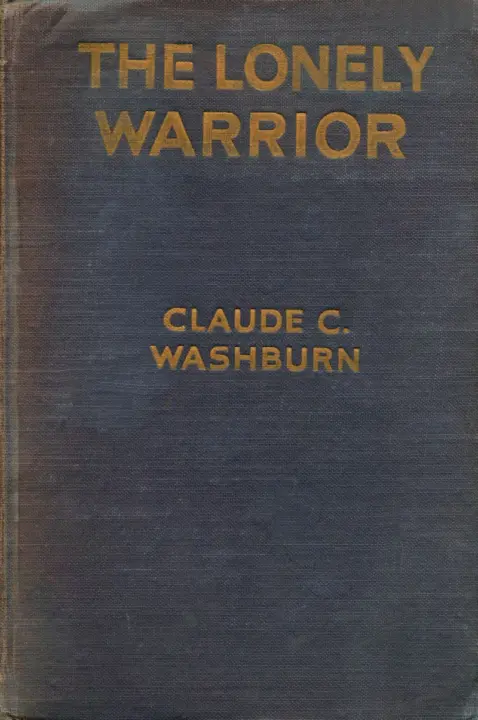
"The Lonely Warrior" by Claude C. Washburn is a novel written in the early 20th century. The story centers around Edward Carroll, his son Stacey, and their emotional conflicts during the backdrop of World War I. The book explores themes of duty, bravery, and the personal costs of war through the lens of familial relationships and societal expectations. At the start of the novel, we meet Edward Carroll, a successful businessman who engages in a poignant conversation with his son Stacey, who is determined to enlist for military service in the ongoing war. Despite Edward's fears for his son’s safety and his belief that the war may not directly involve Americans yet, Stacey argues passionately for the necessity of joining the fight. The opening segment highlights the generational clash in perceptions of duty and honor, with Stacey embodying a youthful idealism contrasted against his father's pragmatic concerns. Their dialogue reveals deep emotional undercurrents and foreshadows the personal struggles both will face as the broader conflict of the Great War looms over their lives.
Introduction adapted from the source catalogue; source summaries may be automatically generated.
Free to read · English · 103,179 words · No account needed
MAKE TIME FOR A GOOD BOOK
On by default. Untick to stop anonymous reading totals. Each page counts after 10 seconds in view. How this works.
Anonymous counting is on unless you have switched it off.
“It’s a strong bond, isn’t it?”
Stacey nodded. “Oughtn’t he to have a nurse?”
“It would be a great deal better. He’d have more of a chance.”
“Then send one around, will you please? At my expense, of course.”
“All right,” said the doctor, shook hands with Stacey, and departed.
The conversation had taken place in the hallway outside the door. When Stacey reëntered the sick room Mrs. Burnham gazed at him wistfully.
“It’s all right,” he said. “Jim’s got a good chance. The doctor’s going to send a nurse.”
Her eyes filled with tears, and she opened her mouth as though to speak, but closed it again, with only a strangled: “Thanks,” and turned her head away. After a time she got up.
“I’ll go down and cook some dinner,” she said. “You’ll excuse me, sir, if it isn’t much, won’t you? I haven’t had time to—”
“No,” he broke in, “you’re too tired to cook. Please go out and get some lunch for yourself and the children if you know of some delicatessen place,—and for me, too.” And he drew out his purse.
But at this her face colored. “No sir,” she said, with just a hint of resentment, “I couldn’t.”
He thrust a five-dollar bill upon her. “Do as I tell you,” he said imperiously. “This is no time for silly pride. Go on, and mind you get good things and plenty of them.”
She cowered beneath his sternness and went meekly. And Stacey reflected grimly that pride was a decorative handsome emotion that flourished ornamentally, a highly esteemed orchid, in luxury. It couldn’t grow well in poverty, came up sickly and scrawny,—the soil was too weak.
Half an hour later he heard her climb the stairs again and move quietly about the next room. Presently she returned to the bedroom.
“Will you go in there now, sir?” she said. “Everything’s ready for you. Here’s your change—two dollars and sixty-four cents.”
“No, no, please!” he replied. “Keep it for to-morrow.”
He wanted to insist on her eating first, but thought best not to try, so he went, without comment, through the door she indicated into another bedroom—the only other, he supposed,—that obviously also served as dining-room and parlor. Dishes were disposed neatly on a table, with sandwiches, Bologna sausage, eggs, coffee, and doughnuts.
Your reading position is saved on this browser. Take it to another device with a library code. Reading pages adapt to text, rather than matching a printed edition.
BEHIND THE BOOK
This eBook is for the use of anyone anywhere in the United States and most other parts of the world at no cost and with almost no restrictions whatsoever. You may copy it, give it away or re-use it under the terms of the Project Gutenberg License included with this eBook or online at www.gutenberg.org. If you are not located in the United States, you will have to check the laws of the country where you are located before using this eBook. Read the source licence.
The original source file, including credits and licence, is retained by this library. Request an original-format copy at no charge. Please include the book title and Project Gutenberg identifier #60719.
KEEP YOUR CURIOSITY GOING
Cécile Tormay

Moritz Busch
Coulson Kernahan
John L. Ransom

Maurice Baring
Frances Wright