THE CLASSIC COLLECTION✦An outlaw’s diary: the CommuneCLASSIC FREE BOOKS
An outlaw’s diary: the Commune
Cécile Tormay
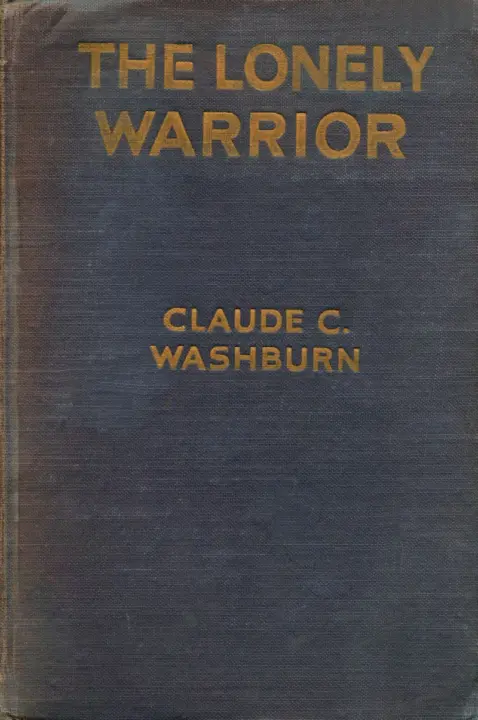
THE CLASSIC COLLECTION · 1922
"The Lonely Warrior" by Claude C. Washburn is a novel written in the early 20th century. The story centers around Edward Carroll, his son Stacey, and their emotional conflicts during the backdrop of World War I. The book explores themes of duty, bravery, and the personal costs of war through the lens of familial relationships and societal expectations. At the start of the novel, we meet Edward Carroll, a successful businessman who engages in a poignant conversation with his son Stacey, who is determined to enlist for military service in the ongoing war. Despite Edward's fears for his son’s safety and his belief that the war may not directly involve Americans yet, Stacey argues passionately for the necessity of joining the fight. The opening segment highlights the generational clash in perceptions of duty and honor, with Stacey embodying a youthful idealism contrasted against his father's pragmatic concerns. Their dialogue reveals deep emotional undercurrents and foreshadows the personal struggles both will face as the broader conflict of the Great War looms over their lives.
Introduction adapted from the source catalogue; source summaries may be automatically generated.
Free to read · English · 103,179 words · No account needed
MAKE TIME FOR A GOOD BOOK
On by default. Untick to stop anonymous reading totals. Each page counts after 10 seconds in view. How this works.
Anonymous counting is on unless you have switched it off.
“Jesus Christ! no, Captain! Let him play and—”
Laughter broke out tumultuously, and the chairman pounded with his
gavel.
“That’s all,” said Stacey, and sat down.
“I think,” said the commander, when silence had been partly restored, “that it would be unfortunate to divide this organization up into those who saw fighting and those who did not. We should stick together in everything.” But his words were perfunctory. He had been severely wounded at Les Eparges. “All in favor of the motion signify by saying Aye. Opposed, No.”
The motion was lost.
Stacey had won. But he was under no illusions. He had won by force, and he had made more enemies than friends. When he left the hall at the end of the meeting he was a solitary figure at whom men looked from a distance. He did not care. He preferred his solitude.
But outside, at the foot of the steps, Edwards, the commander, caught up with him and limped off beside him. He was a mechanic and a student, self-educated, and popular with labor. In high quarters he was solemnly suspected of being a socialist.
“What you said was right enough, Carroll,” he observed meditatively. “The trouble was with the way you said it. Too much outside. Too harsh and scornful.”
“Quite true,” Stacey assented. “That happens to be the way I personally am—harsh and scornful.”
Edwards shook his head. “You saw too much of it, I guess, Carroll,” he remarked. “Four whole years, wasn’t it? God in heaven! And more mud than we ever saw. Years more of mud! Filthy thing, the war, wasn’t it?”
Stacey laughed shortly. “Wait twenty years and see how people talk about it,” he said. “Banners waving! Steel-capped heroes! Glory! Glory! We’ll be talking that way, too.”
They walked on in silence.
“Oh, by the way, Edwards,” said Stacey suddenly, “you’re a labor man. I wish to God you’d set me right about that strike business. The thing was too silly the way it got into those rotten papers. I—”
Edwards was laughing quietly. “Pshaw!” he interrupted. “Do you think we don’t know the facts? That’s one thing we do know. The boys aren’t down on you. They’re not even down on Burnham now, though he did turn against them. Can’t say that you’re personally popular—too harsh and scornful, but you’re respected.”
“Well, that’s good,” said Stacey, with genuine relief.
“You ought to crawl through the needle’s eye and come in with us,” Edwards added, after a moment. “I don’t believe you give a damn for your money.”
Your reading position is saved on this browser. Take it to another device with a library code. Reading pages adapt to text, rather than matching a printed edition.
BEHIND THE BOOK
This eBook is for the use of anyone anywhere in the United States and most other parts of the world at no cost and with almost no restrictions whatsoever. You may copy it, give it away or re-use it under the terms of the Project Gutenberg License included with this eBook or online at www.gutenberg.org. If you are not located in the United States, you will have to check the laws of the country where you are located before using this eBook. Read the source licence.
The original source file, including credits and licence, is retained by this library. Request an original-format copy at no charge. Please include the book title and Project Gutenberg identifier #60719.
KEEP YOUR CURIOSITY GOING
Cécile Tormay

Moritz Busch
Coulson Kernahan
John L. Ransom

Maurice Baring
Frances Wright