THE CLASSIC COLLECTION✦An outlaw’s diary: the CommuneCLASSIC FREE BOOKS
An outlaw’s diary: the Commune
Cécile Tormay
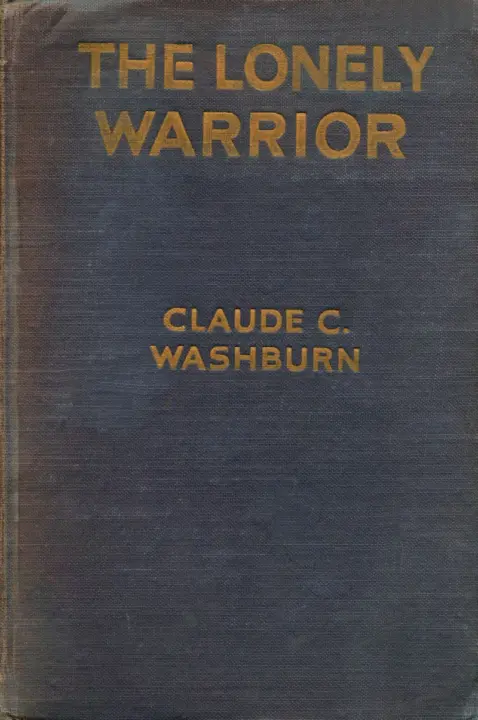
THE CLASSIC COLLECTION · 1922
"The Lonely Warrior" by Claude C. Washburn is a novel written in the early 20th century. The story centers around Edward Carroll, his son Stacey, and their emotional conflicts during the backdrop of World War I. The book explores themes of duty, bravery, and the personal costs of war through the lens of familial relationships and societal expectations. At the start of the novel, we meet Edward Carroll, a successful businessman who engages in a poignant conversation with his son Stacey, who is determined to enlist for military service in the ongoing war. Despite Edward's fears for his son’s safety and his belief that the war may not directly involve Americans yet, Stacey argues passionately for the necessity of joining the fight. The opening segment highlights the generational clash in perceptions of duty and honor, with Stacey embodying a youthful idealism contrasted against his father's pragmatic concerns. Their dialogue reveals deep emotional undercurrents and foreshadows the personal struggles both will face as the broader conflict of the Great War looms over their lives.
Introduction adapted from the source catalogue; source summaries may be automatically generated.
Free to read · English · 103,179 words · No account needed
MAKE TIME FOR A GOOD BOOK
On by default. Untick to stop anonymous reading totals. Each page counts after 10 seconds in view. How this works.
Anonymous counting is on unless you have switched it off.
“All right,” said Stacey, with apparent equanimity. “Thanks.”
But he saw Mr. Latimer flash a sudden glance of anger at his wife, who, however, went on with her knitting calmly.
“So that’s the way the land lies,” Stacey reflected, as he climbed the stairs. “Papa has been told, or, more likely, has found out. Decent of Mrs. Latimer, very!” Nevertheless, he was unhappy.
He knocked at the library door, and Marian called to him to enter.
She was curled up in her favorite arm-chair, and Ames Price was rising from a smaller chair near-by.
Marian gave Stacey a look of mischievous defiance. But he went over and shook hands with her so pleasantly and coolly that her eyes grew suddenly puzzled.
“Hello, Ames,” he said then, shaking his rival’s hand. “Haven’t seen you for years. How’ve you been?”
“First-class!” replied the other, eyeing Stacey doubtfully. “You look
pretty fit.”
He was a tall, fair, loosely built man of forty, smooth-shaven and slightly bald. Stacey had known him in a casual way for years, but all that he really knew about him was that he had inherited money, had managed it well enough, was said to be a bit fast—but not excessively, and played an admirable game of golf. So far as Stacey or any one else was aware, there had been (except for golf) no passions in Ames’s life. Stacey felt a little sorry for him, that he should have been overwhelmed now by this one. Marian would make him uncomfortable. She would demand a great variety of emotions of him.
But, in spite of himself, Stacey also felt a hot jealousy. By Jove,
Marian was beautiful!
“I suppose,” said Ames, with proper politeness, “that you must have had a pretty rough time in France. You were over the deuce of a while. I didn’t get across myself—division just about to sail when the Armistice came along.”
There was a touch of constraint in his tone. Stacey understood it at once. It was as though Ames had said: “You come back a hero. What chance have I got against you?”
“Oh, well,” Stacey returned, pleasantly enough, “that’s all done with now. Here we all are again. There’s no change in anything, really.”
He glanced at Marian. She was surveying the situation distantly, with a faint amused smile. Stacey’s own sensations beneath his calm demeanor were turbulent and mixed. He desired Marian keenly, hated to let her go, yet felt an antagonism for her that his desire increased rather than diminished. He was jealous of Ames, yet not in the least hostile toward him,—almost kindly, in fact.
Your reading position is saved on this browser. Take it to another device with a library code. Reading pages adapt to text, rather than matching a printed edition.
BEHIND THE BOOK
This eBook is for the use of anyone anywhere in the United States and most other parts of the world at no cost and with almost no restrictions whatsoever. You may copy it, give it away or re-use it under the terms of the Project Gutenberg License included with this eBook or online at www.gutenberg.org. If you are not located in the United States, you will have to check the laws of the country where you are located before using this eBook. Read the source licence.
The original source file, including credits and licence, is retained by this library. Request an original-format copy at no charge. Please include the book title and Project Gutenberg identifier #60719.
KEEP YOUR CURIOSITY GOING
Cécile Tormay

Moritz Busch
Coulson Kernahan
John L. Ransom

Maurice Baring
Frances Wright