THE CLASSIC COLLECTION✦An outlaw’s diary: the CommuneCLASSIC FREE BOOKS
An outlaw’s diary: the Commune
Cécile Tormay
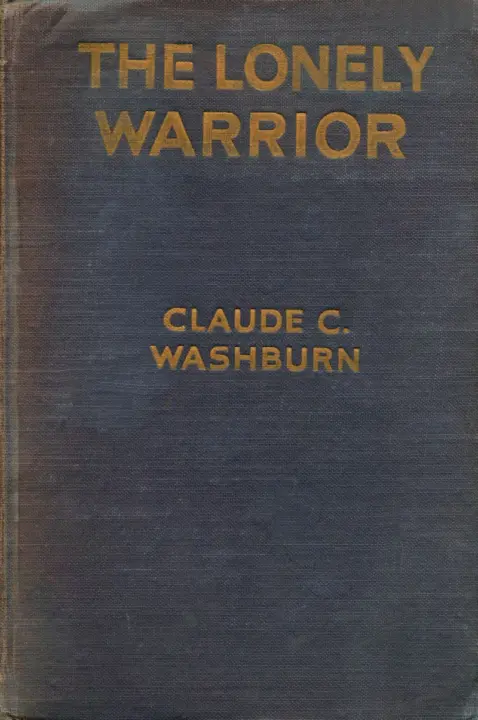
THE CLASSIC COLLECTION · 1922
"The Lonely Warrior" by Claude C. Washburn is a novel written in the early 20th century. The story centers around Edward Carroll, his son Stacey, and their emotional conflicts during the backdrop of World War I. The book explores themes of duty, bravery, and the personal costs of war through the lens of familial relationships and societal expectations. At the start of the novel, we meet Edward Carroll, a successful businessman who engages in a poignant conversation with his son Stacey, who is determined to enlist for military service in the ongoing war. Despite Edward's fears for his son’s safety and his belief that the war may not directly involve Americans yet, Stacey argues passionately for the necessity of joining the fight. The opening segment highlights the generational clash in perceptions of duty and honor, with Stacey embodying a youthful idealism contrasted against his father's pragmatic concerns. Their dialogue reveals deep emotional undercurrents and foreshadows the personal struggles both will face as the broader conflict of the Great War looms over their lives.
Introduction adapted from the source catalogue; source summaries may be automatically generated.
Free to read · English · 103,179 words · No account needed
MAKE TIME FOR A GOOD BOOK
On by default. Untick to stop anonymous reading totals. Each page counts after 10 seconds in view. How this works.
Anonymous counting is on unless you have switched it off.
“Yes, ma’am,” said Edwards bitterly, “if they accept the cut in wages.”
“And are there many families of three?”
“Most are a good deal more than three,” he replied. “About twenty per cent. of the men are unmarried and perhaps bring the average down to three.”
Catherine’s face had an odd expression. Stacey thought she looked like a sorrowful goddess. “Before my husband died,” she said, “we were a family of four. We were living on two hundred and fifty dollars a month, and you thought, Mr. Carroll, that we had to live too sordidly. You will do something?”
He gazed at her kindly, but did not reply at once.
Stacey was touched by the mention of Phil. The thought of Phil was with him, almost like a gentle presence, very often. Catherine spoke of him seldom but, when she did so, quite simply and naturally, as now. She must miss him sadly, Stacey thought, and felt grieved for her. But, since it was his instinct to carry through unswervingly anything he had undertaken, he was also exultant, as well as faintly amused at his father, who was being swept away from principles at every turn, simply not permitted to play with them.
“I can’t say I like those statistics,” said Mr. Carroll at last, more to Catherine than to Edwards. Then he turned to the latter. “But I’d have to know more. I’d have to look into things. And then I don’t know what I could do about it; I might do something, I suppose. Confound it! sir,” he exclaimed impatiently, “why didn’t you take this up with some official of the company?”
“I want you to know more, sir,” Edwards returned eagerly. “I’d like it if you’d go down with me and see some of the strikers man to man, get their story.”
Mr. Carroll reflected, frowning. “All right,” he said sharply. “Come to my office to-morrow morning at nine.”
Catherine’s face fairly shone, and Mr. Carroll, looking back at her, relaxed his sternness and leaned over to pat her hand.
“May I go, too?” she asked of them both.
“Yes, ma’am!” said Edwards, getting up. “I’d like that.”
He made his adieux clumsily, with too much formality, and Stacey accompanied him down the hall to the door.
“Well,” Edwards remarked, “that’s something, I suppose,—thanks to Mrs. Blair. Precious little help you were, though, Carroll!”
Your reading position is saved on this browser. Take it to another device with a library code. Reading pages adapt to text, rather than matching a printed edition.
BEHIND THE BOOK
This eBook is for the use of anyone anywhere in the United States and most other parts of the world at no cost and with almost no restrictions whatsoever. You may copy it, give it away or re-use it under the terms of the Project Gutenberg License included with this eBook or online at www.gutenberg.org. If you are not located in the United States, you will have to check the laws of the country where you are located before using this eBook. Read the source licence.
The original source file, including credits and licence, is retained by this library. Request an original-format copy at no charge. Please include the book title and Project Gutenberg identifier #60719.
KEEP YOUR CURIOSITY GOING
Cécile Tormay

Moritz Busch
Coulson Kernahan
John L. Ransom

Maurice Baring
Frances Wright