THE CLASSIC COLLECTION✦An outlaw’s diary: the CommuneCLASSIC FREE BOOKS
An outlaw’s diary: the Commune
Cécile Tormay
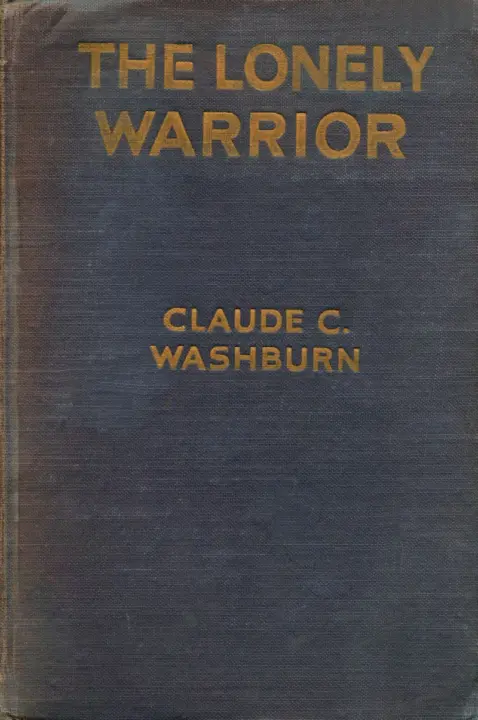
THE CLASSIC COLLECTION · 1922
"The Lonely Warrior" by Claude C. Washburn is a novel written in the early 20th century. The story centers around Edward Carroll, his son Stacey, and their emotional conflicts during the backdrop of World War I. The book explores themes of duty, bravery, and the personal costs of war through the lens of familial relationships and societal expectations. At the start of the novel, we meet Edward Carroll, a successful businessman who engages in a poignant conversation with his son Stacey, who is determined to enlist for military service in the ongoing war. Despite Edward's fears for his son’s safety and his belief that the war may not directly involve Americans yet, Stacey argues passionately for the necessity of joining the fight. The opening segment highlights the generational clash in perceptions of duty and honor, with Stacey embodying a youthful idealism contrasted against his father's pragmatic concerns. Their dialogue reveals deep emotional undercurrents and foreshadows the personal struggles both will face as the broader conflict of the Great War looms over their lives.
Introduction adapted from the source catalogue; source summaries may be automatically generated.
Free to read · English · 103,179 words · No account needed
MAKE TIME FOR A GOOD BOOK
On by default. Untick to stop anonymous reading totals. Each page counts after 10 seconds in view. How this works.
Anonymous counting is on unless you have switched it off.
He was wondering about his sister. Could it really be that she encountered no problems at all? There was a sweetness and a sureness about her that made him doubt such an obvious hypothesis.
“I’ll stay to lunch, Jule, if you’ll ask me,” he began, “because—”
“Of course I will! How nice!” she interrupted.
“—Because it will be my only chance for a while. I’m going back to work with Parkins to-morrow.”
“Oh, I’m glad!” she exclaimed.
“Are you? Why?”
She looked at him rather shyly, frowning a little. “Because,” she said after just an instant, “you have so fine a training it seems a shame to waste it and let houses be built more clumsily by people who haven’t had it.”
Stacey felt grateful for her reply. She might have said: “Because I think you’ll be happier,” or: “Because I think every man ought to do something.” She had their father’s direct way of going straight to the heart of a question, and she was so simple about it that she got no credit for intelligence. What she said always sounded usual.
She went on with her weeding now, and they talked cordially of
superficial things.
Junior, back from kindergarten, made himself the centre of conversation during lunch, but afterward Julie sent him away with his nurse, and sat down with Stacey in the living-room.
It was curious, he thought, what a sense of intimacy he felt, since, except for that one remark of hers, they had talked only of externals.
“Julie,” he demanded abruptly, “does everything really run along for you as smoothly as it seems to? Are you truly perfectly happy?”
She gave him a startled look, her eyes suddenly troubled. “No,” she said painfully, after a long moment, “I’m not so—bovine as all that. Oh,” she added quickly, “I get along! I haven’t any soul tragedies and I’m not in love with some other man than Jimmy, but there are things”—she pressed her fingers together nervously—“different things—that I’d like to do—or feel. Reckless things!”
Looking into her flushed face, Stacey perceived a strange unknown Julie, and he, too, was troubled and remorseful. “I didn’t know,” he said.
“You never tried to find out, did you, Stacey dear?” she replied gently.
“No,” he assented.
“But why should you?” she asked, defending him against her own attack. “Every one’s the same way. They all think: ‘Oh, Julie,—just the typical housewife!’”
“The more fools they!” Stacey muttered.
“No, it’s natural. I behave that way. I have to behave some way.”
Your reading position is saved on this browser. Take it to another device with a library code. Reading pages adapt to text, rather than matching a printed edition.
BEHIND THE BOOK
This eBook is for the use of anyone anywhere in the United States and most other parts of the world at no cost and with almost no restrictions whatsoever. You may copy it, give it away or re-use it under the terms of the Project Gutenberg License included with this eBook or online at www.gutenberg.org. If you are not located in the United States, you will have to check the laws of the country where you are located before using this eBook. Read the source licence.
The original source file, including credits and licence, is retained by this library. Request an original-format copy at no charge. Please include the book title and Project Gutenberg identifier #60719.
KEEP YOUR CURIOSITY GOING
Cécile Tormay

Moritz Busch
Coulson Kernahan
John L. Ransom

Maurice Baring
Frances Wright