THE CLASSIC COLLECTION✦An outlaw’s diary: the CommuneCLASSIC FREE BOOKS
An outlaw’s diary: the Commune
Cécile Tormay
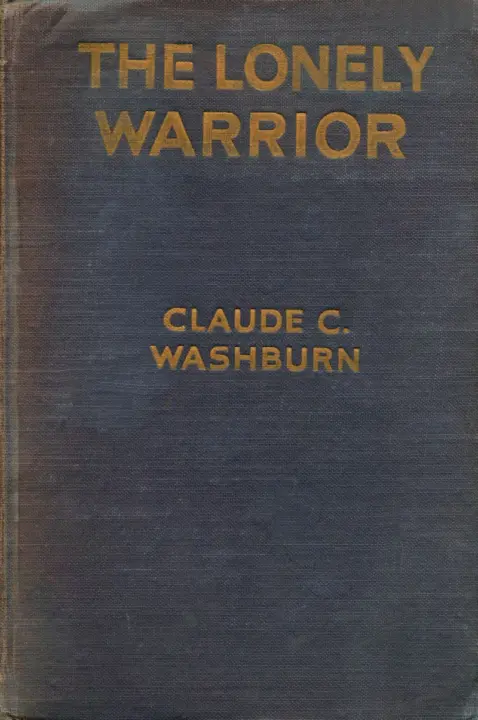
THE CLASSIC COLLECTION · 1922
"The Lonely Warrior" by Claude C. Washburn is a novel written in the early 20th century. The story centers around Edward Carroll, his son Stacey, and their emotional conflicts during the backdrop of World War I. The book explores themes of duty, bravery, and the personal costs of war through the lens of familial relationships and societal expectations. At the start of the novel, we meet Edward Carroll, a successful businessman who engages in a poignant conversation with his son Stacey, who is determined to enlist for military service in the ongoing war. Despite Edward's fears for his son’s safety and his belief that the war may not directly involve Americans yet, Stacey argues passionately for the necessity of joining the fight. The opening segment highlights the generational clash in perceptions of duty and honor, with Stacey embodying a youthful idealism contrasted against his father's pragmatic concerns. Their dialogue reveals deep emotional undercurrents and foreshadows the personal struggles both will face as the broader conflict of the Great War looms over their lives.
Introduction adapted from the source catalogue; source summaries may be automatically generated.
Free to read · English · 103,179 words · No account needed
MAKE TIME FOR A GOOD BOOK
On by default. Untick to stop anonymous reading totals. Each page counts after 10 seconds in view. How this works.
Anonymous counting is on unless you have switched it off.
“I’ll—have to—wait a minute,” Stacey replied, and the young man
departed.
Presently he returned, and together the two went back into the sitting-room for more loot, emerging dripping with sweat and half choked. Yet Stacey was beginning to enjoy himself.
They tried the other two rooms, the doors of which Stacey had already noticed. From the first they got—with difficulty—a fine rug, slightly scorched, and a mahogany stand. The second seemed impossible—a mass of black smoke.
“What’s in there, I wonder?” said Stacey hoarsely.
“I dunno,” the young fellow replied. “We mout ask that nigger, Joe.”
Only two or three men were left now even in the room next the porch, and Joe was definitely on the point of getting out of the window. However, he paused for an instant to answer the question.
“That theah room, that’s Miss Helen’s bedroom. Don’ you go theah, suh,” he said, and vanished.
Stacey reflected, with a half smile, then hurried back, his laconic acquaintance still at his side. Voices shouted at them from the porch.
The house was a furnace now. There was a heavy roaring in the air and every little while the sound of something crashing down. Nevertheless, Stacey plunged into the bedroom, and so, too, did his companion. It was unbearable, but, at least, one could see; a vivid flickering light shot through the smoke. After a moment Stacey made out the crib, dived for a blackened, almost unrecognizable object that lay on the smoldering sheets, and leaped back just as a beam fell, with a shower of sparks, from the ceiling. Together he and his companion fled back to the room next the porch and leaned, coughing and choking, against the window. The room was empty.
“Wh-what did you get?” Stacey asked hoarsely at last.
“A hoss,” replied the other, with a grin, holding up a toy.
“I got a doll,” said Stacey weakly.
And all at once, there in this burning room, it was as though something snapped within him. The strange barrier was down. The world came rushing up to meet him. He burst into a helpless fit of laughter.
“Do I—do I look as wild as you do?” he gasped, gazing at the other’s grimy face and singed hair.
“You shuah look pretty bad,” said the young man.
Stacey pulled himself together. “I should say we’d better get out of
here,” he remarked.
“I reckon we had.”
They scrambled out over the smoking porch and down the ladder, surprised at the anxious group awaiting them.
Your reading position is saved on this browser. Take it to another device with a library code. Reading pages adapt to text, rather than matching a printed edition.
BEHIND THE BOOK
This eBook is for the use of anyone anywhere in the United States and most other parts of the world at no cost and with almost no restrictions whatsoever. You may copy it, give it away or re-use it under the terms of the Project Gutenberg License included with this eBook or online at www.gutenberg.org. If you are not located in the United States, you will have to check the laws of the country where you are located before using this eBook. Read the source licence.
The original source file, including credits and licence, is retained by this library. Request an original-format copy at no charge. Please include the book title and Project Gutenberg identifier #60719.
KEEP YOUR CURIOSITY GOING
Cécile Tormay

Moritz Busch
Coulson Kernahan
John L. Ransom

Maurice Baring
Frances Wright