THE CLASSIC COLLECTION✦An outlaw’s diary: the CommuneCLASSIC FREE BOOKS
An outlaw’s diary: the Commune
Cécile Tormay
THE CLASSIC COLLECTION · 1922
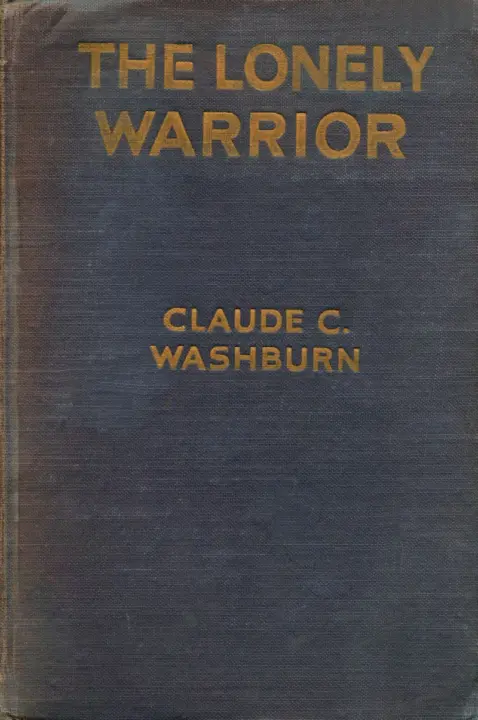
"The Lonely Warrior" by Claude C. Washburn is a novel written in the early 20th century. The story centers around Edward Carroll, his son Stacey, and their emotional conflicts during the backdrop of World War I. The book explores themes of duty, bravery, and the personal costs of war through the lens of familial relationships and societal expectations. At the start of the novel, we meet Edward Carroll, a successful businessman who engages in a poignant conversation with his son Stacey, who is determined to enlist for military service in the ongoing war. Despite Edward's fears for his son’s safety and his belief that the war may not directly involve Americans yet, Stacey argues passionately for the necessity of joining the fight. The opening segment highlights the generational clash in perceptions of duty and honor, with Stacey embodying a youthful idealism contrasted against his father's pragmatic concerns. Their dialogue reveals deep emotional undercurrents and foreshadows the personal struggles both will face as the broader conflict of the Great War looms over their lives.
Introduction adapted from the source catalogue; source summaries may be automatically generated.
Free to read · English · 103,179 words · No account needed
MAKE TIME FOR A GOOD BOOK
On by default. Untick to stop anonymous reading totals. Each page counts after 10 seconds in view. How this works.
Anonymous counting is on unless you have switched it off.
But, as he glanced at the telegram, he started.
“Philip dangerously ill with pneumonia. Come at once. Catherine,” it
read.
Stacey pushed back his chair and got up quickly. “We’ll have to go—at once!” he said. “A friend of mine is ill—pneumonia.”
She rose. “Your face is pale,” she observed, as he reached for her coat, “You really do care about something, don’t you?”
He nodded, holding out the coat.
“You ought to be glad,” she concluded, slipping it on. “I’m ready.”
“Drink your high-ball first—as quickly as you can,” he said, not
unkindly.
“No,” she returned, “I don’t care about it. Come! Let’s go.”
He flung money on the table and hurried the girl out. “And the message is two days old!” he muttered, wondering dully who could have told Catherine he was at Clarefield.
He drove the car to Vernon at a tremendous speed, Ethel sitting silent by his side. He spoke but once, to ask her the address of her apartment.
But when they drew up in front of it and he had helped her out, he stood with her for just a moment on the sidewalk. For all that he was feeling anxiety for his friend so strongly as almost to wipe everything else from his mind, he nevertheless—and even, somehow, because of this—felt now at last a touch of human interest in Ethel.
“If you ever need anything at all—or want to see me for any reason, call me up at my house,” he said inadequately.
“Thanks,” she murmured. “Good-bye.”
He sprang back into the car and drove swiftly to Phil’s house.
There was another car standing at the curb. “The doctor’s!” he thought,
with sudden hope.
Stacey did not ring, but opened the door softly and walked into the
living-room.
Catherine was sitting there, like some expressionless Byzantine Madonna, with Carter in her arms. He was sleeping, his flushed face and tousled yellow hair against her breast, his legs dangling limply from her lap. There was no one else in the room. Catherine looked up as Stacey entered, but she did not speak.
He stared at her. “Phil?” he demanded in a low voice.
The shadowy expression on her face deepened until it was unmistakable pain and fatigue, but still she did not speak.
“Dead?” Stacey cried hoarsely.
“Yes,” she replied gently, “he died last night—very peacefully.”
Stacey sat down suddenly and turned his head away. Tears did not come to his eyes, but he gasped, a choking feeling in his throat that made it hard for him to breathe.
“Poor Stacey!” said Catherine softly, after a little.
Your reading position is saved on this browser. Take it to another device with a library code. Reading pages adapt to text, rather than matching a printed edition.
BEHIND THE BOOK
This eBook is for the use of anyone anywhere in the United States and most other parts of the world at no cost and with almost no restrictions whatsoever. You may copy it, give it away or re-use it under the terms of the Project Gutenberg License included with this eBook or online at www.gutenberg.org. If you are not located in the United States, you will have to check the laws of the country where you are located before using this eBook. Read the source licence.
The original source file, including credits and licence, is retained by this library. Request an original-format copy at no charge. Please include the book title and Project Gutenberg identifier #60719.
KEEP YOUR CURIOSITY GOING
Cécile Tormay

Moritz Busch
Coulson Kernahan
John L. Ransom

Maurice Baring
Frances Wright