THE CLASSIC COLLECTION✦An outlaw’s diary: the CommuneCLASSIC FREE BOOKS
An outlaw’s diary: the Commune
Cécile Tormay
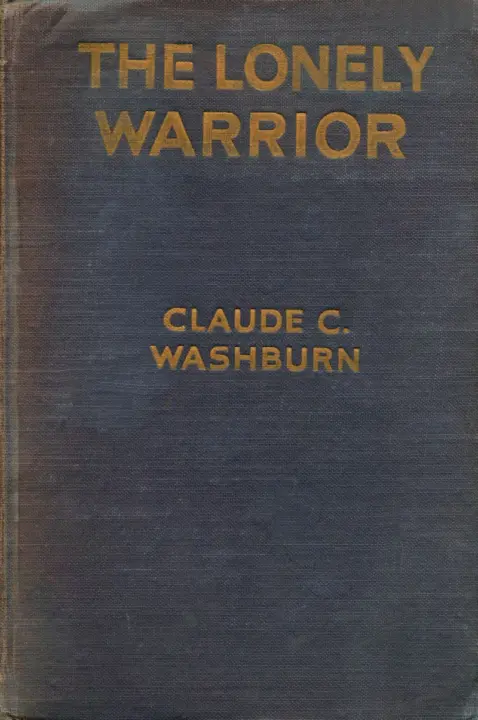
THE CLASSIC COLLECTION · 1922
"The Lonely Warrior" by Claude C. Washburn is a novel written in the early 20th century. The story centers around Edward Carroll, his son Stacey, and their emotional conflicts during the backdrop of World War I. The book explores themes of duty, bravery, and the personal costs of war through the lens of familial relationships and societal expectations. At the start of the novel, we meet Edward Carroll, a successful businessman who engages in a poignant conversation with his son Stacey, who is determined to enlist for military service in the ongoing war. Despite Edward's fears for his son’s safety and his belief that the war may not directly involve Americans yet, Stacey argues passionately for the necessity of joining the fight. The opening segment highlights the generational clash in perceptions of duty and honor, with Stacey embodying a youthful idealism contrasted against his father's pragmatic concerns. Their dialogue reveals deep emotional undercurrents and foreshadows the personal struggles both will face as the broader conflict of the Great War looms over their lives.
Introduction adapted from the source catalogue; source summaries may be automatically generated.
Free to read · English · 103,179 words · No account needed
MAKE TIME FOR A GOOD BOOK
On by default. Untick to stop anonymous reading totals. Each page counts after 10 seconds in view. How this works.
Anonymous counting is on unless you have switched it off.
Clearly she had better self-control than he. He paused before replying.
“Would you, now?” he said then. “That’s odd! You look too properly disdainful to care about fighting, and, as to being a man, you seem to me very thoroughly a woman.”
She looked at him again, squarely, appearing to study him.
“By the way,” he added abruptly, “what’s your name? Your drunken friend presented you merely as Ethel.”
“Wyatt. Ethel Wyatt. It wouldn’t mean anything to you. But I prefer Ames drunk, don’t you?”
“Yes.”
She turned to Price. “Cheer up, Ames, old top!” she cried, in a jovial, quite different voice. “Cocktails! Here’s to you!” And she pushed his glass toward him.
Ames gave her a dazed smile, patted her hand heavily, and drank. “’S’a mistake!” he said. “Had one a minute ago. Oughtn’t to have any more. But mus’ drink with Essel—Ethel.” He beamed across at Stacey. “Told you so, Carroll. See her for yourself now. Friendly. Not warm or cold, but friendly.”
Again she turned to Stacey. “You believe him?”
“No.” He stared at her fiercely. “Will you chuck Ames and run off
somewhere with me?”
“Yes, later,” she replied coolly, “when he’s quite drunk. I don’t want a scene. I hate scenes.” And she turned back to Ames.
Throughout the whole dinner she paid no more attention to Stacey, talking instead, with smiles and a coarsened voice, to her escort. But, beneath the table, her ankle was curved about Stacey’s, and now and again he felt it tremble, and trembled, too. But no touch of emotion was in her voice.
He had begun this merely as a savage joke on Ames. He was physically stirred now and going on with it eagerly, in search of oblivion.
After a while, Ethel being in sprightly conversation with Ames, Whittaker leaned close to Stacey. “I say! what’s the matter?” he demanded. “Wake up and get busy, Carroll!”
“Oh,” said Stacey calmly, “that’s all right! It’s all arranged. We’re only waiting for Ames to get completely blind. Miss Wyatt doesn’t want a scene.”
Whittaker stared, then laughed. “My heartiest apologies!” he exclaimed. “You’re a cool pair!”
“Where am I going to go from here?”
“Well,” said Whittaker thoughtfully, “you might go on to West Boyd. Fifteen miles straight down the road. There’s a good inn there, the Thorndike. Oh, but hang it, you haven’t got a car!”
“Can’t I rent one here?”
Your reading position is saved on this browser. Take it to another device with a library code. Reading pages adapt to text, rather than matching a printed edition.
BEHIND THE BOOK
This eBook is for the use of anyone anywhere in the United States and most other parts of the world at no cost and with almost no restrictions whatsoever. You may copy it, give it away or re-use it under the terms of the Project Gutenberg License included with this eBook or online at www.gutenberg.org. If you are not located in the United States, you will have to check the laws of the country where you are located before using this eBook. Read the source licence.
The original source file, including credits and licence, is retained by this library. Request an original-format copy at no charge. Please include the book title and Project Gutenberg identifier #60719.
KEEP YOUR CURIOSITY GOING
Cécile Tormay

Moritz Busch
Coulson Kernahan
John L. Ransom

Maurice Baring
Frances Wright