THE CLASSIC COLLECTION✦An outlaw’s diary: the CommuneCLASSIC FREE BOOKS
An outlaw’s diary: the Commune
Cécile Tormay
THE CLASSIC COLLECTION · 1922
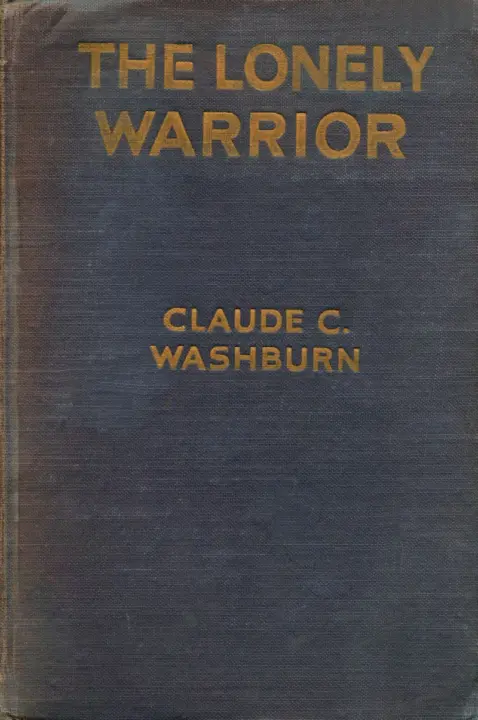
"The Lonely Warrior" by Claude C. Washburn is a novel written in the early 20th century. The story centers around Edward Carroll, his son Stacey, and their emotional conflicts during the backdrop of World War I. The book explores themes of duty, bravery, and the personal costs of war through the lens of familial relationships and societal expectations. At the start of the novel, we meet Edward Carroll, a successful businessman who engages in a poignant conversation with his son Stacey, who is determined to enlist for military service in the ongoing war. Despite Edward's fears for his son’s safety and his belief that the war may not directly involve Americans yet, Stacey argues passionately for the necessity of joining the fight. The opening segment highlights the generational clash in perceptions of duty and honor, with Stacey embodying a youthful idealism contrasted against his father's pragmatic concerns. Their dialogue reveals deep emotional undercurrents and foreshadows the personal struggles both will face as the broader conflict of the Great War looms over their lives.
Introduction adapted from the source catalogue; source summaries may be automatically generated.
Free to read · English · 103,179 words · No account needed
MAKE TIME FOR A GOOD BOOK
On by default. Untick to stop anonymous reading totals. Each page counts after 10 seconds in view. How this works.
Anonymous counting is on unless you have switched it off.
What he said this time was true beyond a doubt, though Irene could hardly be expected to believe it. For when he took her arm she did not draw close to him in delight; she shrank instinctively from his touch. She was sobbing, but he was probably quite right in thinking that it was from anger and shame. She controlled herself presently and wiped her eyes.
“Well, then, I’ll be going,” she remarked, in a strangled voice.
He went to the door with her. “Good night, Irene,” he said cordially,
shaking her hand.
“I—I’m sorry to have—put you out,” she said absurdly.
“Oh, that’s all right!” he replied, with a touch of amusement. “Good
night.”
Stacey returned to Whittaker. “Sorry to keep you so long,” he observed.
“No harm in that,” the other returned genially, “so long as you leave me in such good company.” He waved his hand toward the carafe.
“Yes, good stuff, isn’t it?” said Stacey, and took a stiff drink.
They set off presently, Stacey giving a sigh of relief at being out of the house and in some one else’s hands—no longer obliged to think for himself.
It was quite dark now. The car ploughed through the freezing slush and mud of a suburban district until at last it drew up before a small outlying drug-store.
Whittaker blew the horn, and a girl scurried out into the green and purple light, and down to the curb.
“Gee!” she exclaimed, “there’s two of you!”
“Uh-huh,” Whittaker assented. “My friend, Stacey Carroll, Minnie. Another hero of the late world unpleasantness. Minnie Prentice, Carroll. Hop in, Minnie, old thing!”
Stacey had stepped down to let the girl in. She shook his hand and turned her small piquant face to his for a moment, then sprang up lightly, dropping a kiss on Whittaker’s cheek, running her arm through his, and snuggling into place, all in a second.
“Minnie,” Whittaker remarked, as the car leaped forward, “was lately a prominent, if silent, member of that unfortunate production, ‘The Pearl Girl,’ which expensive show completely failed to arouse Chicago from its sleep, and passed away, with me finally almost the only mourner. Disgusted with the rouge and corruption of the stage, Minnie decided to reform; and where, as I explained to her, can you reform better than in Vernon? in which pleasant city she now holds a position at Leveredge’s department store (notion counter), and has me for a chaperon. Hey, Minnie?”
“You forget to tell Mr. What’s-his-name the rest, Bill,” said Minnie
with dignity.
Your reading position is saved on this browser. Take it to another device with a library code. Reading pages adapt to text, rather than matching a printed edition.
BEHIND THE BOOK
This eBook is for the use of anyone anywhere in the United States and most other parts of the world at no cost and with almost no restrictions whatsoever. You may copy it, give it away or re-use it under the terms of the Project Gutenberg License included with this eBook or online at www.gutenberg.org. If you are not located in the United States, you will have to check the laws of the country where you are located before using this eBook. Read the source licence.
The original source file, including credits and licence, is retained by this library. Request an original-format copy at no charge. Please include the book title and Project Gutenberg identifier #60719.
KEEP YOUR CURIOSITY GOING
Cécile Tormay

Moritz Busch
Coulson Kernahan
John L. Ransom

Maurice Baring
Frances Wright