THE CLASSIC COLLECTION✦An outlaw’s diary: the CommuneCLASSIC FREE BOOKS
An outlaw’s diary: the Commune
Cécile Tormay
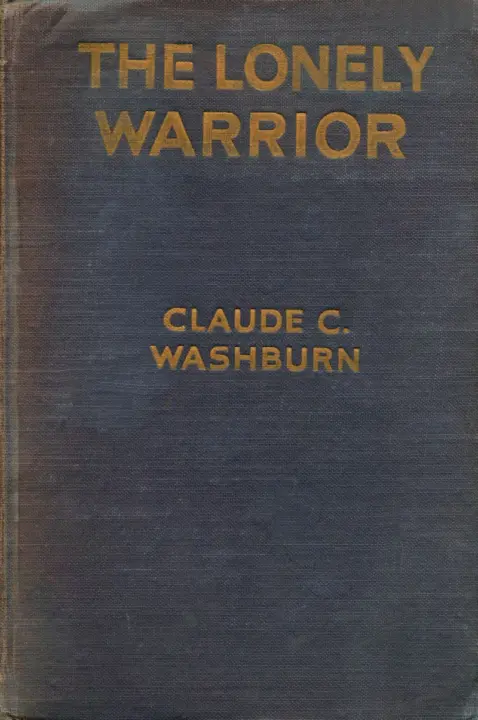
THE CLASSIC COLLECTION · 1922
"The Lonely Warrior" by Claude C. Washburn is a novel written in the early 20th century. The story centers around Edward Carroll, his son Stacey, and their emotional conflicts during the backdrop of World War I. The book explores themes of duty, bravery, and the personal costs of war through the lens of familial relationships and societal expectations. At the start of the novel, we meet Edward Carroll, a successful businessman who engages in a poignant conversation with his son Stacey, who is determined to enlist for military service in the ongoing war. Despite Edward's fears for his son’s safety and his belief that the war may not directly involve Americans yet, Stacey argues passionately for the necessity of joining the fight. The opening segment highlights the generational clash in perceptions of duty and honor, with Stacey embodying a youthful idealism contrasted against his father's pragmatic concerns. Their dialogue reveals deep emotional undercurrents and foreshadows the personal struggles both will face as the broader conflict of the Great War looms over their lives.
Introduction adapted from the source catalogue; source summaries may be automatically generated.
Free to read · English · 103,179 words · No account needed
MAKE TIME FOR A GOOD BOOK
On by default. Untick to stop anonymous reading totals. Each page counts after 10 seconds in view. How this works.
Anonymous counting is on unless you have switched it off.
Stacey, then, set off for New York the next afternoon. Julie was at the train to bid him good-bye, and so was Jimmy Prout, who tossed a book into his brother-in-law’s lap, and sat down opposite him. Stacey considered Jimmy’s agreeable face. Jimmy did no one any harm; on the contrary, he did people good by being such a companionable person. Why, thought Stacey, couldn’t he be like Jimmy? If turbulence of mind solved anything, got one anywhere, there would be something to say for it; since it didn’t, since it led only to impotent fuming, what was the use of it? But, even at the moment of putting the question to himself, Stacey was disconsolately aware that he might as well ask what was the use of the tides, since they only moved back and forth.
“You know, Stacey,” Julie was saying, “I’m over thirty, but every time I see any one off on the train I feel thirteen. I feel a positively aching desire to go too.”
“Come on along,” he returned. “Nobody I’d like better to have with me.”
“That’s nice of you, Stacey,” she said gratefully. “I would. I’d come just this way, without a thing, if it weren’t for Junior—he’s having whooping-cough. I’ve always wanted to do something impetuous like that.”
“Have you now?” asked Stacey, mildly surprised.
But Julie, who was sitting next the window of her brother’s section, suddenly gasped and burst into laughter. “Oh, Jimmy, Stacey, please, please, help me stop!” she cried, in a smothered voice, pressing her handkerchief against her mouth. “Oh, she mustn’t see me in this state!”
“Who mustn’t?” demanded her husband.
“I-Irene Loeffler. She—she’s come to see Stacey off,” Julie stammered weakly. “She’ll be in the car in a moment. Oh, dear!”
Jimmy laughed, too, and Julie made a tremendous effort at self-control, as Irene strode briskly down the car and paused beside them. She held a book in her hand.
“Hello!” she said abruptly. “Who’s going away?”
“I am,” and “he is,” returned Stacey and Jimmy, who had risen politely.
“That so? Where you going? Sit down! Sit down!”
“New York first,” Stacey answered cautiously.
Irene dropped into the seat beside Jimmy and crossed her legs. “I was looking for Effie Prince,” she remarked casually. “Supposed to be leaving on this train. Most likely couldn’t get her trunks packed in time. Never can. Here! You take the book I brought for her.”
“Thanks,” said Stacey. “Then you’re not going away? Sorry! I hoped you were when I saw you.”
Your reading position is saved on this browser. Take it to another device with a library code. Reading pages adapt to text, rather than matching a printed edition.
BEHIND THE BOOK
This eBook is for the use of anyone anywhere in the United States and most other parts of the world at no cost and with almost no restrictions whatsoever. You may copy it, give it away or re-use it under the terms of the Project Gutenberg License included with this eBook or online at www.gutenberg.org. If you are not located in the United States, you will have to check the laws of the country where you are located before using this eBook. Read the source licence.
The original source file, including credits and licence, is retained by this library. Request an original-format copy at no charge. Please include the book title and Project Gutenberg identifier #60719.
KEEP YOUR CURIOSITY GOING
Cécile Tormay

Moritz Busch
Coulson Kernahan
John L. Ransom

Maurice Baring
Frances Wright