THE CLASSIC COLLECTION✦An outlaw’s diary: the CommuneCLASSIC FREE BOOKS
An outlaw’s diary: the Commune
Cécile Tormay
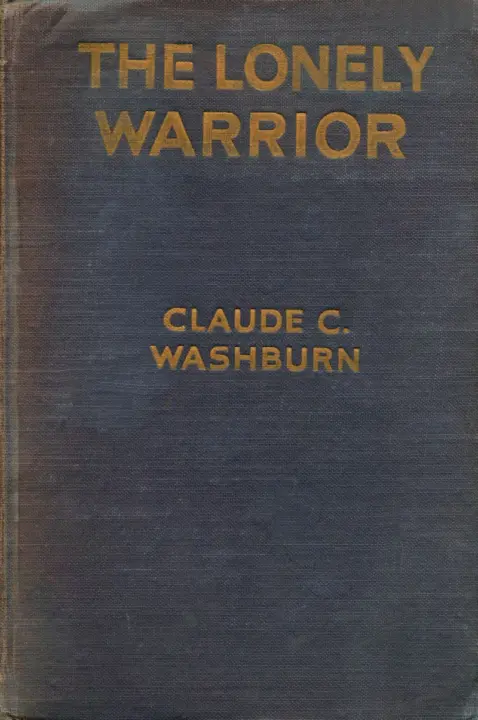
THE CLASSIC COLLECTION · 1922
"The Lonely Warrior" by Claude C. Washburn is a novel written in the early 20th century. The story centers around Edward Carroll, his son Stacey, and their emotional conflicts during the backdrop of World War I. The book explores themes of duty, bravery, and the personal costs of war through the lens of familial relationships and societal expectations. At the start of the novel, we meet Edward Carroll, a successful businessman who engages in a poignant conversation with his son Stacey, who is determined to enlist for military service in the ongoing war. Despite Edward's fears for his son’s safety and his belief that the war may not directly involve Americans yet, Stacey argues passionately for the necessity of joining the fight. The opening segment highlights the generational clash in perceptions of duty and honor, with Stacey embodying a youthful idealism contrasted against his father's pragmatic concerns. Their dialogue reveals deep emotional undercurrents and foreshadows the personal struggles both will face as the broader conflict of the Great War looms over their lives.
Introduction adapted from the source catalogue; source summaries may be automatically generated.
Free to read · English · 103,179 words · No account needed
MAKE TIME FOR A GOOD BOOK
On by default. Untick to stop anonymous reading totals. Each page counts after 10 seconds in view. How this works.
Anonymous counting is on unless you have switched it off.
Phil, who had followed Stacey and stood now at his shoulder, smiled. “That always seems to me an unfair advantage to take of people,” he said, “to watch them when they don’t know you’re there—like looking at them in their sleep. No,—worse than that. For their personality is one thing when it’s focussed on you, quite another focussed on some one else. You’re not meant to see the other. It contains no adaptation to you.”
“That’s why it’s a relief,” Stacey returned. “For a brief moment you get the sense of being yourself abolished, and experience peace.”
“H’m!” said Phil reflectively. “Also,” he added, after a pause, “I dare say this matter of personal adaptation to the individual accounts for the emptiness of talk—and thought—in a group. The adaptation is necessarily lacking.”
Stacey smiled faintly. “Always thorough, Phil, aren’t you?” he observed. He had a strange shadowy sense of being back in his old pre-war relationship to Phil. There was pleasure in this for Stacey, but melancholy also, since he knew it was an illusion. He continued to gaze in through the window at his father and Catherine.
Mr. Carroll was leaning forward in his chair, with a certain courtliness, and smiling; Catherine’s face in the light from the electric lamp appeared mobile and full of expression. They seemed to be talking freely.
“I never saw Catherine so bold before,” Stacey remarked finally, turning away. “I swear I’m jealous.”
“Oh,” Phil returned quietly, “she’s always shyer with you than with any
one else.”
“Is she? That’s silly. Now what do you suppose they’re talking about?” asked Stacey idly.
Philip Blair smiled. “You, no doubt.”
“Horrid thought! Come on! Let’s go in.”
“We were watching you from outside the window,” he announced
maliciously, as they reëntered the room. Catherine flushed. “Phil
said—”
“Oh, shut up, Stacey!” Phil interrupted. “I won’t have my wife teased. By the way, your friend, Mrs. Latimer, has been here a number of times.”
Stacey was interested. “You like her, Catherine?” he inquired.
“Very much,” she replied, the old shyness back again, stronger than ever, in voice and face. Perhaps she was vexed with it and struggled against it, for: “The last time she came she brought her daughter, Mrs. Price, with her,” Catherine added, then bit her lip, lest she should have said something awkward.
“Marian?” Stacey exclaimed. But he was not perturbed. He had forgotten Marian completely in the last week. He was merely surprised; for he somehow could not fancy Marian and Catherine together.
Your reading position is saved on this browser. Take it to another device with a library code. Reading pages adapt to text, rather than matching a printed edition.
BEHIND THE BOOK
This eBook is for the use of anyone anywhere in the United States and most other parts of the world at no cost and with almost no restrictions whatsoever. You may copy it, give it away or re-use it under the terms of the Project Gutenberg License included with this eBook or online at www.gutenberg.org. If you are not located in the United States, you will have to check the laws of the country where you are located before using this eBook. Read the source licence.
The original source file, including credits and licence, is retained by this library. Request an original-format copy at no charge. Please include the book title and Project Gutenberg identifier #60719.
KEEP YOUR CURIOSITY GOING
Cécile Tormay

Moritz Busch
Coulson Kernahan
John L. Ransom

Maurice Baring
Frances Wright