THE CLASSIC COLLECTION✦An outlaw’s diary: the CommuneCLASSIC FREE BOOKS
An outlaw’s diary: the Commune
Cécile Tormay
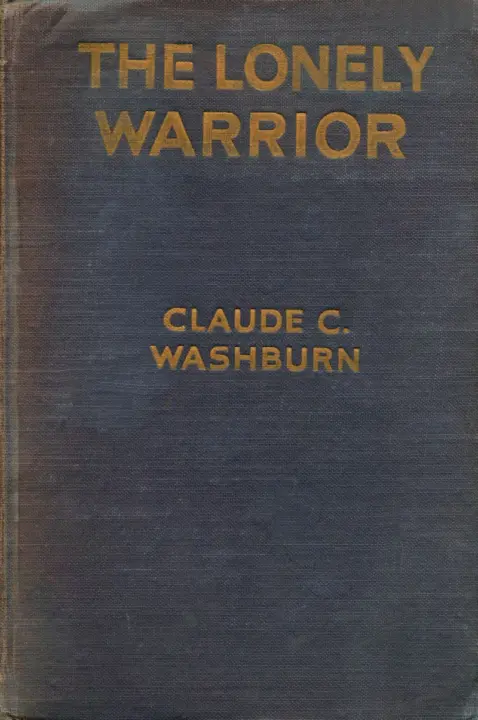
THE CLASSIC COLLECTION · 1922
"The Lonely Warrior" by Claude C. Washburn is a novel written in the early 20th century. The story centers around Edward Carroll, his son Stacey, and their emotional conflicts during the backdrop of World War I. The book explores themes of duty, bravery, and the personal costs of war through the lens of familial relationships and societal expectations. At the start of the novel, we meet Edward Carroll, a successful businessman who engages in a poignant conversation with his son Stacey, who is determined to enlist for military service in the ongoing war. Despite Edward's fears for his son’s safety and his belief that the war may not directly involve Americans yet, Stacey argues passionately for the necessity of joining the fight. The opening segment highlights the generational clash in perceptions of duty and honor, with Stacey embodying a youthful idealism contrasted against his father's pragmatic concerns. Their dialogue reveals deep emotional undercurrents and foreshadows the personal struggles both will face as the broader conflict of the Great War looms over their lives.
Introduction adapted from the source catalogue; source summaries may be automatically generated.
Free to read · English · 103,179 words · No account needed
MAKE TIME FOR A GOOD BOOK
On by default. Untick to stop anonymous reading totals. Each page counts after 10 seconds in view. How this works.
Anonymous counting is on unless you have switched it off.
Close to Stacey a heavy red-faced man was shaking his clenched fists high in the air. “Oh, lynch him! The God-damn son of a bitch! Oh, nigger lover! Oh, kill him! Lynch him!” he shrieked, his voice hoarse, his face purple, convulsed, incredibly bestial.
And suddenly a white ungovernable rage flared up in Stacey. There was nothing left of his personality but rage. He seized the man about the waist, and, helped by a new surge of the crowd, half flung him, half was swept with him, back into the narrow dark entrance of the alley and down it.
The momentum gathered from the crowd hurled both forward, staggering, and separated them. But Stacey was upon his man again instantly. They were perhaps thirty yards down the alley in a semi-obscurity.
“Here! You! What d’you—?”
Stacey merely dived, in hot silence, for the man’s throat, and fastened his hands upon it tensely.
The victim struck out wildly, gasped, kicked, but Stacey bent him back and leaned over, sinking his thumbs deeper and deeper with every ounce of his great strength into the fleshy throat. And, as he pressed, he had the delirious exultant delusion that he was strangling all humanity. His teeth were set. His eyes were terrible with hatred.
The man’s face grew violet, his eyes protruded loathsomely, his gurgling mouth opened to press out a swollen tongue. Then all at once he relaxed weakly, his whole body limp. Stacey flung him off, and he fell in a sprawled motionless heap to the ground.
Stacey looked down for a moment and pushed the body with the toe of his shoe, then turned away, wiping his hands on his handkerchief. He was quite calm again, fierce, but with no further impulse to kill.
He did not go back and fight his way into the crowd once more. Where was the use? He could not break through. Instead, he followed the alley in, leaving the roar of the crowd behind him, and came out eventually into another street, parallel with the one he had left. It, too, was crowded, but not densely like the first. Stacey made his way off from it swiftly, and before long reached still another street, empty, silent.
But from back over there behind the intervening house-walls came yet wilder noise and crackling volleys of shots. They had got the negro, Stacey supposed.
He strode on for a long, long time—half an hour? an hour?—heedless of direction, turning corners aimlessly, until at last he was walking up a street down which, toward him, people were flowing in groups, talking loudly. The show was over, no doubt, the audience dispersing.
Your reading position is saved on this browser. Take it to another device with a library code. Reading pages adapt to text, rather than matching a printed edition.
BEHIND THE BOOK
This eBook is for the use of anyone anywhere in the United States and most other parts of the world at no cost and with almost no restrictions whatsoever. You may copy it, give it away or re-use it under the terms of the Project Gutenberg License included with this eBook or online at www.gutenberg.org. If you are not located in the United States, you will have to check the laws of the country where you are located before using this eBook. Read the source licence.
The original source file, including credits and licence, is retained by this library. Request an original-format copy at no charge. Please include the book title and Project Gutenberg identifier #60719.
KEEP YOUR CURIOSITY GOING
Cécile Tormay

Moritz Busch
Coulson Kernahan
John L. Ransom

Maurice Baring
Frances Wright