THE CLASSIC COLLECTION✦StormCLASSIC FREE BOOKS
Storm
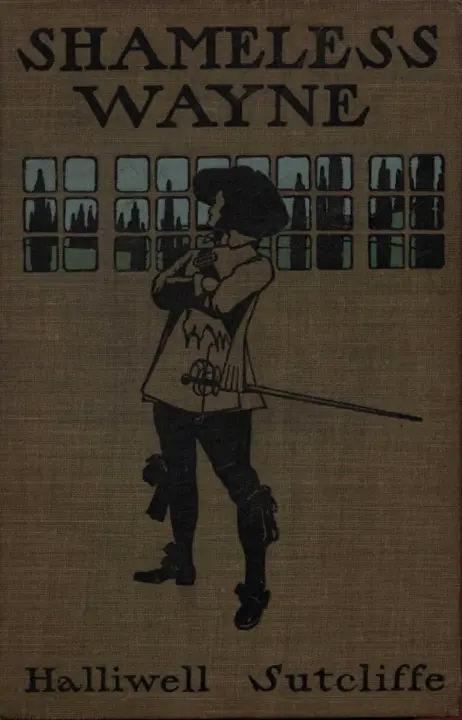
Halliwell Sutcliffe

THE CLASSIC COLLECTION · 1911
"The Lone Adventure" by Halliwell Sutcliffe is a historical novel written in the early 20th century. Set against the backdrop of the Jacobite Rising in England, the story unfolds in the picturesque moors of Lancashire, following the experiences of Rupert Royd, the heir to the estate of Windyhough. The narrative dives into themes of loyalty, struggle, and personal identity as Rupert grapples with his perceived weakness and familial expectations, while the larger political tensions simmer around him. At the start of the novel, we meet Rupert as he stands alone on the moor, contemplating his insecurities and the challenges imposed by his mother and brother. Rupert feels like an outsider in his own family due to his physical frailties and longing for the acceptance of the gallant image embodied by his younger brother, Maurice. As he interacts with Nance Demaine, a girl who understands his struggles, feelings of rivalry and self-doubt surface when their love line becomes intertwined with his brother's affections. The chapter takes a dramatic turn when Rupert confronts Maurice in a fight, seeking to assert himself. The opening portion vividly portrays the inner and outer conflicts faced by Rupert as the tensions of a pending civil war loom, setting the stage for the larger historical narrative to unfold.
Introduction adapted from the source catalogue; source summaries may be automatically generated.
Free to read · English · 136,218 words · No account needed
MAKE TIME FOR A GOOD BOOK
On by default. Untick to stop anonymous reading totals. Each page counts after 10 seconds in view. How this works.
Anonymous counting is on unless you have switched it off.
The three troopers left faced round on the incoming company. They saw seven men, white in the linen coats they had not found thought or leisure to throw off, and sudden panic seized them. Through the stark waiting-time of their siege, with the moors and the sobbing winds to foster superstition, they had learned belief in ghosts, and thought they saw them now. They ran blindly for the doorway. Rupert leaped from the stair, and they were taken front and rear.
When all was done, Rupert steadied himself, stood straight and
soldierly, scanned the faces of his rescuers, and knew them all for
friends.
“My thanks, gentlemen,” he said, with tired courtesy. “You came in a
good hour.”
He leaned a hand on the Red Squire’s shoulder, wiped a trickle of blood from some chance wound that had touched his forehead, glanced round at them with dim, unseeing eyes.
“Have I kept the house? Have I finished?”
“The house is in our keeping now. You’ve done well, my lad,” said the red-faced squire, with gruff tenderness.
“Then I’ll get to sleep, I think.”
And he would have fallen, but the squire held him up and, putting two rough arms about him, carried him upstairs.
“A well-plucked one,” he said, returning quickly. “And now, gentlemen, the house will be on fire, by your leave, if we don’t turn our hands to the pump.”
Nance, watching from the shadows, was bewildered by the speed and fury of it all--bewildered more by the business-like, quiet way in which these linen-coated gentry went in and out of hall, carrying buckets and quenching the last smouldering flames with water from the stable yard. This was war--war, with its horror, its gallantry, its comedy; but it was not the warfare she had pictured when she sang heroic ballads at the spinet.
And then the night’s uproar and its madness passed by her. She thought only of the master who had all but died just now to save the house--to save her honour. She could not face the busy hall, the man sprawling on the stair, head downward, where Rupert’s blow had left him. Instead, she went back along the corridor and up by the servants’ stairway, and found Rupert lying in a dead sleep in his own chamber, a lighted candle at his elbow, just as the red-faced squire had left him.
“My dear,” she said, knowing he could not hear, “my dear”--her voice broke in a deep, quiet laugh that had no meaning to her as yet--“they said you were the scholar. And I think they lied.”
Your reading position is saved on this browser. Take it to another device with a library code. Reading pages adapt to text, rather than matching a printed edition.
Halliwell Sutcliffe
Halliwell Sutcliffe
Halliwell Sutcliffe
Halliwell Sutcliffe
BEHIND THE BOOK
This eBook is for the use of anyone anywhere in the United States and most other parts of the world at no cost and with almost no restrictions whatsoever. You may copy it, give it away or re-use it under the terms of the Project Gutenberg License included with this eBook or online at www.gutenberg.org. If you are not located in the United States, you will have to check the laws of the country where you are located before using this eBook. Read the source licence.
The original source file, including credits and licence, is retained by this library. Request an original-format copy at no charge. Please include the book title and Project Gutenberg identifier #62899.
KEEP YOUR CURIOSITY GOING
Cécile Tormay

Moritz Busch
Coulson Kernahan
John L. Ransom

Maurice Baring
Frances Wright