THE CLASSIC COLLECTION✦StormCLASSIC FREE BOOKS
Storm
Halliwell Sutcliffe
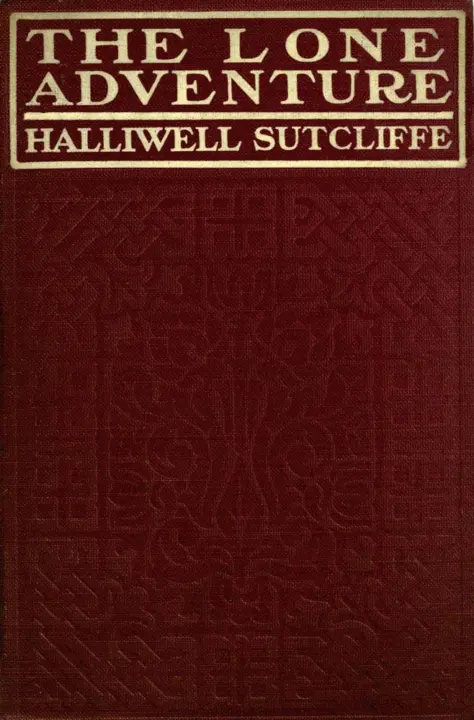
THE CLASSIC COLLECTION · 1911
"The Lone Adventure" by Halliwell Sutcliffe is a historical novel written in the early 20th century. Set against the backdrop of the Jacobite Rising in England, the story unfolds in the picturesque moors of Lancashire, following the experiences of Rupert Royd, the heir to the estate of Windyhough. The narrative dives into themes of loyalty, struggle, and personal identity as Rupert grapples with his perceived weakness and familial expectations, while the larger political tensions simmer around him. At the start of the novel, we meet Rupert as he stands alone on the moor, contemplating his insecurities and the challenges imposed by his mother and brother. Rupert feels like an outsider in his own family due to his physical frailties and longing for the acceptance of the gallant image embodied by his younger brother, Maurice. As he interacts with Nance Demaine, a girl who understands his struggles, feelings of rivalry and self-doubt surface when their love line becomes intertwined with his brother's affections. The chapter takes a dramatic turn when Rupert confronts Maurice in a fight, seeking to assert himself. The opening portion vividly portrays the inner and outer conflicts faced by Rupert as the tensions of a pending civil war loom, setting the stage for the larger historical narrative to unfold.
Introduction adapted from the source catalogue; source summaries may be automatically generated.
Free to read · English · 136,218 words · No account needed
MAKE TIME FOR A GOOD BOOK
On by default. Untick to stop anonymous reading totals. Each page counts after 10 seconds in view. How this works.
Anonymous counting is on unless you have switched it off.
“Gi’e me,” said Martha, with bewildering tenderness, “the end of all this Rising trouble, and us two in a farm together, wi’ a churn to work at, and an inglenook to sit by when the day’s work is over wi’. I’d not sell that farm I’ve dreamed of, Simon, for all your bonnie Prince’s love-locks.”
“Well, as for love-locks,” said the other, his thoughts still busier with war than peace, “he has none so many left these days. He’s a plain man, riding troubled roads; and he carries himself like a man, they say, or near thereby.”
Martha lifted her lanthorn suddenly to his face. “Aye, you carry the ‘far’ look,” she said jealously. “Cattle i’ the byre, the quiet lowing o’ them, and a hearth-place warm and ready for ye--they’re windle-straws to ye just now, my lad.”
And Simon laughed. “I’d like one straight-up fight, I own, before I settle down. It’s i’ the blood, ye see. I carried a pike i’ the last Rising, and killed one here and there, and took my wounds. A man no way forgets, Martha, the young, pleasant days. And there’s danger near the house, if all Mr. Oliphant said be true.”
“Well, gang in and meet it, then,” snapped Martha, “if your stiffened joints will let you.”
She was sore with jealousy, though Simon’s battle-hunger was her only rival, and struck at random, cruelly, as women do at these times, because God made them so. And Simon, because men are made so, winced, and recovered, and said never a word as he crossed to the kitchen door.
“Simon!” she called, with late-found penitence.
He did not turn his head, but strode indoors, through the running banter that met him by the way, and went upstairs to find Rupert standing by the loophole that overlooked the main doorway.
“At your post, master?” he said dryly.
Rupert turned sharply. “You disturbed a dream of mine,” he said, in his well-bred, scholarly voice. “I was fancying men were out in the moonlit courtyard, that I aimed straight, Simon, and shot a few of those black rats from Hanover.”
Simon chuckled soberly. He liked to hear his favourite lapse from the orderly speech that was his usual habit.
“They’ll come, sure enough,” he said gruffly. “We’ve waited over-long, you and me, to miss some chance o’ frolic at the last.”
Rupert, with his large, royal air, disdaining always the lean, scholarly form he carried, laughed gently. “My faith is weak to-night, Simon. So little happens, and God knows I’ve prayed for open battle.”
Your reading position is saved on this browser. Take it to another device with a library code. Reading pages adapt to text, rather than matching a printed edition.
Halliwell Sutcliffe
Halliwell Sutcliffe
Halliwell Sutcliffe
Halliwell Sutcliffe
BEHIND THE BOOK
This eBook is for the use of anyone anywhere in the United States and most other parts of the world at no cost and with almost no restrictions whatsoever. You may copy it, give it away or re-use it under the terms of the Project Gutenberg License included with this eBook or online at www.gutenberg.org. If you are not located in the United States, you will have to check the laws of the country where you are located before using this eBook. Read the source licence.
The original source file, including credits and licence, is retained by this library. Request an original-format copy at no charge. Please include the book title and Project Gutenberg identifier #62899.
KEEP YOUR CURIOSITY GOING
Cécile Tormay

Moritz Busch
Coulson Kernahan
John L. Ransom

Maurice Baring
Frances Wright