THE CLASSIC COLLECTION✦The sprightly romance of MarsacCLASSIC FREE BOOKS
The sprightly romance of Marsac
Molly Elliot Seawell
THE CLASSIC COLLECTION · 1899
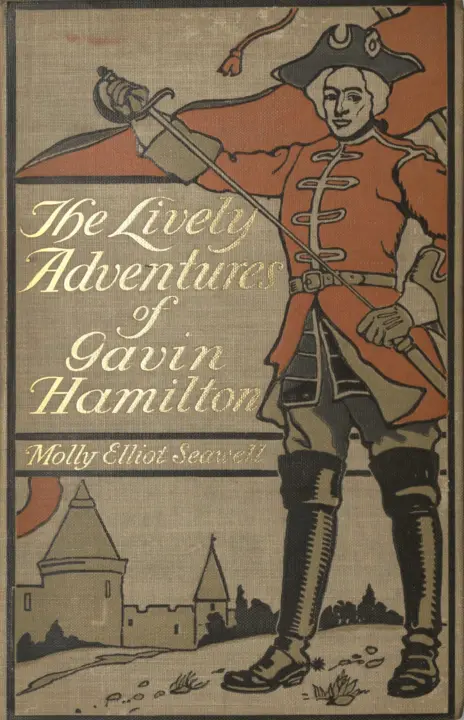
"The Lively Adventures of Gavin Hamilton" by Molly Elliot Seawell is a historical novel written in the late 19th century. The story is set during the tumultuous backdrop of the Seven Years' War, specifically focusing on the experiences of young Gavin Hamilton, a soldier navigating the complexities of his lineage and the brutal realities of conflict. Through his vivid encounters with various characters, including his fellow soldier Captain St. Arnaud and the notable King Frederick of Prussia, the novel explores themes of loyalty, honor, and the pursuit of identity. At the start of the novel, we are introduced to Gavin Hamilton during a bitterly cold autumn in 1757, as he finds himself separated from his regiment amid the chaos of war. He encounters Captain St. Arnaud, who has also lost his regiment. Together, they endure the harsh winter conditions while sharing personal stories, revealing Gavin's turbulent relationship with his estranged father. The narrative quickly shifts from their immediate survival to their camaraderie and aspirations for greater honor, culminating in their daring escape from captivity at the fortress of Glatz. This opening establishes a mix of adventure, personal conflict, and historical intrigue that promises to engage readers in Gavin's lively journey.
Introduction adapted from the source catalogue; source summaries may be automatically generated.
Free to read · English · 63,895 words · No account needed
MAKE TIME FOR A GOOD BOOK
On by default. Untick to stop anonymous reading totals. Each page counts after 10 seconds in view. How this works.
Anonymous counting is on unless you have switched it off.
She got down in the road, St. Arnaud handed her the money, and she made him promise to feed the horse well; and then St. Arnaud, proceeding, by way of reward, to give her a kiss, Bettina raised her strong arm and fetched him a thundering box on the ear; and Gavin, who was standing by quite innocent, inadvertently happening to laugh, Bettina gave him two corresponding slaps that nearly knocked him down, crying:
“Is that the way you behave? I’ll teach you better manners, both of you!” and she strode down the road indignantly, scorning to look back.
“I thought,” said Gavin, rubbing his tingling cheeks, “that women were always kind to the unfortunate.”
“Well, there are exceptions,” diplomatically replied St. Arnaud. “For my own part, I am very much obliged to the young lady for not giving me a good beating; she is perfectly capable of it, physically as well as morally.”
“And we are not unfortunate any longer,” cried Gavin, jumping into the cart, and giving the patient horse a whack. “We are free, we have money, we have this equipage!”
“Yes,” replied St. Arnaud gayly, “we will not trouble with post-chaises; we will travel the whole distance to Vienna in this blessed cart; we will make our entrée as conspicuously as possible. We will drive under the palace windows of the Empress Queen herself, and let her see us. Oh, we will make such an arrival into Vienna that it won’t be forgotten in a hurry!”
“We will! We will!” shouted Gavin, belabouring, in the excess of his joy, the poor horse; “and we won’t say anything about the fond adieu we had from Miss Bettina.”
Some weeks after this, on a brilliant winter morning, the last day of the year, all Vienna was astir for a great military review. The Empress Queen, undaunted by the disasters at Rosbach and Leuthen, had determined to renew the contest with her old enemy, the King of Prussia, at the earliest practicable moment; and to give heart to her army and people, she appeared constantly before them, reviewed her troops often, and showed undiminished confidence in them. She had, it is true, consented that her brother-in-law, the Archduke Charles, should be relieved of the command of the army, in deference to the popular will. But she, the most loyal sovereign in the world to all who had served her, took occasion to soften the blow to the Archduke Charles by appearing with him in public and treating him with a kindness that his courage and devotion merited, although he had been vanquished by the superior genius of the King of Prussia. She had, therefore, ordered a grand review of the household troops, with a number of veterans of the last campaign. It was a means she took of keeping up the courage of her people, as well as complimenting a loyal but unfortunate servant. When her enemies thought her nearest to ruin, then it was that Maria Theresa showed herself so superior to fear that she infused her own high courage into her army and her people. And for this reason, when her military fortunes were low, she chose rather to act as if disasters were mere mishaps, to be redeemed in another campaign.
Your reading position is saved on this browser. Take it to another device with a library code. Reading pages adapt to text, rather than matching a printed edition.
Molly Elliot Seawell
Molly Elliot Seawell

Molly Elliot Seawell
Molly Elliot Seawell
BEHIND THE BOOK
This eBook is for the use of anyone anywhere in the United States and most other parts of the world at no cost and with almost no restrictions whatsoever. You may copy it, give it away or re-use it under the terms of the Project Gutenberg License included with this eBook or online at www.gutenberg.org. If you are not located in the United States, you will have to check the laws of the country where you are located before using this eBook. Read the source licence.
The original source file, including credits and licence, is retained by this library. Request an original-format copy at no charge. Please include the book title and Project Gutenberg identifier #68630.
KEEP YOUR CURIOSITY GOING
Cécile Tormay

Moritz Busch
Coulson Kernahan
John L. Ransom

Maurice Baring
Frances Wright