THE CLASSIC COLLECTION✦A dead man’s diaryCLASSIC FREE BOOKS
A dead man’s diary
Coulson Kernahan
THE CLASSIC COLLECTION · 1906
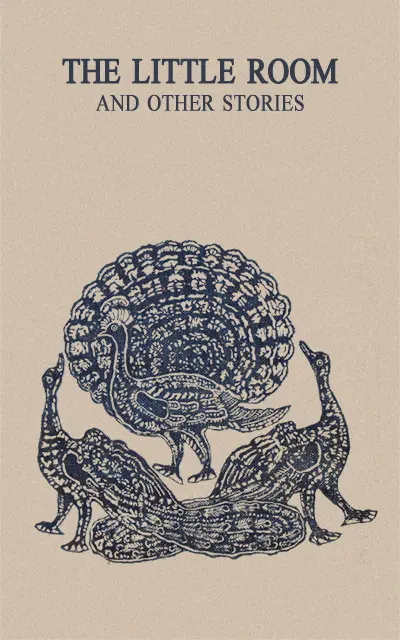
"The Little Room and Other Stories" by Madeline Yale Wynne is a collection of short stories written in the late 19th century. The opening story, "The Little Room," delves into themes of memory, imagination, and the intersection of reality and fantasy, centering on Margaret Grant, who recounts a peculiar childhood memory regarding a mysterious little room that she believes existed in her family home. As her narrative unfolds, it reveals deep emotional ties to her mother, who struggled with this memory, suggesting that the experiences they shared may harbor hidden truths. The opening of "The Little Room" introduces Margaret and her husband, Roger, as they journey to visit her aunts who raised her mother. Margaret reminisces about her mother's vivid descriptions of a charming little room from her childhood, which was later discovered to have never existed, leaving a question mark over her mother's memories. This tale unfolds with Margaret's mix of nostalgia and apprehension, revealing the emotional weight the memory carries for her, exacerbated by her husband's skepticism. As Margaret grapples with her memories, the narrative shifts into a blend of family dynamics, the essence of childhood imagination, and the haunting fear of losing cherished recollections, setting a compelling tone for the work.
Introduction adapted from the source catalogue; source summaries may be automatically generated.
Free to read · English · 20,289 words · No account needed
MAKE TIME FOR A GOOD BOOK
On by default. Untick to stop anonymous reading totals. Each page counts after 10 seconds in view. How this works.
Anonymous counting is on unless you have switched it off.
‘I sat down where you have just been sitting, and leaned my chin on my hands as I made you do. I felt excited and disturbed. The full significance of the next step dawned on me in all its depth and meaning. I was carried along by my agitated thoughts, and found myself looking at myself in the glass. I was struck, as anyone is at such a moment, by the strangeness of my own face caught with some controlling emotion on it. I seemed outside and apart from my usual self. As the consciousness of observing myself came to me, I began to look more as I usually do when I casually glance in the glass, to tie my scarf, for instance. Then I fell to speculating on that other fellow that I had seen when he was unawares. I suppose it is a common experience, this meeting with oneself. I must have been quite deeply absorbed, when, gradually, I saw over my left shoulder a shadow--no, not a shadow, but a semblance of a face. There was a sort of golden halo or fringe of golden hair over a pair of smiling red-brown eyes. I caught myself smiling involuntarily in response. The eyes were above the level of my own, as if a woman were standing there looking over my shoulder and meeting my eyes in the glass. Mabel’s eyes are dark. Her eyes were a red-brown. I could not see her face--not that it was hidden, but it was as if the eyes were so absorbing that they blotted out all else. This lasted for some minutes, then I turned to see what was behind me that would produce such an illusion. There was nothing there that could be twisted or warped into any semblance of a face. I took the same position again, my chin on my hands, my elbows on the table. It was some time before I could get the vision--not till my thoughts began to wander; then I saw those strange, beautiful eyes again, and the fluffy golden hair, and not till I moved my head did they disappear. The eyes smiled at me; the vision seemed warm and human--not in the faintest degree ghostly, except that somehow I couldn’t see much but the eyes. As I say, I was driven by curiosity to turn round, and she vanished. I failed to call her to me again that night, and the next, and for some days; then she came again. I had sat here for hours waiting for her. I was determined to see what would come of it. I used to spend whole evenings here alone, waiting. When, at last, she did come, she came smiling, warm, human; and this time I saw her mouth--a large, mobile mouth, less smiling than the eyes, but most lovely. She came again and again. Once I put my hand behind me suddenly--that was a mistake. She vanished, and it was many evenings after that before she came again. The next time, strangely enough, I could see her more distinctly than ever. Her eyes were not smiling; maybe that was why I could see the rest of her face better. Then I discerned how beautiful she was. Her chin was a perfect oval, and it terminated in a lovely point below her gracious mouth; it was distractingly beautiful. My left hand was hanging by my side, and I could distinctly feel her draperies brushing tremulously against it. You will have the same sensation if you let this scarf brush across your hand--so. This silent drama went on for some weeks. I neglected everything for her. One day Mabel sent for me, and told me she had noticed my abstraction and had drawn her own conclusions, and that, if I were willing, she would like to discontinue the engagement. Willing! I felt like a knave; I was humiliated; I suffered, but I could say nothing. It was a different thing to sit and smile into those red-brown eyes of my vision, and to meet Mabel’s dark, truthful ones, and not to be able to explain anything to her; to feel that for her there was no explanation; to know that I was submerged in a stream of life of which she had no part. Then Mabel’s greatness saved me. She saw my suffering, and she did not press me for any explanation, but told me frankly that she must consider our relations as having reverted to their old standing--we must be only as friends; that she herself saw that her interests were more and more tending toward work among the poor, and her imagination absorbed in plans for the general welfare, rather than in the idea of making one man’s home supremely happy, as it undoubtedly should be made. That was about it. It was noble of her, wasn’t it? I had no choice but to accept her decision. That I wished for that very decision was bitterness to me. I see now that even then I wanted the selfish comfort of being a martyr. Mabel is the noblest woman alive; she has become my saint, instead of my wife.’
Your reading position is saved on this browser. Take it to another device with a library code. Reading pages adapt to text, rather than matching a printed edition.
BEHIND THE BOOK
This eBook is for the use of anyone anywhere in the United States and most other parts of the world at no cost and with almost no restrictions whatsoever. You may copy it, give it away or re-use it under the terms of the Project Gutenberg License included with this eBook or online at www.gutenberg.org. If you are not located in the United States, you will have to check the laws of the country where you are located before using this eBook. Read the source licence.
The original source file, including credits and licence, is retained by this library. Request an original-format copy at no charge. Please include the book title and Project Gutenberg identifier #58855.
KEEP YOUR CURIOSITY GOING
Coulson Kernahan

Maurice Baring
Frances Wright
Cécile Tormay

Frederic Jesup Stimson

W. H. P. (William Henry Pope) Jarvis