THE CLASSIC COLLECTION✦A dead man’s diaryCLASSIC FREE BOOKS
A dead man’s diary
Coulson Kernahan
THE CLASSIC COLLECTION · 1906
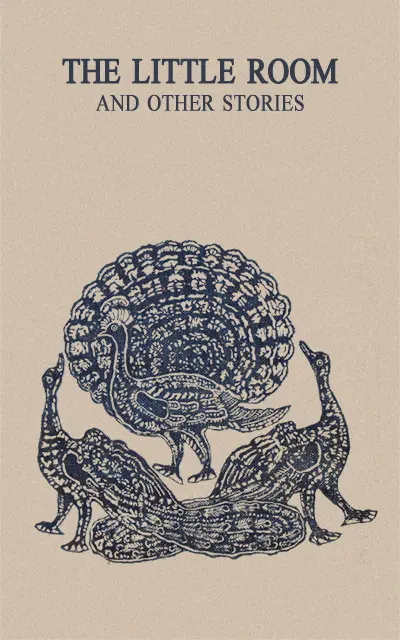
"The Little Room and Other Stories" by Madeline Yale Wynne is a collection of short stories written in the late 19th century. The opening story, "The Little Room," delves into themes of memory, imagination, and the intersection of reality and fantasy, centering on Margaret Grant, who recounts a peculiar childhood memory regarding a mysterious little room that she believes existed in her family home. As her narrative unfolds, it reveals deep emotional ties to her mother, who struggled with this memory, suggesting that the experiences they shared may harbor hidden truths. The opening of "The Little Room" introduces Margaret and her husband, Roger, as they journey to visit her aunts who raised her mother. Margaret reminisces about her mother's vivid descriptions of a charming little room from her childhood, which was later discovered to have never existed, leaving a question mark over her mother's memories. This tale unfolds with Margaret's mix of nostalgia and apprehension, revealing the emotional weight the memory carries for her, exacerbated by her husband's skepticism. As Margaret grapples with her memories, the narrative shifts into a blend of family dynamics, the essence of childhood imagination, and the haunting fear of losing cherished recollections, setting a compelling tone for the work.
Introduction adapted from the source catalogue; source summaries may be automatically generated.
Free to read · English · 20,289 words · No account needed
MAKE TIME FOR A GOOD BOOK
On by default. Untick to stop anonymous reading totals. Each page counts after 10 seconds in view. How this works.
Anonymous counting is on unless you have switched it off.
‘Yes, I am slim; but I’ve seen smaller chances, and you know I am all the one you have got.’
‘Why, yes, as William has it, “A poor thing, but mine own.” Allow me to help you up on the table; there, how is that? Do you think you could sit on that cuff-box and rest your feet on the pen-wiper? I am afraid the table is rather bare and cold, and you don’t look very well. Is that comfortable?’
‘Oh, very, thank you;--and now you may begin.’
‘Yes, in a minute. I want to ask you first if you really are my only
chance?’
‘Yes, absolutely your only one,’ said the small figure sitting on the box, with his hands resting on his knees. He was a clever-looking little ghost, eight or nine inches high, clean shaven, with his hair brushed back to hide an evidently increasing tendency to baldness--he was not in his first youth. He was plainly but neatly dressed, though his clothes looked a little shiny at the seams. His face was careworn and anxious in its expression, but attractive, and his manners were unobjectionable.
‘So you are my only chance, are you? May I ask where you came from?’
‘Oh, I am sent here from the “Bureau of Chances”; we have to go just wherever we are sent, you know; we haven’t any choice in the matter.’
‘Yes, of course, that stands to reason; I can readily understand no ghost of the slightest financial instinct would have chosen me to come to; I am all the more obliged for any chance at all, on any terms. It is very encouraging to have you sit there; I like it. I think I will try and do some work.’
‘Yes, I would,’ said the little Ghost, with alacrity.
The Author leaned back, and, clasping his hands behind his head, he fixed his eyes on the little Ghost, and began:
‘It is to be a story, you know--a romance. She is to be the central figure--a splendid red-haired creature, with great instincts, primeval, untrained, capacious; she is to devour the world; she can’t wait for experience; she hungers and thirsts for sensations; she is to boom through the story--no lagging, no questioning; see?’
‘Yes,’ nodded the little Ghost.
‘And then,’ continued the Author, ‘she is to meet the hero; he is to be Tradition, Culture, Development, Conservatism; and there will be, so to speak, no one else in the world except these two forces, and the battle royal will be between these two.’
‘Yes,’ nodded the little Ghost.
‘I think I will write that out before I go any further with the plot.’
Your reading position is saved on this browser. Take it to another device with a library code. Reading pages adapt to text, rather than matching a printed edition.
BEHIND THE BOOK
This eBook is for the use of anyone anywhere in the United States and most other parts of the world at no cost and with almost no restrictions whatsoever. You may copy it, give it away or re-use it under the terms of the Project Gutenberg License included with this eBook or online at www.gutenberg.org. If you are not located in the United States, you will have to check the laws of the country where you are located before using this eBook. Read the source licence.
The original source file, including credits and licence, is retained by this library. Request an original-format copy at no charge. Please include the book title and Project Gutenberg identifier #58855.
KEEP YOUR CURIOSITY GOING
Coulson Kernahan

Maurice Baring
Frances Wright
Cécile Tormay

Frederic Jesup Stimson

W. H. P. (William Henry Pope) Jarvis