THE CLASSIC COLLECTION✦The haunts of menCLASSIC FREE BOOKS
The haunts of men
Robert W. (Robert William) Chambers
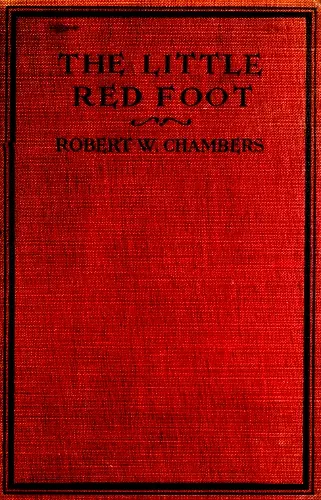
THE CLASSIC COLLECTION · 1921
"The Little Red Foot" by Robert W. Chambers is a historical novel written in the early 20th century. This engaging narrative is set in colonial America during a crucial time leading up to the Revolutionary War, focusing on the life and legacy of Sir William Johnson, an influential figure known for his relationships with Native Americans and his role in the British colonies. The book introduces themes of loyalty, honor, and the complex intersections of colonial politics, which are embodied in the lives of its characters, including Sir William's son, Sir John Johnson. At the start of the story, Sir William Johnson's passing is depicted as a monumental event, marking the end of an era. The opening chapters provide insight into his significance as a leader who sought to maintain peace between colonists and Indigenous tribes amid the brewing tensions that signal the coming revolutionary conflict. Following his death, key characters, including his son Sir John and various members of colonial society, are shown navigating their grief while also grappling with the ominous political landscape. The story hints at personal conflicts and broader societal shifts, layered with the tensions between loyalty to the Crown and emerging revolutionary sentiments among the colonists.
Introduction adapted from the source catalogue; source summaries may be automatically generated.
Free to read · English · 129,789 words · No account needed
MAKE TIME FOR A GOOD BOOK
On by default. Untick to stop anonymous reading totals. Each page counts after 10 seconds in view. How this works.
Anonymous counting is on unless you have switched it off.
That horrid treason which, through God's mercy, did not utterly confound us and deliver this fortress to our enemy, still seems to brood over this calm river and the frowning hills that buttress it, like a low, dark cloud.
But I believe, under God, that our cause is now clean purged of all villainy, and all that is sordid, base, and contemptible.
I believe, under God, that we shall accomplish our freedom and recover our ancient and English liberties in the end.
That dull and German King, who sits yonder across the water, can never again stir in any American the faintest echo of that allegiance which once all offered simply and without question.
Nor can his fat jester, my Lord North, contrive any new pleasantry to seduce us, or any new and bloody deviltry to make us fear the wrath of God's anointed or the monkey chatter of his clown.
For us, the last king has sat upon a throne; the last privilege has been accorded to the last and noble drone; the last slave's tax has long been paid.
Yet--and it sounds strange--England still seems home to us.... We think of it as home.... It is in our blood; and I am not ashamed to say it. And I think a hundred years may pass, and, in our hearts, shall still remain deep, deep, a tenderness for that far, ocean-severed home our grandsires knew as England.
I say it spite o' the German King, spite of his mad ministers, spite o' British wrath and scorn and jibes and cruelty. For, by God! I believe that we ourselves who stand in battle here are the true mind and heart and loins of England, fighting to slay her baser self!
Well, we are here in the Highlands, my sweetheart-wife and I.... I who now wear the regimentals of a Continental Colonel, and have a regiment as pretty as ever I see--though it be not over-strong in numbers. But, oh, the powder toughened line o' them in their patched blue-and-buff! And their bright bayonets! Sir, I would not boast; and ask I pardon if it seems so....
Below us His Excellency, calm, imperturbable, holds in his hand our destinies, juggling now with Sir Henry Clinton, now with my Lord Cornwallis, as suits his temper and his purpose.
The traitor, Arnold, ravages where he may; the traitor, Lee, sulks in retreat; and Conway has confessed his shame; and the unhappy braggart, Gates, now mourns his laurels, wears his willows, and sits alone, a broken and preposterous man.
Your reading position is saved on this browser. Take it to another device with a library code. Reading pages adapt to text, rather than matching a printed edition.
Robert W. (Robert William) Chambers
Robert W. (Robert William) Chambers

Robert W. (Robert William) Chambers
Robert W. (Robert William) Chambers
BEHIND THE BOOK
This eBook is for the use of anyone anywhere in the United States and most other parts of the world at no cost and with almost no restrictions whatsoever. You may copy it, give it away or re-use it under the terms of the Project Gutenberg License included with this eBook or online at www.gutenberg.org. If you are not located in the United States, you will have to check the laws of the country where you are located before using this eBook. Read the source licence.
The original source file, including credits and licence, is retained by this library. Request an original-format copy at no charge. Please include the book title and Project Gutenberg identifier #37333.
KEEP YOUR CURIOSITY GOING
Cécile Tormay

Moritz Busch
Coulson Kernahan
John L. Ransom

Maurice Baring
Frances Wright