THE CLASSIC COLLECTION✦The haunts of menCLASSIC FREE BOOKS
The haunts of men
Robert W. (Robert William) Chambers
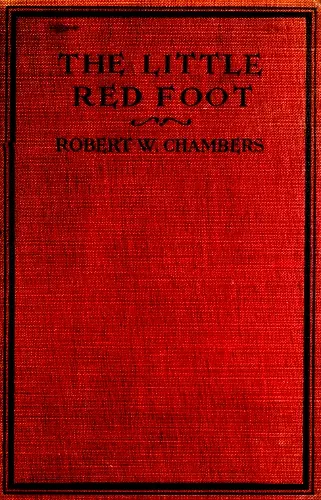
THE CLASSIC COLLECTION · 1921
"The Little Red Foot" by Robert W. Chambers is a historical novel written in the early 20th century. This engaging narrative is set in colonial America during a crucial time leading up to the Revolutionary War, focusing on the life and legacy of Sir William Johnson, an influential figure known for his relationships with Native Americans and his role in the British colonies. The book introduces themes of loyalty, honor, and the complex intersections of colonial politics, which are embodied in the lives of its characters, including Sir William's son, Sir John Johnson. At the start of the story, Sir William Johnson's passing is depicted as a monumental event, marking the end of an era. The opening chapters provide insight into his significance as a leader who sought to maintain peace between colonists and Indigenous tribes amid the brewing tensions that signal the coming revolutionary conflict. Following his death, key characters, including his son Sir John and various members of colonial society, are shown navigating their grief while also grappling with the ominous political landscape. The story hints at personal conflicts and broader societal shifts, layered with the tensions between loyalty to the Crown and emerging revolutionary sentiments among the colonists.
Introduction adapted from the source catalogue; source summaries may be automatically generated.
Free to read · English · 129,789 words · No account needed
MAKE TIME FOR A GOOD BOOK
On by default. Untick to stop anonymous reading totals. Each page counts after 10 seconds in view. How this works.
Anonymous counting is on unless you have switched it off.
It was a vast panorama that lay around us--a great misty amphitheatre more than a hundred miles in circumference. At our feet lay that immense marsh of fifteen thousand acres, called the Great Vlaie; mountains walled the Drowned Lands north, east, west; and to the south stretched a wilderness of pine and spectral tamaracks.
Lying flat on the roof, and peering cautiously between the spindles of the railing, I saw, below on the Vlaie Water, the same skiff I had seen at Fish House.
In the heavy skiff, the gunwales of which were barricaded with their military packs, lay six green-coats,--Captains Hare and Nellis, Sergeant Newberry, Beacraft, and two strangers in private's uniform.
They had a white flag set in the prow.
But the two blue-eyed Indians, Barney Cane and George Cuck, were not with them, nor were the two Mohawks. And in a whisper I bade my Saguenay go around to the south gable and keep his eye on the gate and the Johnstown Road on the mainland.
Hare took the white flag from the prow and waved it, the two rowers continuing up creek and heading toward our landing.
Then I called out to them to halt and back water; and, as they paid no heed, I fired at their white flag, and knocked the staff and rag out of Hare's hand without wounding him.
At that two or three cried out angrily, but their rowers ceased and began to back water hastily; and I, reloading, kept an eye on them.
Then Hare stood up in the skiff and bawled through his hollowed hand:
"Will you parley? Or do you wish to violate a flag?"
"Keep your interval, Henry Hare!" I retorted. "If you have anything to say, say it from where you are or I'll drill you clean!"
"Is that John Drogue, the Brent-Meester?" he shouted.
"None other," said I. "What brings you to Summer House in such fair
weather, Harry Hare?"
"I wish to land and parley," he replied. "You may blindfold me if you
like."
"When I put out your lights," said I, "it will be a quicker job than that. What do you wish to do--count our garrison?"
Captain Nellis got up from his seat and replied that he knew how many people occupied Summer House, and that, desiring to prevent the useless effusion of blood, he demanded our surrender under promise of kind treatment.
I laughed at him. "No," said I, "my hair suits my head and I like it there rather than swinging all red and wet at the girdle of your blue-eyed Indians."
Your reading position is saved on this browser. Take it to another device with a library code. Reading pages adapt to text, rather than matching a printed edition.
Robert W. (Robert William) Chambers
Robert W. (Robert William) Chambers

Robert W. (Robert William) Chambers
Robert W. (Robert William) Chambers
BEHIND THE BOOK
This eBook is for the use of anyone anywhere in the United States and most other parts of the world at no cost and with almost no restrictions whatsoever. You may copy it, give it away or re-use it under the terms of the Project Gutenberg License included with this eBook or online at www.gutenberg.org. If you are not located in the United States, you will have to check the laws of the country where you are located before using this eBook. Read the source licence.
The original source file, including credits and licence, is retained by this library. Request an original-format copy at no charge. Please include the book title and Project Gutenberg identifier #37333.
KEEP YOUR CURIOSITY GOING
Cécile Tormay

Moritz Busch
Coulson Kernahan
John L. Ransom

Maurice Baring
Frances Wright