THE CLASSIC COLLECTION✦The haunts of menCLASSIC FREE BOOKS
The haunts of men
Robert W. (Robert William) Chambers
THE CLASSIC COLLECTION · 1921
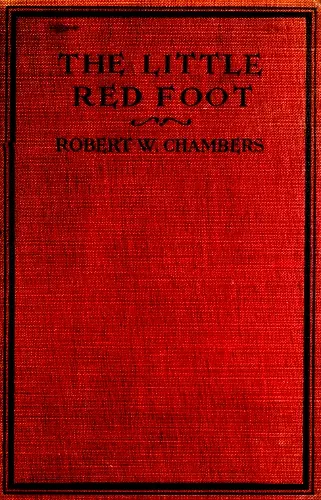
"The Little Red Foot" by Robert W. Chambers is a historical novel written in the early 20th century. This engaging narrative is set in colonial America during a crucial time leading up to the Revolutionary War, focusing on the life and legacy of Sir William Johnson, an influential figure known for his relationships with Native Americans and his role in the British colonies. The book introduces themes of loyalty, honor, and the complex intersections of colonial politics, which are embodied in the lives of its characters, including Sir William's son, Sir John Johnson. At the start of the story, Sir William Johnson's passing is depicted as a monumental event, marking the end of an era. The opening chapters provide insight into his significance as a leader who sought to maintain peace between colonists and Indigenous tribes amid the brewing tensions that signal the coming revolutionary conflict. Following his death, key characters, including his son Sir John and various members of colonial society, are shown navigating their grief while also grappling with the ominous political landscape. The story hints at personal conflicts and broader societal shifts, layered with the tensions between loyalty to the Crown and emerging revolutionary sentiments among the colonists.
Introduction adapted from the source catalogue; source summaries may be automatically generated.
Free to read · English · 129,789 words · No account needed
MAKE TIME FOR A GOOD BOOK
On by default. Untick to stop anonymous reading totals. Each page counts after 10 seconds in view. How this works.
Anonymous counting is on unless you have switched it off.
But I soon perceived that all he knew was the veriest camp gossip, and that his budget of rumours and reports was of no value whatever. For he said that our armies were everywhere victorious; that the British armies were on the run; and that the war would be over in another month. Everybody, quoth he, would become rich and happy, with General Washington for our King, and every general a duke or marquis, and every soldier a landed proprietor, with nothing to do save sit on his porch, smoke his pipe, and watch his slaves plow his broad acres.
When this sorry ass took his leave, I had long since ceased to listen to
him.
I felt very well, except for the accursed itching where my flesh was mending, and rib-bones knitting.
Dr. Thatcher came in. He was booted, spurred, wore pistols and sword, and a military foot-mantle.
When he caught my eyes he smiled slightly and asked me how I did. And I expressed my gratitude as suitably as I knew how, saying that I was well and desired to rise and be about my business.
"In two weeks," he said, which took me aback.
"Do you know how long you have been here?" he asked, amused.
"Some three or four days, I suppose.
"A month today, Mr. Drogue."
This stunned me. He seated himself on the camp-stool beside my
trundle-bed.
"What preys upon your mind, Mr. Drogue?" he asked pleasantly.
"Sir?"
"I ask you what it is that troubles you."
I felt a slow heat in my cheeks:
"I have nothing on my mind, sir, save desire to return to duty."
He said in his kindly way: "You would mend more quickly, sir, if your
mind were tranquil."
I felt my face flush to my hair:
"Why do you suppose that my mind is uneasy, Doctor?"
"You have asked no questions. A sick man, when recovering, asks many. You seem to remain incurious, indifferent. Yet, you are in the house of old friends."
He looked at me out of his kind, grave eyes: "Also," he said, "you had
many days of fever."
My face burned: I feared to guess what he meant, but now I must ask.
"Did I babble?"
"A feverish patient often becomes loquacious."
"Of--of whom did I--rave?" I could scarce force myself to the question. Then, as he also seemed embarrassed, I added: "You need not name her, Doctor. But I beg you to tell me who besides yourself overheard me."
"Only your soldier, Nicholas Stoner, and a Saguenay Indian, who squats outside your door day and night."
"Nobody else?"
"I think not."
Your reading position is saved on this browser. Take it to another device with a library code. Reading pages adapt to text, rather than matching a printed edition.
Robert W. (Robert William) Chambers
Robert W. (Robert William) Chambers

Robert W. (Robert William) Chambers
Robert W. (Robert William) Chambers
BEHIND THE BOOK
This eBook is for the use of anyone anywhere in the United States and most other parts of the world at no cost and with almost no restrictions whatsoever. You may copy it, give it away or re-use it under the terms of the Project Gutenberg License included with this eBook or online at www.gutenberg.org. If you are not located in the United States, you will have to check the laws of the country where you are located before using this eBook. Read the source licence.
The original source file, including credits and licence, is retained by this library. Request an original-format copy at no charge. Please include the book title and Project Gutenberg identifier #37333.
KEEP YOUR CURIOSITY GOING
Cécile Tormay

Moritz Busch
Coulson Kernahan
John L. Ransom

Maurice Baring
Frances Wright