THE CLASSIC COLLECTION✦The haunts of menCLASSIC FREE BOOKS
The haunts of men
Robert W. (Robert William) Chambers
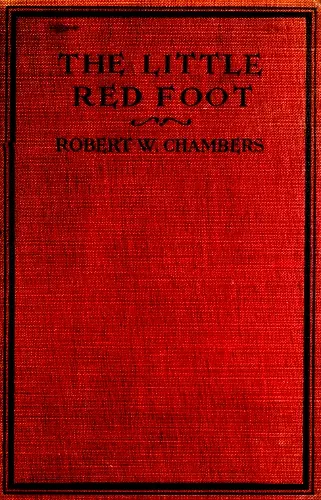
THE CLASSIC COLLECTION · 1921
"The Little Red Foot" by Robert W. Chambers is a historical novel written in the early 20th century. This engaging narrative is set in colonial America during a crucial time leading up to the Revolutionary War, focusing on the life and legacy of Sir William Johnson, an influential figure known for his relationships with Native Americans and his role in the British colonies. The book introduces themes of loyalty, honor, and the complex intersections of colonial politics, which are embodied in the lives of its characters, including Sir William's son, Sir John Johnson. At the start of the story, Sir William Johnson's passing is depicted as a monumental event, marking the end of an era. The opening chapters provide insight into his significance as a leader who sought to maintain peace between colonists and Indigenous tribes amid the brewing tensions that signal the coming revolutionary conflict. Following his death, key characters, including his son Sir John and various members of colonial society, are shown navigating their grief while also grappling with the ominous political landscape. The story hints at personal conflicts and broader societal shifts, layered with the tensions between loyalty to the Crown and emerging revolutionary sentiments among the colonists.
Introduction adapted from the source catalogue; source summaries may be automatically generated.
Free to read · English · 129,789 words · No account needed
MAKE TIME FOR A GOOD BOOK
On by default. Untick to stop anonymous reading totals. Each page counts after 10 seconds in view. How this works.
Anonymous counting is on unless you have switched it off.
But I had scant leisure for watching them, where they moved about laughing and gossiping excitedly, comparing rifles, trying locks and pans, sorting out finery, or smearing themselves with gaudy symbols.
For, not a hundred rods east of us, across the ridge, stood that log hut of Howell's; and the owl-haunted tamaracks stretched away behind it in a misty wilderness. And in that swampy forest, at this very moment, were hidden desperate men who designed our deaths--men I knew--neighbors at Fonda's Bush, like the Cadys, Helmers, and Dries Bowman!--men who lately served in my militia company, like Balty Weed and Gene Grinnis.
Now, as I paced the fire circle, listening and waiting for Nick and Johnny Silver, I could scarce credit what the wretch, Moucher, had told me, so horrid bloody did their enterprise appear to me.
That they should strive to kill us when facing us in proper battle, that I could comprehend. But to plan in the darkness!--to come by stealth in their farmer's clothes to surprise us in our sleep!--faugh!
"My God," says I to Godfrey, who paced beside me, "why have they not at least embodied to do us such a filthy business? And if they were only a company with some officer to make them respectable--militia, minute men, rangers, anything!"
"They be bloody-minded folk," said he grimly. "No coureur-du-bois is harder, craftier, or more heartless than John Howell; no forest runner more merciless than Charlie Cady. These be rough and bloody men, John. And I think we are like to have a rude fight of it before sun-up."
I thought so too, but did not admit as much. I had ten men. They mustered ten--if Moucher's accounts were true. And I did not doubt it, under the circumstances of his pusillanimous confession.
The River Reed came to me to show me her necklace of coloured glass. And I drew her aside, told her as much as I cared to, and bade her prepare her Oneidas for a midnight battle.
At that moment I heard the Canada sparrow. Thiohero answered, sweet and clear. A few seconds later Nick and Silver came in, carrying the canoe paddles.
"They've gone," said Nick, with an oath. "Two mounted men and a led horse rode toward Johnstown two hours since. They wore Canajoharie regimentals. Major Westfall sent a dozen riders after 'em; but men who came so boldly to spy us out are like to get away as boldly, too."
He plucked my arm and I stepped apart with him.
"Westfall's in his dotage; Dayton is too slow. Why don't they send up
Willett or Herkimer?"
"I don't know," said I, troubled.
Your reading position is saved on this browser. Take it to another device with a library code. Reading pages adapt to text, rather than matching a printed edition.
Robert W. (Robert William) Chambers
Robert W. (Robert William) Chambers

Robert W. (Robert William) Chambers
Robert W. (Robert William) Chambers
BEHIND THE BOOK
This eBook is for the use of anyone anywhere in the United States and most other parts of the world at no cost and with almost no restrictions whatsoever. You may copy it, give it away or re-use it under the terms of the Project Gutenberg License included with this eBook or online at www.gutenberg.org. If you are not located in the United States, you will have to check the laws of the country where you are located before using this eBook. Read the source licence.
The original source file, including credits and licence, is retained by this library. Request an original-format copy at no charge. Please include the book title and Project Gutenberg identifier #37333.
KEEP YOUR CURIOSITY GOING
Cécile Tormay

Moritz Busch
Coulson Kernahan
John L. Ransom

Maurice Baring
Frances Wright