THE CLASSIC COLLECTION✦The haunts of menCLASSIC FREE BOOKS
The haunts of men
Robert W. (Robert William) Chambers
THE CLASSIC COLLECTION · 1921
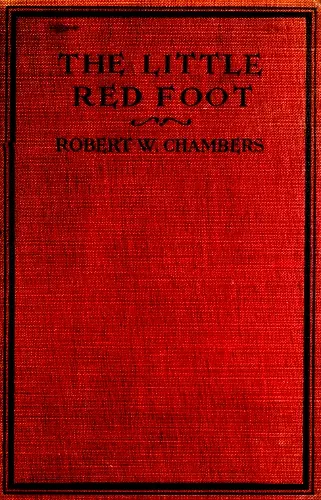
"The Little Red Foot" by Robert W. Chambers is a historical novel written in the early 20th century. This engaging narrative is set in colonial America during a crucial time leading up to the Revolutionary War, focusing on the life and legacy of Sir William Johnson, an influential figure known for his relationships with Native Americans and his role in the British colonies. The book introduces themes of loyalty, honor, and the complex intersections of colonial politics, which are embodied in the lives of its characters, including Sir William's son, Sir John Johnson. At the start of the story, Sir William Johnson's passing is depicted as a monumental event, marking the end of an era. The opening chapters provide insight into his significance as a leader who sought to maintain peace between colonists and Indigenous tribes amid the brewing tensions that signal the coming revolutionary conflict. Following his death, key characters, including his son Sir John and various members of colonial society, are shown navigating their grief while also grappling with the ominous political landscape. The story hints at personal conflicts and broader societal shifts, layered with the tensions between loyalty to the Crown and emerging revolutionary sentiments among the colonists.
Introduction adapted from the source catalogue; source summaries may be automatically generated.
Free to read · English · 129,789 words · No account needed
MAKE TIME FOR A GOOD BOOK
On by default. Untick to stop anonymous reading totals. Each page counts after 10 seconds in view. How this works.
Anonymous counting is on unless you have switched it off.
"Flavilla's hair,
Beyond compare,
Like sunshine brightens all the earth!
Old Sol, beware!
She cheats you, there,
And robs your rays of all their worth!
"Impotent blaze!
I shall not praise
Your brazen ways,
Nor dare compare
Your flaming gaze
To those sweet rays
Which play around Flavilla's hair.
"For lo, behold!
No sunshine bold
Can hope to gild or make more fair
The living gold,
Where, fold on fold,
In glory shines Flavilla's hair!"
There was a merry tumult of praise for the poet, and some rallied him, but he seemed complacent enough, and Penelope looked shyly at him over lagging needles,--a smile her acknowledgment and thanks.
"Sir," says a cornet of horse, in helmet and jack-boots--though I perceived none of his company about, and wondered where he came from,--"will you consent to entertain our merry Council with some account of the scout which, from your appearance, sir, I guess you have but recently accomplished."
To this stilted and somewhat pompous speech I inclined my head with civility, but replied that I did not yet feel at liberty to discuss any journey I may have accomplished until my commanding officer gave me permission. Which mild rebuke turned young Jack-boots red, and raised a titter.
An officer said: "The dry blood on your hunting shirt, sir, and the somewhat amazing appearance of your tame Indian, who squats yonder, devouring the back of your head with his eyes, must plead excuse for our natural curiosity. Also, we have not yet smelled powder, and it is plain that you have had your nostrils full."
I laughed, feeling no mirth, however, but sensible of my dull pain and
my restlessness.
"Sir," said I, "if I have smelled gun-powder, I shall know that same perfume again; and if I have not yet sniffed it, nevertheless I shall know it when I come to scent it. So, gentlemen, I can not see that you are any worse off in experience than I."
A subaltern, smiling, ventured to ask me what kind of Indian was that
who enquired me.
"Of Algonquin stock," said I, "but speaks an odd lingo, partly Huron-Iroquois, partly the Loup tongue, I think. He is a Saguenay."
"One of those fierce wanderers of the mountains," nodded an older officer. "I thought they were not to be tamed."
"I owned a tame tree-cat once," remarked another officer.
My friend, Jack-boots, now pulls out a bull's-eye watch with two fobs, and tells the time with a sort of sulky satisfaction. For many of the company arose, and made their several and gallant adieus to Penelope, who suffered their salute on one little hand, while she held yarn and needles in t'other.
Your reading position is saved on this browser. Take it to another device with a library code. Reading pages adapt to text, rather than matching a printed edition.
Robert W. (Robert William) Chambers
Robert W. (Robert William) Chambers

Robert W. (Robert William) Chambers
Robert W. (Robert William) Chambers
BEHIND THE BOOK
This eBook is for the use of anyone anywhere in the United States and most other parts of the world at no cost and with almost no restrictions whatsoever. You may copy it, give it away or re-use it under the terms of the Project Gutenberg License included with this eBook or online at www.gutenberg.org. If you are not located in the United States, you will have to check the laws of the country where you are located before using this eBook. Read the source licence.
The original source file, including credits and licence, is retained by this library. Request an original-format copy at no charge. Please include the book title and Project Gutenberg identifier #37333.
KEEP YOUR CURIOSITY GOING
Cécile Tormay

Moritz Busch
Coulson Kernahan
John L. Ransom

Maurice Baring
Frances Wright