THE CLASSIC COLLECTION✦The haunts of menCLASSIC FREE BOOKS
The haunts of men
Robert W. (Robert William) Chambers
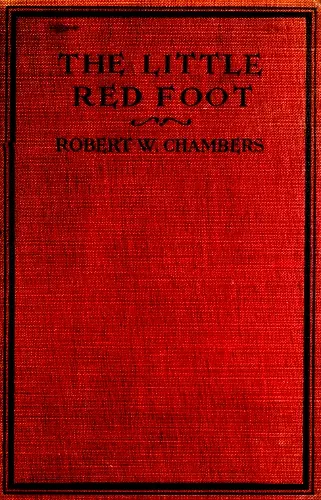
THE CLASSIC COLLECTION · 1921
"The Little Red Foot" by Robert W. Chambers is a historical novel written in the early 20th century. This engaging narrative is set in colonial America during a crucial time leading up to the Revolutionary War, focusing on the life and legacy of Sir William Johnson, an influential figure known for his relationships with Native Americans and his role in the British colonies. The book introduces themes of loyalty, honor, and the complex intersections of colonial politics, which are embodied in the lives of its characters, including Sir William's son, Sir John Johnson. At the start of the story, Sir William Johnson's passing is depicted as a monumental event, marking the end of an era. The opening chapters provide insight into his significance as a leader who sought to maintain peace between colonists and Indigenous tribes amid the brewing tensions that signal the coming revolutionary conflict. Following his death, key characters, including his son Sir John and various members of colonial society, are shown navigating their grief while also grappling with the ominous political landscape. The story hints at personal conflicts and broader societal shifts, layered with the tensions between loyalty to the Crown and emerging revolutionary sentiments among the colonists.
Introduction adapted from the source catalogue; source summaries may be automatically generated.
Free to read · English · 129,789 words · No account needed
MAKE TIME FOR A GOOD BOOK
On by default. Untick to stop anonymous reading totals. Each page counts after 10 seconds in view. How this works.
Anonymous counting is on unless you have switched it off.
"He says he saw painted Mohawks fishing in the Big Eddy, and others watching the trail. He does not know how many, because he can not count above five numbers. He says the Mohawks stoned him and mocked him, calling him Tree-eater and Woodpecker; and they drove him away from the Big Eddy, saying that no Saguenay was at liberty to fish in Canienga territory until permitted by the Canienga; and that unless he started back to Canada, where he belonged, the Iroquois women would catch him and beat him with nettles."
As Thiohero uttered the dread name, Canienga, I could see our captive shrink with the deep fear that the name inspired. And I think any Iroquois terrified him, for it seemed as though he dared not sustain the half-contemptuous, half-indifferent glances of my Oneidas, but his eyes shifted to mine in dumb appeal for refuge.
"What is my brother's name?" I asked.
"Yellow Leaf," translated the girl.
"His clan?"
"The Hawk," she said, shrugging her shoulders.
"Nevertheless," said I, very quietly, "my Saguenay brother is a man, and not an animal to be mocked by the Maqua!"
And I stooped and picked up his blanket and weapons, and gave them to
him.
"The Saguenays are free people," said I. "The Yellow Leaf is free as is his clan ensign, the Hawk. Brother, go in peace!"
And I motioned my people forward.
Our flankers, who, keeping stations, had waited, now started on again, the Water-snake running swiftly to his post on the extreme right flank.
After ten minutes' silent and swift advance, Thiohero came lightly to my
side on the trail.
"Brother," she whispered, "was it well considered to let loose that Tree-eating rover in our rear?"
"Would the Oneida take such a wretched trophy as that poor hunter's
tangled scalp?"
"Neah. Yet, I ask again, was it wisdom to let him loose, who, for a mouthful of parched corn, might betray us to the Mengwe?"
"Poor devil, he means no harm to anybody."
"Then why does he skulk after us?"
Startled, I turned and caught a glimpse of something slinking on the ridge between our flankers; but was instantly reassured because no living thing could dog us without discovery from the rear. And presently I did see the Screech-owl run forward and hurl a clod of moss into the thicket; and the Saguenay broke cover like a scared dog, running perdue so that he came close to Hanatoh, who flung a stick at him.
That was too much for me; and, as the Tree-eater bolted past me, I
seized him.
Your reading position is saved on this browser. Take it to another device with a library code. Reading pages adapt to text, rather than matching a printed edition.
Robert W. (Robert William) Chambers
Robert W. (Robert William) Chambers

Robert W. (Robert William) Chambers
Robert W. (Robert William) Chambers
BEHIND THE BOOK
This eBook is for the use of anyone anywhere in the United States and most other parts of the world at no cost and with almost no restrictions whatsoever. You may copy it, give it away or re-use it under the terms of the Project Gutenberg License included with this eBook or online at www.gutenberg.org. If you are not located in the United States, you will have to check the laws of the country where you are located before using this eBook. Read the source licence.
The original source file, including credits and licence, is retained by this library. Request an original-format copy at no charge. Please include the book title and Project Gutenberg identifier #37333.
KEEP YOUR CURIOSITY GOING
Cécile Tormay

Moritz Busch
Coulson Kernahan
John L. Ransom

Maurice Baring
Frances Wright