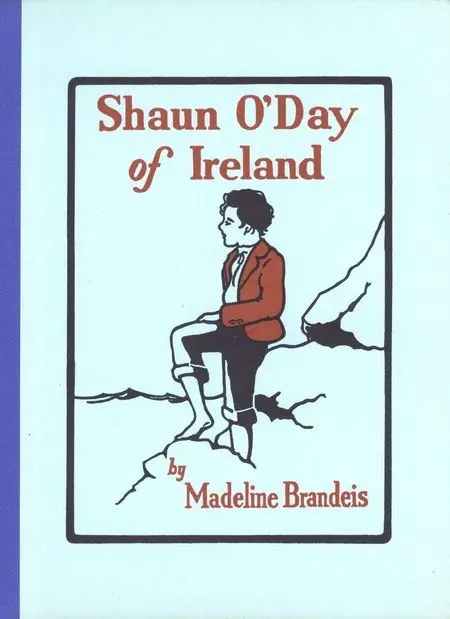
Shaun O’Day of Ireland
Madeline Brandeis
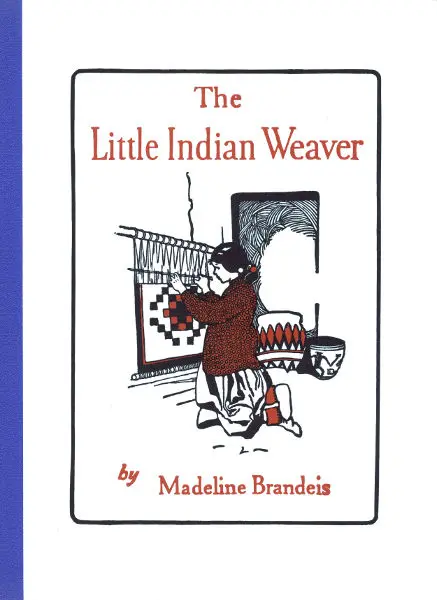
THE CLASSIC COLLECTION · 1928
"The Little Indian Weaver" by Madeline Brandeis is a children's novel written in the early 20th century. The story centers around a young Navajo girl named Bah who lives on a reservation in Arizona, exploring themes of cultural identity, friendship, and creativity. The narrative captures Bah's daily life, her passion for weaving, and her adventures, including the connection she forms with a white boy named Billy. The book follows Bah as she experiences the joys and challenges of childhood, from making a doll out of corn to dealing with the loss of her creation to a sheep. Throughout the story, friendship blossoms between Bah and Billy, who learns a great deal from the Navajo culture and helps Bah trade for a beloved papoose doll. The narrative is enriched with cultural details about the Navajo way of life, weaving traditions, and the significance of prayer sticks. As Billy writes a story that ultimately wins a contest, he recognizes the deep bond he shares with Bah and her family. The book serves as a charming exploration of how different backgrounds can create meaningful relationships and the beauty of tradition.
Introduction adapted from the source catalogue; source summaries may be automatically generated.
Free to read · English · 12,004 words · No account needed
MAKE TIME FOR A GOOD BOOK
On by default. Untick to stop anonymous reading totals. Each page counts after 10 seconds in view. How this works.
Anonymous counting is on unless you have switched it off.
At this point Bah, who you see was at that time only a papoose, would cry and reach out her little hands for some "Bah". As soon as Mother would put a crisp piece into her little hand she would stop crying and chew on it contentedly. So they called her "Bah" because she cried for bread.
"So your name is 'Bread!' That's a nice name. And I'm so hungry that I could eat you now!" said Billy, rising to his feet and making a pretense at biting.
Bah laughed and hid her face behind the new doll. Mother chuckled to herself, as Indians do when they are amused. Then she said: "I make some real 'Bah' for you."
"Oh, that would be fine!" said the boy.
Then, realizing that he had practically asked for it, he hung his head and added: "But don't do it if it's too much trouble."
The remark seemed to amuse the Indian woman, for she chuckled again as she arose, but she did not answer him. Instead, she began to prepare for the making of the bread.
Billy watched the process with great interest, and ate with even more interest when it was finished. The Bah was delicious, he thought.
It tasted like--no, it didn't taste like anything Billy had ever eaten
before.
After having done justice to the new food, the boy was shown in and about the hogan by his little friend. She took him to her "play hogan." It was made for her by her father and was just like the one they lived in, except that it was only large enough for one child to fit into.
"We could have lots of fun here, Bah. I'd like to come again and play with you. May I?" Billy asked.
"Yes, come much," answered Bah happily.
"And we'll play that I'm an Indian Chief and you are the Indian Mother, and the doll--oh, we haven't named the doll yet, have we?" said Billy.
"No, doll no name yet," said Bah.
"Well, let's see, how shall we do it?" Billy mused. "Suppose you come out of your play hogan and look around. The first thing you see will be what we'll name her."
"Yes, I do," said Bah--and obediently she entered the small hogan.
"Now come out, but close your eyes," called Billy.
Out came the little girl, holding her papoose doll. She stood, with
closed eyes, in the door of her hogan, and waited for further
instructions.
"Open your eyes!" called the boy, "and tell me what you see!"
Your reading position is saved on this browser. Take it to another device with a library code. Reading pages adapt to text, rather than matching a printed edition.
Madeline Brandeis
Madeline Brandeis
Madeline Brandeis
Madeline Brandeis
BEHIND THE BOOK
This eBook is for the use of anyone anywhere in the United States and most other parts of the world at no cost and with almost no restrictions whatsoever. You may copy it, give it away or re-use it under the terms of the Project Gutenberg License included with this eBook or online at www.gutenberg.org. If you are not located in the United States, you will have to check the laws of the country where you are located before using this eBook. Read the source licence.
The original source file, including credits and licence, is retained by this library. Request an original-format copy at no charge. Please include the book title and Project Gutenberg identifier #40277.
KEEP YOUR CURIOSITY GOING
Coulson Kernahan

Maurice Baring
Frances Wright
Cécile Tormay

Frederic Jesup Stimson

W. H. P. (William Henry Pope) Jarvis