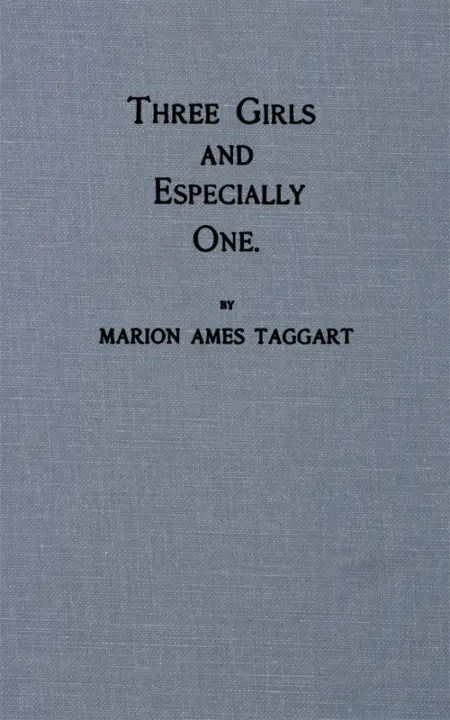
Three girls and especially one
Marion Ames Taggart

THE CLASSIC COLLECTION · 1904
"The Little Grey House" by Marion Ames Taggart is a novel written in the early 20th century. The story centers on the Grey family, particularly the three daughters—Roberta, Oswyth, and Prudence— who navigate the struggles of their economic hardships while maintaining a sense of cheer and resilience. The family's dynamics and their interactions with their new neighbors, the Rutherford boys, set the stage for a tale that explores themes of family, ambition, and the pursuit of happiness despite adversity. The opening of the book introduces the three Grey sisters as they grapple with the overgrown grass around their home, characterized as "the little grey house" tucked away amidst lush greenery. Roberta, the spirited and ambitious sister, takes the lead in organizing a mowing effort, reflecting her determination. The sisters exhibit their distinct personalities, with Oswyth being more reserved and practical, while Prudence is eager and upbeat. Their father, Sylvester Grey, is a dreamer focused on his invention, a bricquette machine, showcasing the family's hope for a better future. The arrival of the Rutherford boys brings a sense of excitement and potential friendship, setting the tone for a charming and heartwarming narrative about growth, community, and the simple joys of life.
Introduction adapted from the source catalogue; source summaries may be automatically generated.
Free to read · English · 52,617 words · No account needed
MAKE TIME FOR A GOOD BOOK
On by default. Untick to stop anonymous reading totals. Each page counts after 10 seconds in view. How this works.
Anonymous counting is on unless you have switched it off.
Rob began singing the splendid Welsh battle-song as she in turn laid hold of the handle, as if she should not only succeed, but have breath to spare for a war-cry.
Roberta was slender, taller that Oswyth, but her young muscles were strong and well-poised, and to whatever task she essayed she brought an excess of nerve-power that rarely failed to bear her to victory on the very crest of the wave. She attacked the tough grass now with such enthusiasm that the balking lawn-mower yielded to her as most things did, and ran along quite meekly for a little while. But then it stopped, and when it did stop not Cleopatra's galley, buried under centuries of Nile mud, was more motionless than was Aunt Azraella's lawn-mower.
Rob pushed and pulled as both her sisters had pushed and pulled, losing her patience as she did so.
"No good, Bobs," said Prue, laconically and a trifle maliciously, for the family only nicknamed Rob "Bobs," after Lord Roberts, Kipling's "Bobs Bahadur," in allusion to her indomitable pluck and generalship, and used the name in moments of triumph, of which this was scarcely one.
Roberta pushed away her rebellious locks with the back of a slightly
grimy hand.
"If I only had a scythe!" she murmured. "No machine can get through this jungle--I feared as much. I'd mow it if I had a scythe, though!"
"Now, Rob, you mustn't so much as think of one!" said Wythie, decidedly. "You know Mardy would be frantic if you were to swing one just once--you're so reckless! Promise you won't get one."
"I solemnly pledge myself to abstain from all intoxicating and entirely inaccessible scythes," said Rob, holding up both hands. "Where in the world should I get one, Wythie?"
"You always get anything you set your heart on," said Wythie, somewhat loosely, yet speaking from her knowledge of her sister.
"Do I? Then it must be that I set my heart on very little," interjected
Rob.
"Would Mr. Flinders cut it?" suggested Prue.
"Even an infant must realize how very sharey Mr. Flinders is in carrying on the place on shares, Prudence, my child," said Rob, gravely. "He may be honest in giving us our third of the vegetables for the use of the land, but I always suspect him of opening the lettuce-heads and rolling them up again to make sure ours haven't more leaves than his."
"Oh, you know Mr. Flinders won't do one thing extra, Prue," said Oswyth, hastily, fearing Prue might resent being called an infant.
"He could have the grass for his horse," said Prue.
Your reading position is saved on this browser. Take it to another device with a library code. Reading pages adapt to text, rather than matching a printed edition.
Marion Ames Taggart

Marion Ames Taggart
Marion Ames Taggart & Karl May
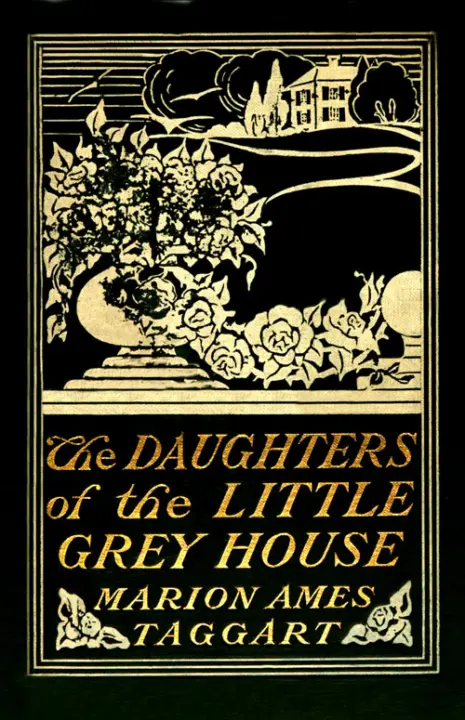
Marion Ames Taggart
BEHIND THE BOOK
This eBook is for the use of anyone anywhere in the United States and most other parts of the world at no cost and with almost no restrictions whatsoever. You may copy it, give it away or re-use it under the terms of the Project Gutenberg License included with this eBook or online at www.gutenberg.org. If you are not located in the United States, you will have to check the laws of the country where you are located before using this eBook. Read the source licence.
The original source file, including credits and licence, is retained by this library. Request an original-format copy at no charge. Please include the book title and Project Gutenberg identifier #48363.
KEEP YOUR CURIOSITY GOING
Coulson Kernahan

Maurice Baring
Frances Wright
Cécile Tormay

Frederic Jesup Stimson

W. H. P. (William Henry Pope) Jarvis