THE CLASSIC COLLECTION✦Hero stories of FranceCLASSIC FREE BOOKS
Hero stories of France
Eva March Tappan
THE CLASSIC COLLECTION · 1917
"The Little Book of the Flag" by Eva March Tappan is a historical account written in the early 20th century. This work explores the significance and evolution of the American flag throughout key moments in U.S. history, from the arrival of early colonists to the Revolutionary War and beyond. Tappan delves into the various flags that represented the colonies and their struggles, highlighting the deep connections between national identity and the symbols of the flag. At the start of the book, Tappan sets the stage with the tale of Henry Hudson, who, while on a fruitless journey to find a passage to Asia, unintentionally introduced the Dutch flag to America. The narrative progresses through the flags carried by colonists, including the pine-tree flag, and discusses the contentious symbols that reflected the colonists' struggles with authority and the quest for liberty. It also introduces notable figures, such as John Endicott, who dramatically removed the cross from the English flag in defiance of royal authority. Overall, the opening portion outlines the pivotal role of flags in shaping and representing the early identity of a nation on the brink of independence.
Introduction adapted from the source catalogue; source summaries may be automatically generated.
Free to read · English · 24,747 words · No account needed
MAKE TIME FOR A GOOD BOOK
On by default. Untick to stop anonymous reading totals. Each page counts after 10 seconds in view. How this works.
Anonymous counting is on unless you have switched it off.
"Old Glory," origin of the name and story of, 68-69;
in three wars, 70.
"Old Ironsides," frigate, poem by Holmes, 57.
"Old Thirteen," 2.
Oliver, hanged in effigy in Boston, 15-16.
Oscar, king of Sweden, 81.
Page family, as color bearers, 20.
Paine, Thomas, poem of on the "Liberty Tree," 31.
Pearson, Captain, yields to John Paul Jones, 45.
Peary, Admiral Robert E., carries the flag to the North Pole, 82-83.
Pennsylvania, 32, 50, 55.
Pennsylvania Gazette, 19.
Pennsylvania Journal, 25.
Perry, Commodore M. C., carries the letter of President Fillmore to
Japan, 77-79.
Philadelphia, 18, 37, 39, 40, 55.
Philadelphia Light Horse Troop, escorts Washington to New York, 27;
flag of the, 27-28, 33.
Phoenix, 74.
Pike, Lieut. Z. M., and the Indians, 59.
Pilgrims, 34.
Pine tree, on flag, 10, 11, 21, 35;
used on the Delaware River, 35.
"Pine-Tree Shillings, The," Hawthorne's story of, 11.
Pope's Creek, birthplace of Washington, 61.
Portsmouth, banner in, 15;
the "quilting party" flag, 43-47.
Poughkeepsie, 49.
Prospect Hill, 29;
flag raised on, 34.
Pulaski, Count, the banner of, 49-50.
Puritans, troubled by the cross in the flag, 4-7.
Putnam, Major-General Israel, 29;
flag presented to, by John Hancock, 30.
Quaker City, the, 27.
Ranger, command of, given to Jones, 43;
the flag of, and its salute, 43-45.
Rattlesnake, on flag of Charleston, 22;
a favorite emblem, 24-26; 35;
on flag of the Alfred, 37.
Reid, Captain, S. C., designs the flag with stars arranged in one
star, 65.
Revere, Paul, 20.
Revolutionary War, 21.
Rhode Island, hoists a flag with the anchor device, 22.
Roman Catholic Church, the cross regarded as the badge of the, 4.
Rome, 48.
Ross, Betsy, makes the first flag with stars and stripes, 40-42.
Ross, Mrs. Elizabeth Griscom, 40, 48.
See Betsy Ross.
Ross, Colonel, 40, 42.
"Rough Riders," 74.
St. Andrew, the cross of, 3, 18, 33.
St. George's Cross, united with the cross of St. Andrew, 3; cut out of the flag by Endicott, 4-5; in the flag sent by James II to New England, in the pine-tree flag, 10; 18; 21; 32; 34.
St. Paul, Cathedral of, 84.
Salem, cross cut from the flag in, 4-5, 8, 68.
San Juan Hill, the battle of, 76.
Santiago, attacked by the Rough Riders, 75.
Savannah, flag hoisted at, 22, 24.
Scotland, the flag of, 3; 33.
Serapis, taken by Jones, 45-47.
Six Nations, 18.
Somerville, flag raised in, 34.
Sons of Liberty, 15;
put up a liberty pole, 17-18;
meetings of the, 30.
South Carolina, 11;
treatment of stamped paper in, 14; 30; 32.
Spain, owner of the Louisiana Territory, 59;
war with, 74, 81.
Spaniards, repulsed at Las Guasimas, 75.
Spanish-American War, 81, 87.
Stamp Act, 14;
repeal of the, 17; 30.
Stars and Stripes, first salute to, 45;
replace the English flag in New York, 54;
at Fort McHenry, 60;
at Chapultepec, 71;
fired upon at Fort Sumter, 71-72;
raised again at Fort Sumter, 72-73;
in Japan, 78;
in China, 79;
in Sweden, 81;
honored in England, 84;
behavior towards the, 85-87.
"Star-Spangled Banner, The," written by Francis Scott Key, 60-61;
played at Fort Sumter, 73;
sung in St. Paul's Cathedral, 84.
Stiles, President, describes the New Haven rejoicing for peace, 54.
Stockholm, 80.
Suffolk (county), 9.
Your reading position is saved on this browser. Take it to another device with a library code. Reading pages adapt to text, rather than matching a printed edition.
Eva March Tappan
Eva March Tappan
Eva March Tappan
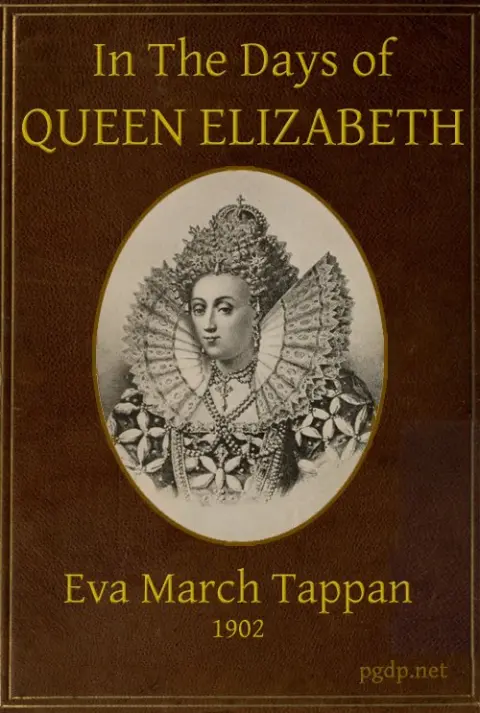
Eva March Tappan
BEHIND THE BOOK
This eBook is for the use of anyone anywhere in the United States and most other parts of the world at no cost and with almost no restrictions whatsoever. You may copy it, give it away or re-use it under the terms of the Project Gutenberg License included with this eBook or online at www.gutenberg.org. If you are not located in the United States, you will have to check the laws of the country where you are located before using this eBook. Read the source licence.
The original source file, including credits and licence, is retained by this library. Request an original-format copy at no charge. Please include the book title and Project Gutenberg identifier #30893.
KEEP YOUR CURIOSITY GOING
Cécile Tormay

Moritz Busch
John L. Ransom
Frances Wright
Cécile Tormay

Mabel Potter Daggett