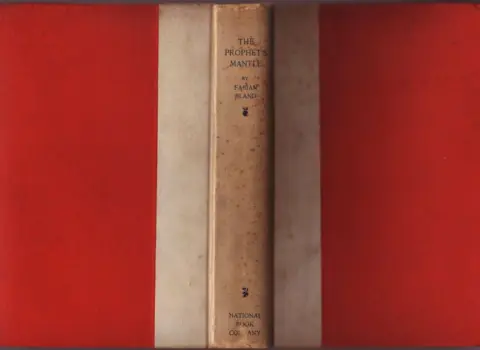
The Prophet’s Mantle
E. (Edith) Nesbit & Hubert Bland
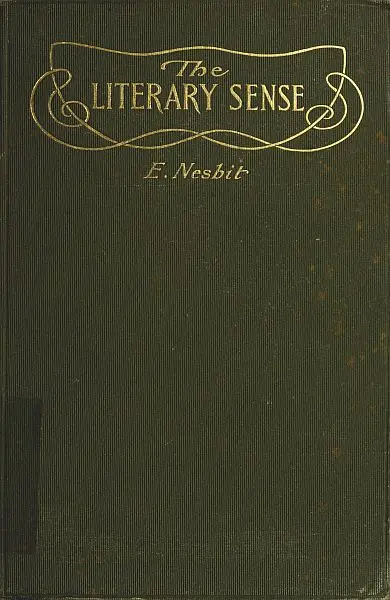
THE CLASSIC COLLECTION · 1903
"The Literary Sense" by E. Nesbit is a collection of interconnected stories written during the early 20th century. The book explores the complexities of romantic relationships, emotions, and the human tendency to romanticize one's life experiences. Through its vivid characters and scenarios, the stories delve into the conflicts that arise from expectations versus reality, often revealing the literary influences that shape the characters' perceptions of love and life. The opening portion introduces Ethel, a young woman who is meeting her lover at a railway station, only to find herself caught between her romantic ideals and the mundane reality of their setting. As she struggles with her emotions and the pressure to conform to the literary standards of love, tension builds when her lover arrives late and confesses an indiscretion. The scene unfolds with Ethel oscillating between her desire to uphold her dignity and the genuine feelings she harbors for him, leading to heartbreak and misunderstanding. This passage sets the tone for the book, emphasizing the interplay between the literary imagination and the harshness of real-life relationships.
Introduction adapted from the source catalogue; source summaries may be automatically generated.
Free to read · English · 58,186 words · No account needed
MAKE TIME FOR A GOOD BOOK
On by default. Untick to stop anonymous reading totals. Each page counts after 10 seconds in view. How this works.
Anonymous counting is on unless you have switched it off.
He stopped short in the street--not one of the "quaint" streets, but a deserted street of tall, square-shuttered, stern, dark mansions, wherein a gas-lamp or two flickered timidly.
"My wife?" he said; "it's my aunt."
"It said 'Mrs. Brown' in the visitors' list," faltered Elizabeth.
"Brown's such an uncommon name," he said; "my aunt spells hers with an
E."
"Oh! with an E? Yes, of course. I spell my name with an E too, only it's
at the wrong end."
Elizabeth began to laugh, and the next moment to cry helplessly.
"Oh, Elizabeth! and you looked in the visitors' list and--" He caught her in his arms there in the street. "No; you can't get away. I'm wiser than I was three years ago. I shall never let you go any more, my dear."
The girl from the sixth looked quite resentfully at the two faces that met her at the station. It seemed hardly natural or correct for a classical mistress to look so happy.
Elizabeth's lover schemed for and got a goodnight word with her at the top of the stairs, by the table where the beautiful brass candlesticks lay waiting in shining rows.
"Sleep well, you poor, tired little person," he said, as he lighted the candle; "such little feet, such wicked little shoes, such a long, long, long walk."
"You must be tired, too," she said.
"Tired? with eleven miles, and your hand against my heart for eight of them? I shall remember that walk when we're two happy old people nodding across our own hearthrug at each other."
So he had felt it too; and if he had been married, how wicked it would have been! But he was not married--yet.
"I am not very, very tired, really," she said. "You see, it was my hand against--I mean your arm was a great help--"
"It was your hand," he said. "Oh, you darling!"
It was her hand, too, that was kissed there, beside the candlesticks, under the very eyes of the chambermaid and two acid English tourists.
THE white crescent of the little new moon blinked at us through the yew boughs. As you walk up the churchyard you see thirteen yews on each side of you, and yet, if you count them up, they make twenty-seven, and it has been pointed out to me that neither numerical fact can be without occult significance. The jugglery in numbers is done by the seventh yew on the left, which hides a shrinking sister in the amplitude of its shadow.
The midsummer day was dying in a golden haze. Amid the gathering shadows of the churchyard her gown gleamed white, ghostlike.
Your reading position is saved on this browser. Take it to another device with a library code. Reading pages adapt to text, rather than matching a printed edition.
E. (Edith) Nesbit & Hubert Bland
E. (Edith) Nesbit
E. (Edith) Nesbit
E. (Edith) Nesbit
BEHIND THE BOOK
This eBook is for the use of anyone anywhere in the United States and most other parts of the world at no cost and with almost no restrictions whatsoever. You may copy it, give it away or re-use it under the terms of the Project Gutenberg License included with this eBook or online at www.gutenberg.org. If you are not located in the United States, you will have to check the laws of the country where you are located before using this eBook. Read the source licence.
The original source file, including credits and licence, is retained by this library. Request an original-format copy at no charge. Please include the book title and Project Gutenberg identifier #39324.
KEEP YOUR CURIOSITY GOING
Coulson Kernahan

Maurice Baring
Frances Wright
Cécile Tormay

Frederic Jesup Stimson

W. H. P. (William Henry Pope) Jarvis