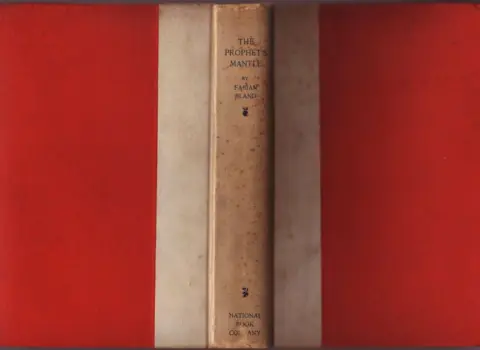
The Prophet’s Mantle
E. (Edith) Nesbit & Hubert Bland
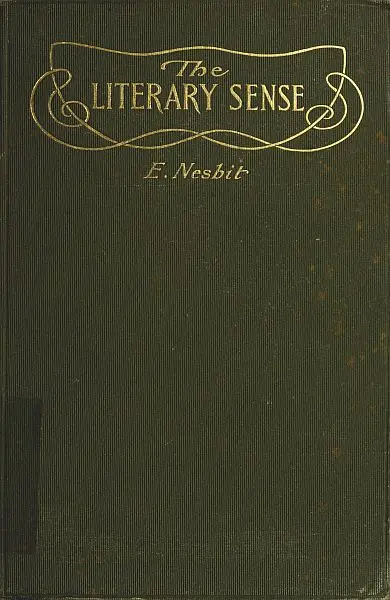
THE CLASSIC COLLECTION · 1903
"The Literary Sense" by E. Nesbit is a collection of interconnected stories written during the early 20th century. The book explores the complexities of romantic relationships, emotions, and the human tendency to romanticize one's life experiences. Through its vivid characters and scenarios, the stories delve into the conflicts that arise from expectations versus reality, often revealing the literary influences that shape the characters' perceptions of love and life. The opening portion introduces Ethel, a young woman who is meeting her lover at a railway station, only to find herself caught between her romantic ideals and the mundane reality of their setting. As she struggles with her emotions and the pressure to conform to the literary standards of love, tension builds when her lover arrives late and confesses an indiscretion. The scene unfolds with Ethel oscillating between her desire to uphold her dignity and the genuine feelings she harbors for him, leading to heartbreak and misunderstanding. This passage sets the tone for the book, emphasizing the interplay between the literary imagination and the harshness of real-life relationships.
Introduction adapted from the source catalogue; source summaries may be automatically generated.
Free to read · English · 58,186 words · No account needed
MAKE TIME FOR A GOOD BOOK
On by default. Untick to stop anonymous reading totals. Each page counts after 10 seconds in view. How this works.
Anonymous counting is on unless you have switched it off.
He did understand, and assumed his role instantly.
"Something under two hours, I think," he said politely, still holding in his hand the hat he had removed on the instant of her breaking silence. "How cool and pleasant the air is after the town!" The boat was moving now quickly between grassy banks topped by rows of ash trees. The landscape on each side spread away like a map intersected with avenues of tall, lean, wind-bent trees, that seemed to move as the boat moved.
"Good!" said she to herself; "he means to talk. We shan't sit staring at each other for two hours like stuck pigs. And he really doesn't know me? Or is it the wife? Oh! I wish I'd never come to this horrible country!" Aloud she said, "Yes, and how pretty the trees and fields are--"
"So--so nice and green, aren't they?" said he.
And she said, "Yes."
Each inwardly smiled. In the old days each had been so eager for the other's good opinion, so afraid of seeming commonplace, that their conversations had been all fine work, and their very love-letters too clever by half. Now they did not belong to each other any more, and he said the trees were green, and she said "Yes."
"There seem to be a great many people in Bruges," said she.
"Yes," he said, in eager assent. "Quite a large number."
"There is a great deal to be seen in these old towns. So quaint, aren't
they?"
She remembered his once condemning in a friend the use of that word. Now
he echoed it.
"So very quaint," said he. "And the dogs drawing carts! Just like the
pictures, aren't they?"
"You can get pictures of them on the illustrated post-cards. So nice to send to one's relations at home."
She was getting angry with him. He played the game too well.
"Ah! yes," he answered, "the dear people like these little tokens, don't
they?"
"He's getting exactly like a curate," she thought, and a doubt assailed her. Perhaps he was not playing the game at all. Perhaps in these three years he had really grown stupid.
"How different it all is from England, isn't it?"
"Oh, quite!" said he.
"Have you ever been in Holland?"
"Yes, once."
"What was it like?" she asked.
That was a form of question they had agreed to hate--once, long ago.
"Oh, extremely pleasant," he said warmly. "We met some most agreeable people at some of the hotels. Quite the best sort of people, you know."
Another phrase once banned by both.
Your reading position is saved on this browser. Take it to another device with a library code. Reading pages adapt to text, rather than matching a printed edition.
E. (Edith) Nesbit & Hubert Bland
E. (Edith) Nesbit
E. (Edith) Nesbit
E. (Edith) Nesbit
BEHIND THE BOOK
This eBook is for the use of anyone anywhere in the United States and most other parts of the world at no cost and with almost no restrictions whatsoever. You may copy it, give it away or re-use it under the terms of the Project Gutenberg License included with this eBook or online at www.gutenberg.org. If you are not located in the United States, you will have to check the laws of the country where you are located before using this eBook. Read the source licence.
The original source file, including credits and licence, is retained by this library. Request an original-format copy at no charge. Please include the book title and Project Gutenberg identifier #39324.
KEEP YOUR CURIOSITY GOING
Coulson Kernahan

Maurice Baring
Frances Wright
Cécile Tormay

Frederic Jesup Stimson

W. H. P. (William Henry Pope) Jarvis