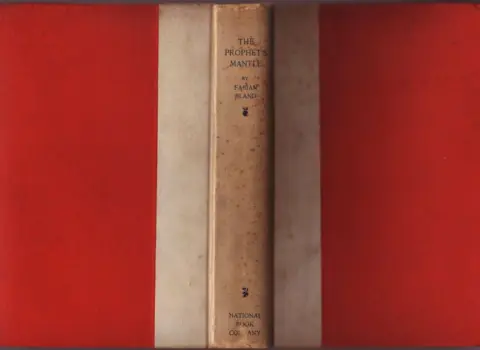
The Prophet’s Mantle
E. (Edith) Nesbit & Hubert Bland
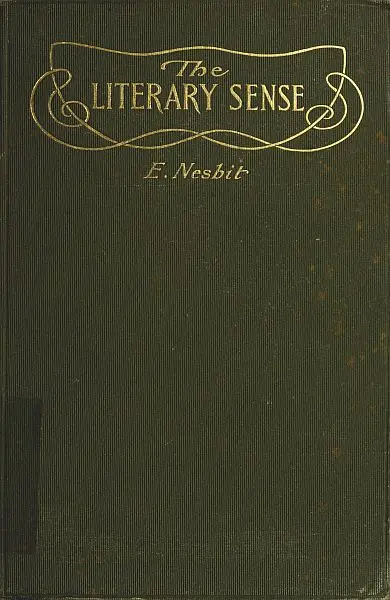
THE CLASSIC COLLECTION · 1903
"The Literary Sense" by E. Nesbit is a collection of interconnected stories written during the early 20th century. The book explores the complexities of romantic relationships, emotions, and the human tendency to romanticize one's life experiences. Through its vivid characters and scenarios, the stories delve into the conflicts that arise from expectations versus reality, often revealing the literary influences that shape the characters' perceptions of love and life. The opening portion introduces Ethel, a young woman who is meeting her lover at a railway station, only to find herself caught between her romantic ideals and the mundane reality of their setting. As she struggles with her emotions and the pressure to conform to the literary standards of love, tension builds when her lover arrives late and confesses an indiscretion. The scene unfolds with Ethel oscillating between her desire to uphold her dignity and the genuine feelings she harbors for him, leading to heartbreak and misunderstanding. This passage sets the tone for the book, emphasizing the interplay between the literary imagination and the harshness of real-life relationships.
Introduction adapted from the source catalogue; source summaries may be automatically generated.
Free to read · English · 58,186 words · No account needed
MAKE TIME FOR A GOOD BOOK
On by default. Untick to stop anonymous reading totals. Each page counts after 10 seconds in view. How this works.
Anonymous counting is on unless you have switched it off.
"She says she meant it to be a pleasant surprise, because we've been rather hard up since my father died, and this chap's got horses and everything, and she says he's going to adopt me. As if I wanted to be adopted by any old stuck-up money-grubber!"
"But you haven't seen him," said Charling gently. "If I'm silly, you
are too, aren't you?"
She hid her face on her sleeve to avoid seeing the effect of this daring shot. Only silence answered her.
Presently Harry said--
"Now, kiddie, let me take you home, will you? Give the stepmother a fair
show, anyhow."
Charling reflected. She was very tired. She stroked Harry's hand absently, and after a while said--
"I will if you will."
"Will what?"
"Go back and give your chap a fair show."
And now the boy reflected.
"Done," he said suddenly. "After all, what's sauce for the goose is sauce for the gander. Come on."
He stood up and held out his hand. This was about the time when the cook packed her box and went off, leaving it to be sent after her. Public opinion in the servants' hall was too strong to be longer faced.
The shadows of the trees lay black and level across the pastures when the two children reached the lodge gates. A floral arch was above the gate, and wreaths of flowers and flags made the avenue gay. Charling had grown very tired, and Harry had carried her on his back for the last mile or two--resting often, because Charling was a strong, healthy child, and, as he phrased it, "no slouch of a weight."
Now they paused at the gate of the lodge.
"This is my house," said Charling. "They've put all these things up for her, I suppose. If you'll write down your address I'll give you mine, and we can write and tell each other what they are like afterwards. I've got a bit of chalk somewhere."
She fumbled in the dusty confusion of her little pocket while Harry found the envelope of his sister's letter and tore it in two. Then, one on each side of the lodge gate-post, the children wrote, slowly and carefully, for some moments. Presently they exchanged papers, and each read the words written by the other. Then suddenly both turned very red.
"But this is my address," said she. "The Grange, Falconbridge."
"It's where my sister's gone to live, anyhow," said he.
"Then--then--"
Conviction forced itself first on the boy.
"What a duffer I've been! It's him she's married."
"Your sister?"
"Yes. Are you sure your father's a good sort?"
Your reading position is saved on this browser. Take it to another device with a library code. Reading pages adapt to text, rather than matching a printed edition.
E. (Edith) Nesbit & Hubert Bland
E. (Edith) Nesbit
E. (Edith) Nesbit
E. (Edith) Nesbit
BEHIND THE BOOK
This eBook is for the use of anyone anywhere in the United States and most other parts of the world at no cost and with almost no restrictions whatsoever. You may copy it, give it away or re-use it under the terms of the Project Gutenberg License included with this eBook or online at www.gutenberg.org. If you are not located in the United States, you will have to check the laws of the country where you are located before using this eBook. Read the source licence.
The original source file, including credits and licence, is retained by this library. Request an original-format copy at no charge. Please include the book title and Project Gutenberg identifier #39324.
KEEP YOUR CURIOSITY GOING
Coulson Kernahan

Maurice Baring
Frances Wright
Cécile Tormay

Frederic Jesup Stimson

W. H. P. (William Henry Pope) Jarvis