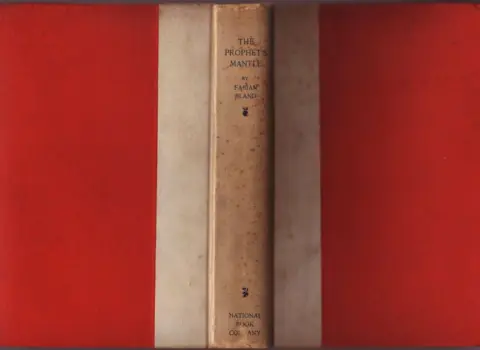
The Prophet’s Mantle
E. (Edith) Nesbit & Hubert Bland
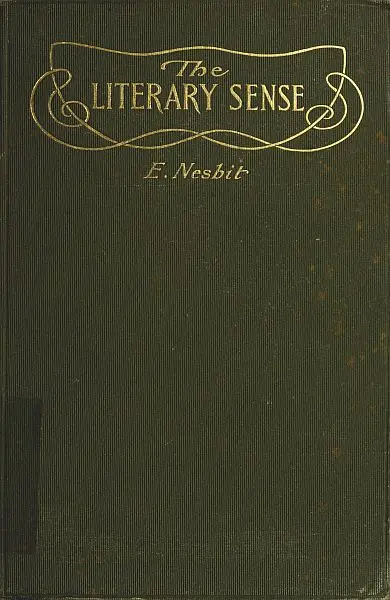
THE CLASSIC COLLECTION · 1903
"The Literary Sense" by E. Nesbit is a collection of interconnected stories written during the early 20th century. The book explores the complexities of romantic relationships, emotions, and the human tendency to romanticize one's life experiences. Through its vivid characters and scenarios, the stories delve into the conflicts that arise from expectations versus reality, often revealing the literary influences that shape the characters' perceptions of love and life. The opening portion introduces Ethel, a young woman who is meeting her lover at a railway station, only to find herself caught between her romantic ideals and the mundane reality of their setting. As she struggles with her emotions and the pressure to conform to the literary standards of love, tension builds when her lover arrives late and confesses an indiscretion. The scene unfolds with Ethel oscillating between her desire to uphold her dignity and the genuine feelings she harbors for him, leading to heartbreak and misunderstanding. This passage sets the tone for the book, emphasizing the interplay between the literary imagination and the harshness of real-life relationships.
Introduction adapted from the source catalogue; source summaries may be automatically generated.
Free to read · English · 58,186 words · No account needed
MAKE TIME FOR A GOOD BOOK
On by default. Untick to stop anonymous reading totals. Each page counts after 10 seconds in view. How this works.
Anonymous counting is on unless you have switched it off.
"Oh! because my name's Charlotte, and mother used to sing a song about Charlie being her darling, and I was her darling, only I couldn't speak properly then; and I got it mixed up into Charling, father says. But let's go on. Tell me your sad history, poor fellow-wanderer."
"My father was a king," said Harry gravely; but Charling turned such sad eyes on him that he stopped.
"Won't you tell me the real true truth?" she said. "I will you."
"Well," said he, "the real true truth is, Charling, I've run away from home, and I'm going to sea."
Charling clapped her hands. "Oh! so have I! So am I! Let me come with you. Would they take a cabin-girl on the ship where you're going to, do you think? And why did you run away? Did they beat you and starve you at home? Or have you a cruel stepmother, or stepfather, or something?"
"No," said he grimly; "I haven't any step-relations, and I'm jolly well not going to have any, either. I ran away because I didn't choose to have a strange chap set over me, and that's all I am going to tell you. But about you? How far have you come to-day?"
"About ninety miles, I should think," said Charling; "at least, my legs
feel exactly like that."
"And what made you do such a silly thing?" he said, smiling at her, and she thought his blue eyes looked quite different now, so that she did not mind his calling her silly. "You know, it's no good girls running away; they always get caught, and then they put them into convents or something."
She slipped her hand confidingly under his arm, and put her head against the sleeve of his Norfolk jacket.
"Not girls with eternal friends, they don't," she said. "You'll take care of me now? You won't let them catch me?"
"Tell me why you did it, then."
Charling told him at some length.
"And father never told me a word about it," she ended; "and I wasn't going to stay to be made to wash the dishes and things, like Cinderella. I wouldn't stand that, not if I had to run away every day for a year. Besides, nobody wants me; nobody will miss me."
This was about the time when they found the white geranium in the churchyard, and began to send grooms about the country on horses. And Murchison was striding about the lanes gnawing his grizzled beard and calling on his God to take him, too, if harm had come to the child.
"But perhaps the stepmother would be nice," the boy said.
Your reading position is saved on this browser. Take it to another device with a library code. Reading pages adapt to text, rather than matching a printed edition.
E. (Edith) Nesbit & Hubert Bland
E. (Edith) Nesbit
E. (Edith) Nesbit
E. (Edith) Nesbit
BEHIND THE BOOK
This eBook is for the use of anyone anywhere in the United States and most other parts of the world at no cost and with almost no restrictions whatsoever. You may copy it, give it away or re-use it under the terms of the Project Gutenberg License included with this eBook or online at www.gutenberg.org. If you are not located in the United States, you will have to check the laws of the country where you are located before using this eBook. Read the source licence.
The original source file, including credits and licence, is retained by this library. Request an original-format copy at no charge. Please include the book title and Project Gutenberg identifier #39324.
KEEP YOUR CURIOSITY GOING
Coulson Kernahan

Maurice Baring
Frances Wright
Cécile Tormay

Frederic Jesup Stimson

W. H. P. (William Henry Pope) Jarvis